

Sleeping on the wrong pillow can cause more than a pain in the neck. Without the right support, your pillow could even be behind your morning tension headaches.
"If you notice that your headaches start or worsen after sleeping, or improve when you change pillows, that’s a strong indicator that your pillow may be a contributing factor," says Dr. Dustin DebRoy, manager of chiropractic education and relations at The Joint Chiropractic.
While the best pillows on the market are crafted from high-quality materials, choosing the wrong one for your body type and sleep needs can lead to more than disturbed sleep and a stiff neck. Here, two chiropractors explain why, plus what pillow to choose instead.
Key takeaways: At a glance
- The wrong pillow can cause headaches: Uneven pillow support can lead to tension headaches.
- Your sleep posture matters: Proper neck and spinal alignment is crucial for good sleep quality.
- Three key reasons: Sustained muscle tension, joint compression and resultant poor sleep are three causes of tension headaches.
- Finding the 'one': Choosing a pillow depends on your sleep position, not its look and feel.
- Replacing is key: Changing your pillow every 1-2 years is important to maintain proper support.
3 ways your pillow is causing your headaches
From undue stress on your neck muscles to poor sleep, here are three ways your pillow could be triggering your morning tension headaches...
1. Muscle strain

Research shows that muscle tension is one of the common causes of tension headaches. Whether your head sinks to the bottom of your ultra-soft pillow or is held too high, your neck muscles will immediately be placed under pressure.
"The neck muscles must find a supported neutral position to fully relax. If a pillow creates a distortion to the neck, the muscles will respond by tightening up," says Dr. Sherry McAllister, president of The Foundation of Chiropractic Progress.
This is to protect the neck and head from further injury due to uneven support, activating the nervous system to respond to the distortion.
Sustained muscle tightness or tension will reduce the blood flow to the neck and head, increasing the likelihood of developing headaches.
2. Joint compression

A pillow that's too flat or too high for you can severely affect your sleep posture. It either pushes your neck and head too far forward or drops them back too much, and this can be bad news for your joints.
"Using a pillow that does not properly support your neck can place the cervical joints in a compressed position for extended periods of time," says Dr. DebRoy.
Over time, this can lead to irritation, stiffness, and discomfort that may contribute to headaches.
3. Sleep deprivation

Not only can muscle tension and joint compression caused by the wrong pillow cause discomfort, it can also lead to sleep deprivation. Unfortunately, studies show that several nights of poor sleep can lead to an increase in headaches.
"Poor sleep can increase muscle tension, reduce the body’s ability to recover, and heighten sensitivity to pain, all of which contribute to headache development," says Dr DebRoy.
What pillow do you need to keep headaches at bay?
Taking the above factors into account, the key is to finding a pillow that suits your body type and sleep position. This will ensure that it provides adequate support and promotes healthy neck alignment with the rest of the body.
"What works best is a medium loft pillow with adaptive fill, ones that keep the neck neutral on the back and fills in the shoulder gap on your side. Having adjustable fill pillows is best so you can customize the height," Dr. Ron Miller, Doctor of Physical Therapy at Pursuit Physical Therapy, explains.
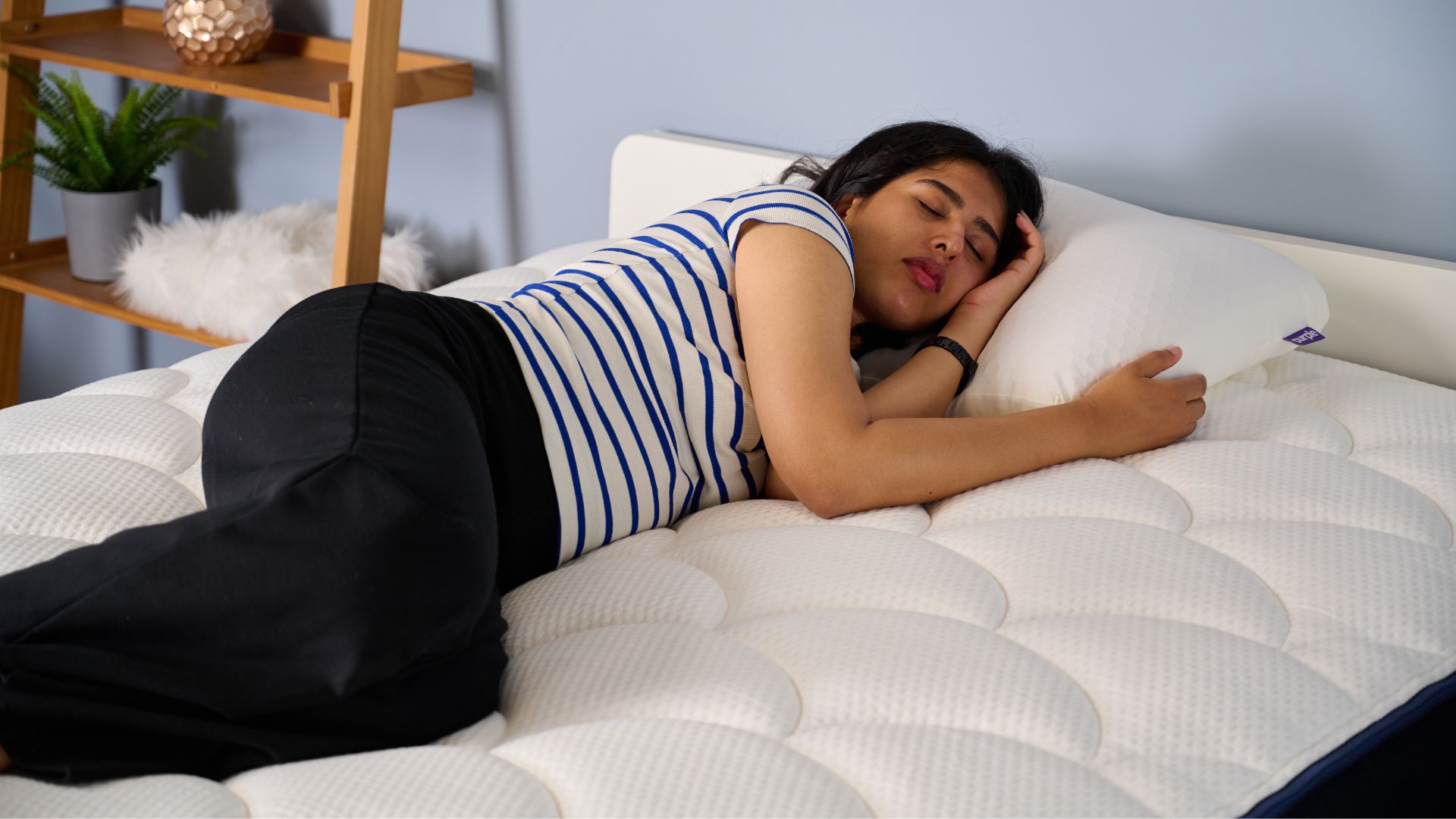
"I will recommend frequently testing it to see whether the nose stays aligned with the sternum (the long flat bone at the center of the chest) and when lying on your side," he adds.
But if you're not totally sure about your sleep needs, our guide to choosing a pillow based on your sleep position can help.
However, replacing your pillows at the right time is also crucial to avoid these annoying headaches.
"Often it is not noticed by the naked eye that the pillow has lost its prime," Dr McAllister points out. The general advice is to replace your pillows every 1-2 years.
One way to find out if you're due a new pillow is the easy 30-second test to find out if your pillow is still supportive.