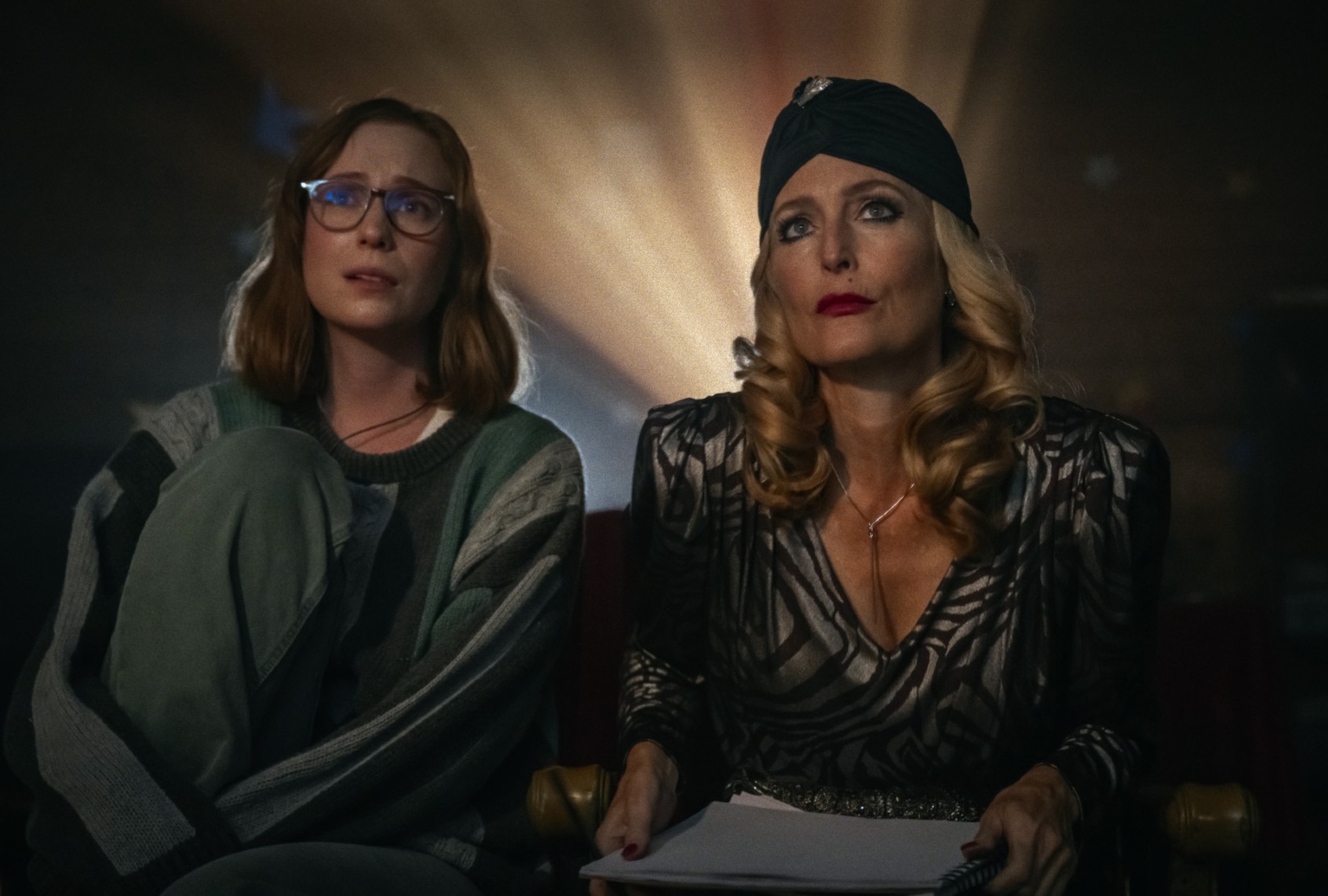
There comes a time in every English-speaker’s life when they learn the meaning of the French phrase “la petite mort,” an adage that, translated literally, means “the little death,” and typically refers to the sensation immediately following an orgasm. Given the phrase’s innate poeticism, it’s often used by scholars, authors, casanovas and perhaps overly didactic filmmakers to convey the fleeting intensity of life’s most burning joys. But most obnoxiously, “la petite mort” is a favorite of black-coffee-sipping, cigarette-bumming, beret-wearing young adults, eager to remind you that the phrase can also allude to a part of oneself, deep inside, that has died — snuffed out by the pain of existence. “Don’t you see?” they ask between puffs of their Parliaments. “Everything has a dual meaning.”
That’s precisely why, upon first hearing that the metafictional antagonist in writer-director Jane Schoenbrun’s latest film, “Teenage Sex and Death at Camp Miasma,” is called Little Death, my body responded with a sharp, involuntary wince. Uh oh. See, it’s not that “la petite mort” isn’t a beautiful, lyrical phrase on its own; it’s just that its novelty wears off quickly. It’s not exactly the kind of metaphor you want to hang an entire film on, lest its relative simplicity give way under the heft of a feature film’s many parts. Then again, unflinching and sometimes self-important intellectualism is a major aspect of Schoenbrun’s whole oeuvre.