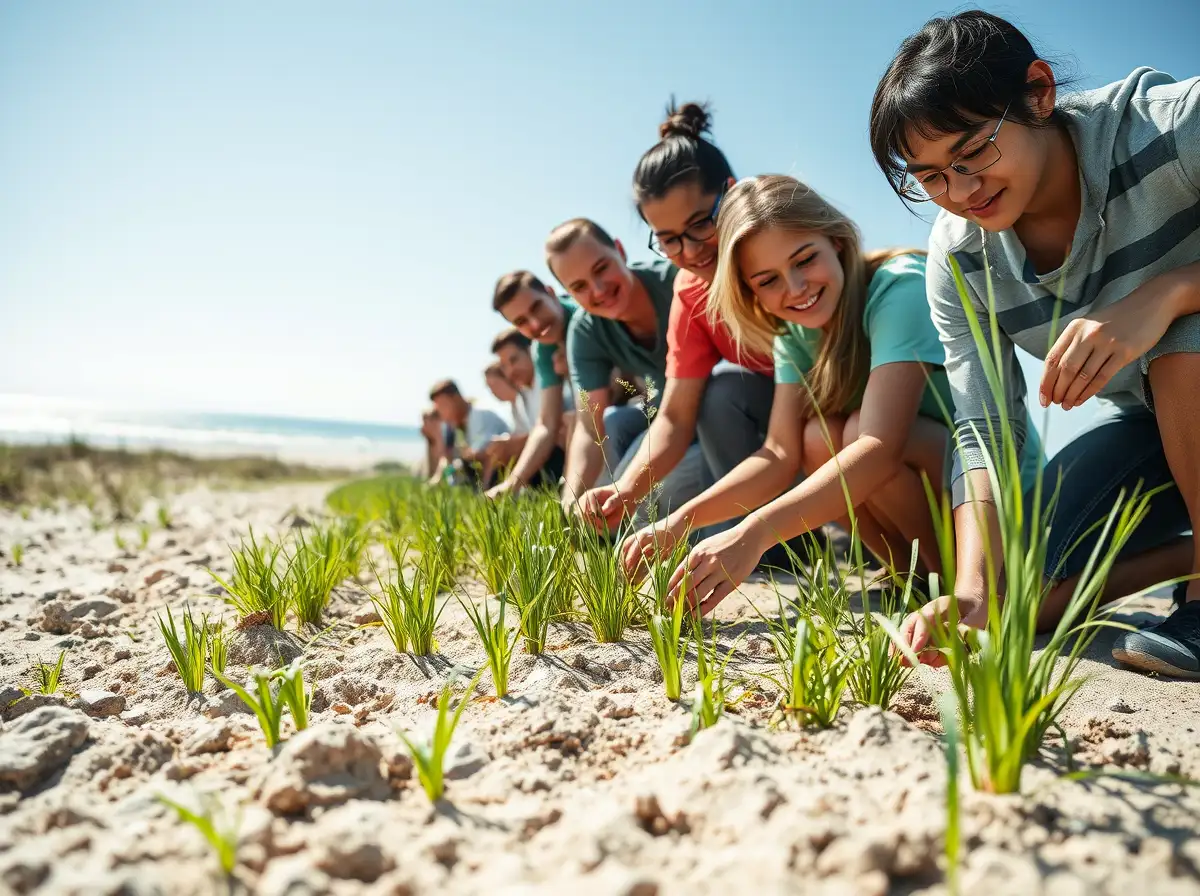
California's coastline is famous for its beaches, cliffs and ocean views, but one of its most important natural defenses has been disappearing for generations. Since 1850, California has lost an estimated 60 per cent of its coastal dunes, according to the Santa Monica Bay National Estuary Program. Today, a 30-acre restoration effort at Santa Monica Beach is working to rebuild this fragile ecosystem and strengthen the shoreline against a changing climate. The project shows why coastal dunes are far more than piles of sand: they are living landscapes that can provide habitat, capture windblown sand and create a natural buffer against coastal hazards, including sea-level rise.
Coastal dunes form where wind moves sand inland from the beach and vegetation helps stabilize it. Over time, these plants create a dynamic landscape that changes with seasons, storms and ocean conditions. Native dune vegetation can trap additional sand, allowing dunes to grow and shift naturally. This constant movement is part of what makes dunes valuable in coastal environments. Unlike a concrete wall, a healthy dune system can evolve as conditions change. When storms push waves farther inland, dunes can absorb some of that energy while providing sand that may later move back toward the beach.