Get all your news in one place.
100's of premium titles.
One app.
Start reading
Ballotpedia
Ballotpedia
Andrew Bahl

California enacts 32 election bills in 2026, including legislation regulating law enforcement presence at polling places

The California Legislature adjourned its regular session on Aug. 31 after sending 34 election-related bills to Gov. Gavin Newsom (D). Newsom signed 32 of the bills between May and September and vetoed two of them in September.

These 32 bills make California the state with the second-most election-related bills enacted so far this year, behind only Virginia, which enacted 49 election bills in its 2026 session.

California’s new laws include several regulating the ability of law enforcement to be present near polling places or to access election-related materials. One of those bills, SB 884, prohibits law enforcement officers from arresting individuals within 200 feet of polling places on election day. Crimes related to disrupting the operation of the polling place or crimes against people or property are exempt from this prohibition on law enforcement activity.
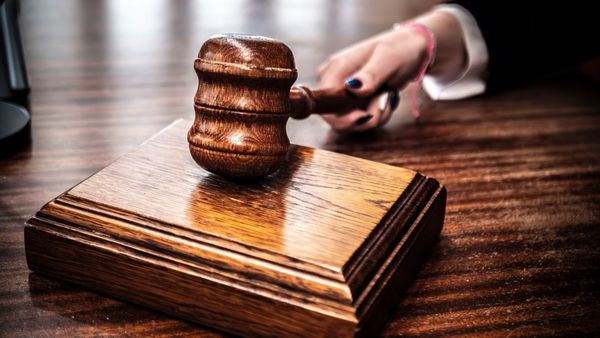
The bill also permits county elections officials to extend the closing time at any polling place if an official determines that voting was disrupted by arrests near the polling place. And it requires all ballot drop-off locations to open at least 30 days before the election.

The final version of SB 884 passed the state Assembly 57-18 on Aug. 31, with 57 Democrats voting in favor and 18 Republicans voting against. The state Senate passed the bill 30-10 on Aug. 31, with 30 Democrats voting in favor and 10 Republicans voting against. Newsom signed the bill on Sept. 19.

Newsom also signed SB 73 in May, which prohibits a peace officer from interfering with the administration of any election and with the election-related duties of the secretary of state, election officials, workers, or volunteers, except when responding to urgent threats. The bill also authorizes the secretary of state, the attorney general, or county election officials to bring a civil action to enforce that prohibition.

The bill also requires the attorney general to provide guidance and information to county elections officials regarding how elections officials, workers, and volunteers should respond to requests by a law enforcement officer to access areas where ballots are cast, processed, counted, or otherwise handled in an election.

The state Assembly passed an amended version of the bill 57-19 on May 22, with 57 Democrats voting in favor and 19 Republicans voting against. The state Senate approved the bill 29-8 on May 26, with 29 Democrats voting in favor and eight Republicans voting against.

On Sept. 19, Newsom also signed AB 1664, which requires a local agency, political subdivision, or elections official to notify the secretary of state and the attorney general immediately, but no later than one calendar day, after becoming aware of a warrant, subpoena, or active law enforcement investigation pertaining to the search or seizure of any election records or certified voting technology. The secretary of state and attorney general are authorized to intervene in any court proceedings or initiate proceedings in any court to challenge a warrant or subpoena on any valid grounds or seek other appropriate relief.

And Newsom signed AB 282, also on Sept. 19, which establishes that any person who seizes or assists in the seizure of ballots, election records, or certified voting technology before election results are certified is guilty of a felony.

California is one of seven states, all with Democratic trifectas, that have enacted 13 bills or resolutions on the presence of law enforcement, National Guard members, or immigration authorities at or near election sites. California is one of three states, along with Connecticut and Virginia, to enact multiple bills related to law enforcement presence at election sites in 2026.

Other bills enacted in 2026 included:

  • AB 1610 , which requires county election officials to provide additional notice to a voter when United States Postal Service data indicates a voter has a mailing address that is different from the voter’s residence address and the mailing address is no longer valid.
  • AB 1853 , which establishes requirements for candidate statements in voter information guides.
  • AB 2604 , which requires the secretary of state to implement and make available to county elections officials a system that allows voters to access electronic signature curing.
  • AB 2691 , which prohibits a person from running for state or local office if they have been convicted of a felony involving sexual assault or human trafficking.
  • SB 259 , which establishes that any person in charge of a vote-by-mail ballot who willfully interferes with its delivery to a voter is guilty of a misdemeanor with a potential penalty of imprisonment in the county jail for no more than six months, a fine of no more than $10,000, or both.
  • SB 327 , which prohibits utilities from recovering the direct or indirect costs of political influence activities from ratepayers.
  • SB 1360 , which requires counties to provide language assistance in non-English languages if they meet certain demographic requirements. Election officials must ensure that certain forms of voting materials or assistance, such as official and sample ballots, registration forms, polling place signage, and bilingual pollworkers, are translated or provided in a covered language.
  • SB 1369 , which requires paid signature gatherers for a state or local initiative, referendum, or recall petition to verbally disclose to each person, before providing the petition for the person’s signature, that they are being paid to circulate the petition.
  • SB 1420 , which requires the secretary of state to set procedures for counties to follow related to in-person voting of vote-by-mail ballots.
  • SB 1431 , which removes the maximum limits on the number of signatures that can be gathered for nomination papers.

Newsom also vetoed two bills. The first, AB 1116, would have allowed voters without a California driver's license or state identification card to register online using the last four digits of their Social Security number. The second, AB 1562, created a pilot program that would have allowed counties to randomly select voters to serve as precinct board members.

In addition to the 34 bills, California legislators also adopted two election-related resolutions this year. AJR 29 states that the legislature “opposes Executive Order No. 14399 and any other federal executive action that restricts, burdens, or interferes with California’s vote by mail system, that seeks to improperly deputize the United States Postal Service as an administrator of state elections, or that seeks to disenfranchise California voters who cast their ballots by mail in accordance with state law.” SJR 18 states that the legislature “respectfully but strongly disagrees with the majority opinion of the United States Supreme Court in Citizens United v. Federal Election Commission and encourages states to adopt policies to limit the powers of corporations to contribute to political campaigns, consistent with the United States Constitution.”

California enacted or adopted 27 election-related bills or resolutions in 2025, 15 in 2024, and 29 in 2023.

Sign up to read this article
Read news from 100's of titles, curated specifically for you.
Already a member? Sign in here
Related Stories
Top stories on inkl right now
One subscription that gives you access to news from hundreds of sites
Already a member? Sign in here
Our Picks
Fourteen days free
Download the app
One app. One membership.
100+ trusted global sources.