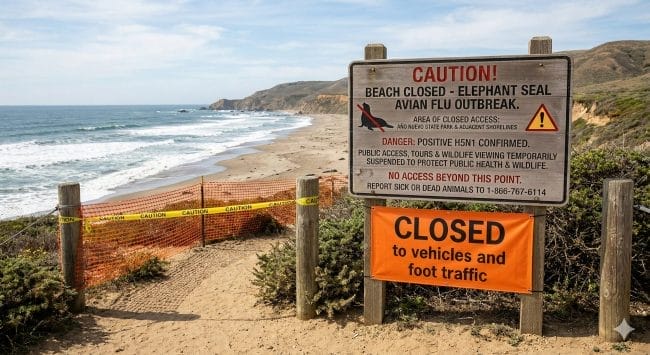
A walk along the California coast usually offers a peaceful escape. However, a silent and invisible threat is currently moving through the local wildlife. Health officials have confirmed the first detection of the H5N1 avian flu in California marine mammals, specifically affecting elephant seal populations. This development has led to localized closures at Año Nuevo State Park, where public viewing areas and guided tours are currently suspended. This is not just a concern for the animals. Specifically, the potential for the virus to interact with humans or pets has put the region on high alert. If you frequent the coast, the rules of your weekend hike have just changed. We are revealing why this specific strain is causing so much concern.

The Invisible Threat on the Shoreline
Honestly, it is hard to see a beautiful beach as a danger zone. However, researchers from UC Davis have confirmed that several seal pups at Año Nuevo tested positive for the virus. Surprisingly, elephant seals are particularly vulnerable because they congregate in dense groups to mate and molt. This proximity allows the virus to spread efficiently through the colony. Consequently, officials are canceling tours and closing access. They want to protect the seals from added stress and prevent people from accidentally carrying the virus to other areas.
The risk to domestic pets is a significant point of caution for local residents. Pets that roam off-leash on these beaches could face exposure if they come into contact with infected carcasses. On the other hand, the human risk remains low for now, according to the California Department of Fish and Wildlife. Nevertheless, health departments are taking no chances with a virus that has shown adaptation in other mammalian species globally. Here’s the truth: the closures at Año Nuevo are a necessary firebreak to monitor this localized outbreak. If you see restricted area signs at the park, they are there to safeguard both the public and the wildlife.
Practical Steps for Coastal Visitors
Navigating these updates requires a new level of awareness for outdoor enthusiasts. You should avoid all contact with sick or dead wildlife immediately. Furthermore, report any unusual sightings to the West Coast Marine Mammal Stranding Network. Many people try to help stranded animals out of compassion. However, your intervention could be dangerous for both you and the animal during an active outbreak. The best thing you can do is keep a safe distance. Let the professionals handle the situation. Staying informed about specific park advisories is the only way to plan your coastal visits safely.
Follow three safety protocols if you live near the coast to prevent the spread of the virus. First, keep all pets on a short leash to prevent them from sniffing or rolling in beach debris. Second, wash your boots and outdoor gear with a bleach solution after any visit to a sensitive coastal area. This practice will help eliminate potential viral traces. Third, monitor the California State Parks website for the latest list of closures before you head out. By following these guidelines, you act as a barrier to the virus’s spread. You can still enjoy the beauty of the coast, but you must respect the current boundaries.
Protecting the Future of California’s Wildlife
The health of our coastline is a delicate balance that requires our active cooperation. While the current restrictions are a temporary inconvenience, they are a small price to pay. They ensure the survival of these vital elephant seal colonies. By staying away from restricted zones, you give the animals the space they need to recover. Furthermore, you prevent the virus from finding a new host. You have the power to protect your community and the environment by respecting the health alerts. Stay vigilant and stay safe while we wait for the all-clear together.
Have you encountered any beach closures or unusual wildlife behavior in your area recently? Leave a comment below and share your experience.
What to Read Next…
- Health Insurance Premiums Could Spike in 2026 — Why Millions May Pay More
- Federal SNAP Freeze Could Worsen Chronic Health for Older Adults Across the U.S.
- 8 Signs Your Healthy Southern Diet is Actually Causing Inflammation
The post California Beach Alert: Avian Flu Outbreak Confirmed in Elephant Seals as Officials Close Public Access appeared first on Budget and the Bees.