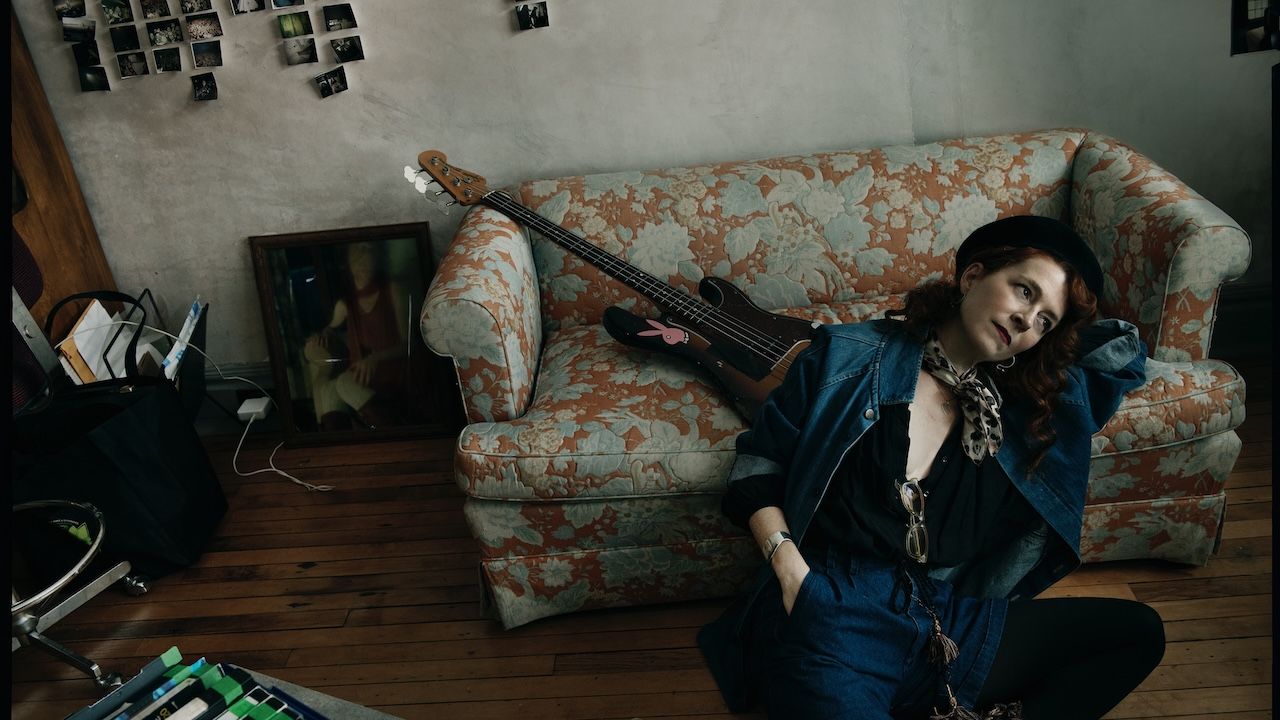
In the 1990s, Melissa Auf der Maur played in two of the greatest alternative rock bands ever, Hole and Smashing Pumpkins, and so was uniquely placed to witness the magic and mayhem, charm and chaos of the era. She lays it all bare in unflinching detail in her fascinating new memoir, Even The Good Girls Will Cry, the best book about the shifting cultural sands of the '90s since the late Mark Lanegan's brutally unfiltered 2020 autobiography Sing Backwards And Weep.
Self-described in chapter 1 of her book as "the product of a one- night stand between two radically beautiful and adventurous souls" - her mother Linda Gaboriau was an academic, a journalist, a feminist activist and the first female rock DJ on CHOM- FM, Montreal's English-speaking rock radio station, her father Nick Auf der Maur a poet, newspaper columnist, TV personality, political rabble-rouser, and hard-drinking "boulevardier" - Auf der Maur was an artistic, confident, bohemian teenager when she fell in love with British post-punk (The Cure, The Smiths, Depeche Mode, Echo and the Bunnymen) and US underground rock (Sonic Youth, Jane's Addiction, L7, Mudhoney). But it was seeing Smashing Pumpkins in a Montreal punk club, then hearing an advance copy of Nirvana's Nevermind album in the same venue, which truly altered the course of her life.
Three years later, on the recommendation of her friend and 'grunge dad' Billy Corgan, Auf der Maur joined Hole, playing her first gig with Courtney Love's band at Reading festival in front of 65,000 music fans.
"At the time my twenty-two-year-old mind was barely contemplating the enormity of it all," she writes. "This was only the seventh live rock concert that I’d ever performed in my life, and the first outside of Montreal clubs. I had joined the band only two weeks earlier and learned the set list over the course of a week’s rehearsal in Seattle.
"I felt like an absurd grunge Cinderella, who’d found herself with VIP access to the ball. To some back home, my joining Hole was the epitome of a dream. To others, it was the biggest sellout of our scene. I had been trained to not hunt for this, to not give a fuck about success. I was lockstep in line with the indie ethos of the early ’90s to not sell out. Success was weighted with guilt and shame. It felt like our self- worth was always at stake. Very confusing times for an aspiring and struggling artist."
If such conflicts and contradictions, or the alt. rock scene of the '90s mean, or ever meant, anything to you, Even The Good Girls Will Cry, is an essential read: precious few books rooted in what Auf der Maur calls the "last analog decade" reveal so poetically, and so perceptively, what it was like to be in the eye of the hurricane. And when we spoke to the New York-based musician, photographer, art space curator and writer, it's clear that revisiting her memories of navigating that turbulent decade has been an emotional, challenging and cathartic undertaking, and a process that's still on-going and evolving.