Get all your news in one place.
100's of premium titles.
One app.
Start reading
The Economic Times
The Economic Times
Team Global

By 2014, 16,000 volunteers had traced solar eruptions across spacecraft images; 38,000 hand-drawn tracks helped scientists catalog 144 coronal mass ejections

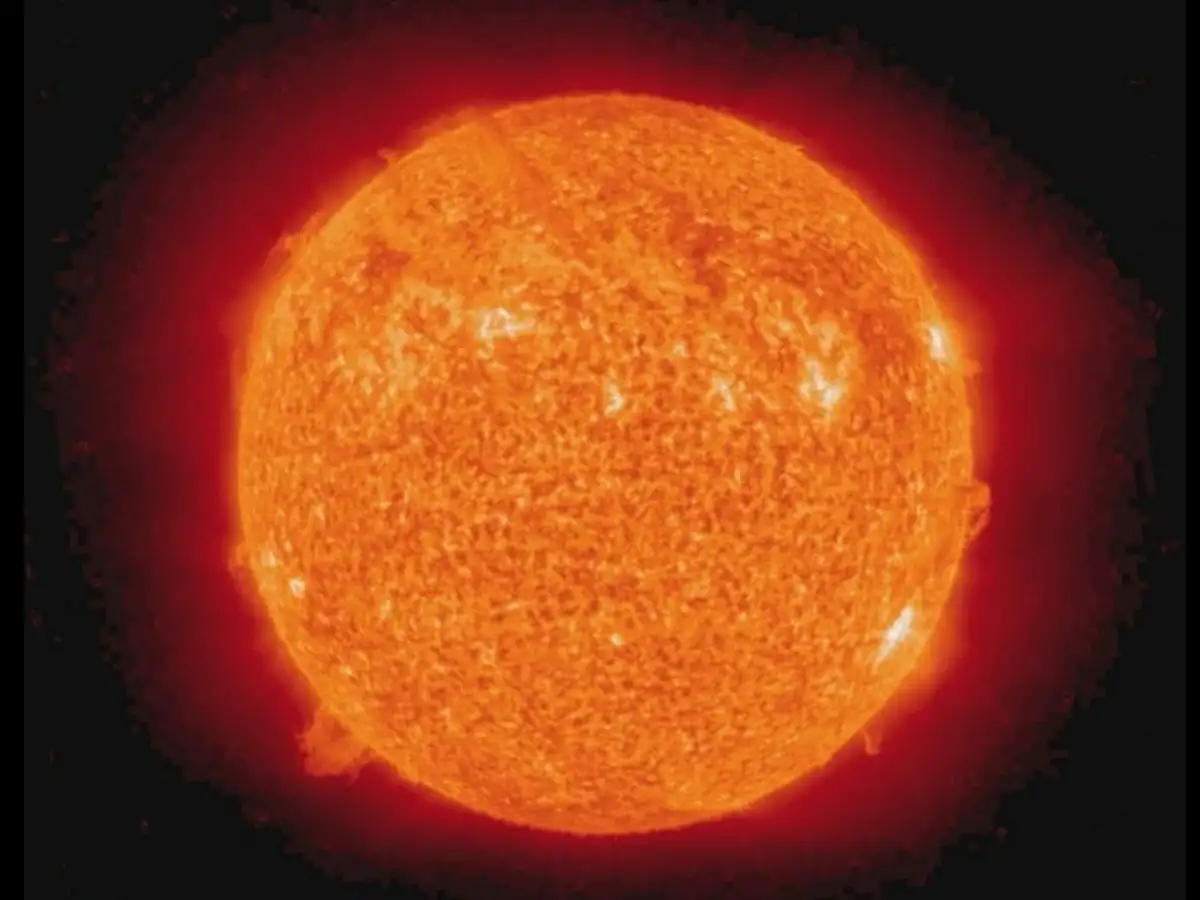
The Sun emits enormous clouds of electrically charged particles and magnetic fields into space. These eruptions, known as coronal mass ejections, can travel millions of miles and, when directed toward Earth, may affect electrical flow, satellites, radio communication transmissions, navigation systems, and even power grids when they reach their destination. Recording these eruptions as they move away from the Sun is an important part of understanding space weather, but tracking them is a slow and demanding task.

To solve this problem, scientists launched Solar Stormwatch, a citizen-science project that invited people to examine pictures taken by NASA’s STEREO twins. Instead of letting machines do the whole job, the citizens have tracked solar eruptions by hand, marking them on various images of STEREO spacecraft. As a result, the Solar Stormwatch research team has prepared more than 16,000 volunteers’ hand-made tracks of over 38,000 solar eruptions. By the end of 2014, scientists gathered a catalog of 144 coronal mass ejections.
Why were people needed?

Although computers correctly recognize several attributes in images of spacecraft, coronal mass ejections acted as a complex and puzzling problem. The ejections often appeared as faint and expanding clouds that changed shapes when they moved through the dimensions of space. Bright stars, background light, and other solar activity could also make them difficult to distinguish.

Solar Stormwatch decided not to burden volunteers with complicated scientific definitions and just gave them a simple task. Participants viewed specially prepared images called J-maps. Every event was traced many times by different volunteers rather than relying on a single observation. Now, each volunteer used a range of points to make a visible path of a phenomenon. Instead of just relying on one observation made by one volunteer, every eruption’s path was observed many times. This process of repeating the same study was extremely significant.

The technique

The project yielded a vast collection of observations. More than 38,000 individual tracks were created as volunteers traced out the eruptions through pictures captured by the Heliospheric Imagers tool aboard the STEREO-A and STEREO-B spacecraft.

Sign up to read this article
Read news from 100's of titles, curated specifically for you.
Already a member? Sign in here
Related Stories
Top stories on inkl right now
One subscription that gives you access to news from hundreds of sites
Already a member? Sign in here
Our Picks
Fourteen days free
Download the app
One app. One membership.
100+ trusted global sources.