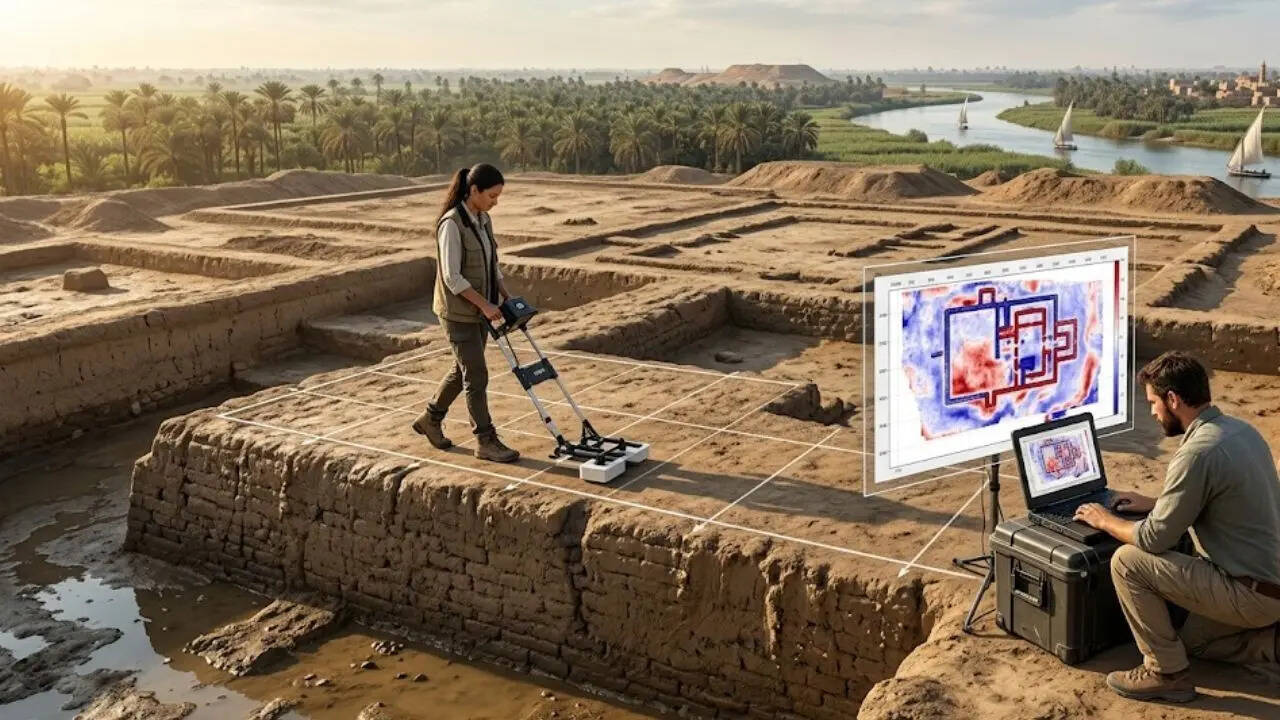
Archaeologists have uncovered a huge mud-brick building, 2,500 years old, that has been buried underneath the silty deposits and waterlogged sediments of the Nile Delta, Egypt, for thousands of years, using non-invasive geophysical methods such as magnetometry and electrical resistivity tomographic techniques. The structure was located as part of a recent archaeological project within Tell el-Balamun by researchers from the Polish Centre of Mediterranean Archaeology and cooperating local authorities. The building dates from the Late Period of Ancient Egyptian history, specifically the 26th Dynasty.
The discovery of this large ancient building is of great archaeological significance, given that most ancient structures are not well preserved in the Delta region due to its exceptionally high water table levels, causing the destruction of almost all archaeological material. Therefore, this very large hidden monumental building provides an unprecedented in situ record of the nature of urban planning and administrative arrangement in the ancient Egyptian Delta at a crucial time in Mediterranean and Egyptian history. Mapping these submerged foundations, researchers are reconstructing the lost geopolitical landscape of the Saite Dynasty's northern administrative hubs.