
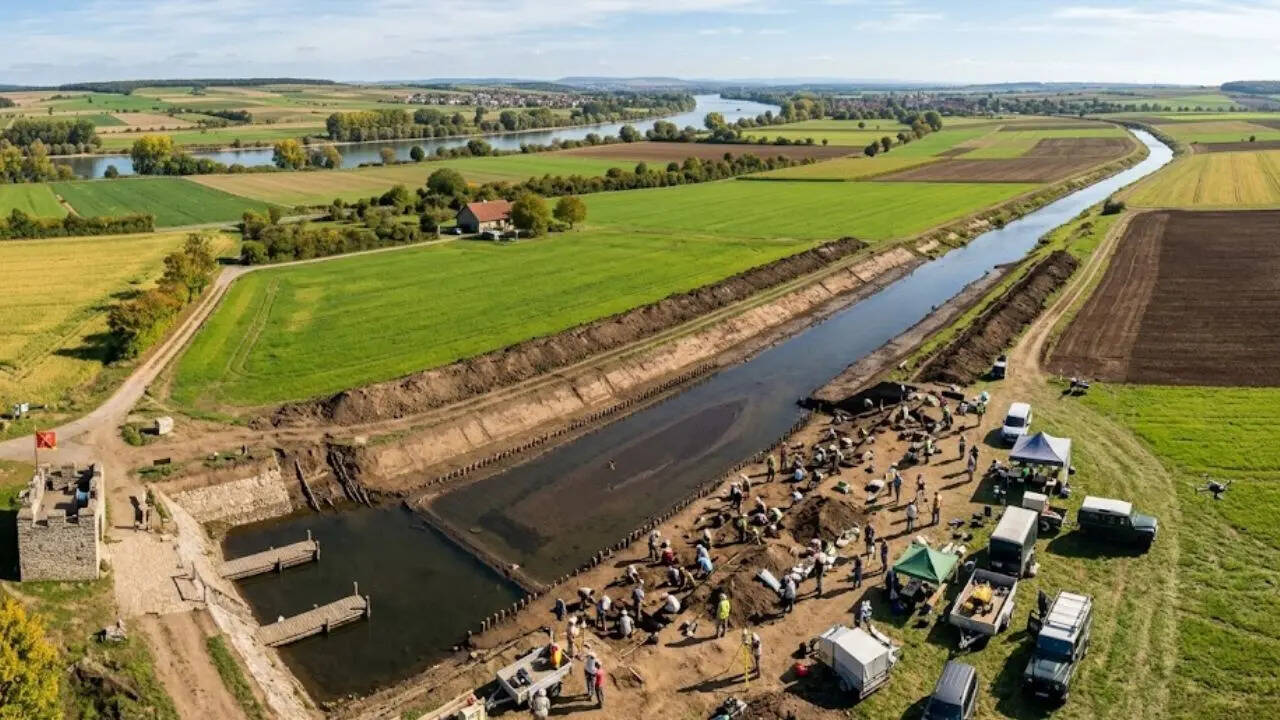
In the German region of Groß-Gerau, archaeologists have discovered a large, engineered canal. Using geophysical remote sensing methods, it has been established that the canal was built in the 4th century during the reign of Emperor Valentinian I. This artificial waterway (15 meters in width) was used as a means of high-speed military logistics moving goods between the Rhine River and the Fortified Landing Station at Trebur-Astheim.
Unlike other Roman ruins, there is evidence to suggest that the canal underwent a final re-excavation for many centuries after the fall of the empire. Such trade routes are thought to have existed into the early Medieval period. This significant discovery will lead to a reexamination of Roman hydraulic engineering practices, as well as military strategy on the frontier of the empire; specifically, the extent to which the empire was able to manipulate the landscape and utilise its advantages. The discovery at Groß-Gerau reveals sophisticated Roman infrastructure, demonstrating how the Empire strategically engineered landscapes to facilitate rapid, long-term military logistics.













