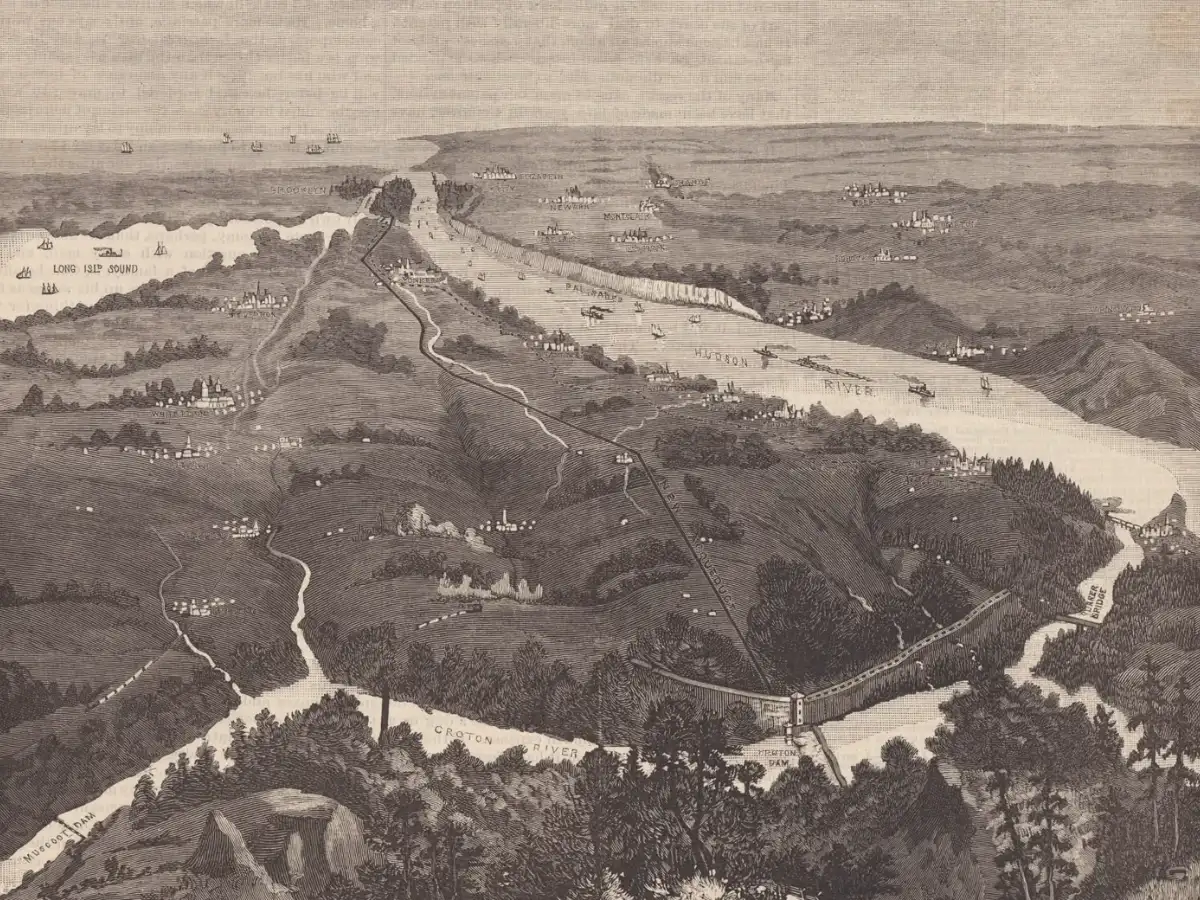
Most people turn on a tap without a second thought. You might have filled a kettle, rinsed a mug, or left the shower on until it got hot. Nothing dramatic happened, which is the point. Clean water on demand is so normalised that we only seem to notice when there isn't any. Early New Yorkers would have found our shrugging difficult to understand. According to a 2023 American Society of Civil Engineers report, written by Leslie Nemo, the city spent roughly its first 217 years only occasionally offering anyone a clean glass of water. The solution was the Old Croton Aqueduct, which opened in 1842. The Friends of the Old Croton Aqueduct note that the 41-mile route was gravity-fed over carefully graded falls of just 13 inches per mile. So, if 1840s New York could manage to do this, why is it so apparently hard to keep the water flowing in modern times?
Fires, fevers and filthy wells