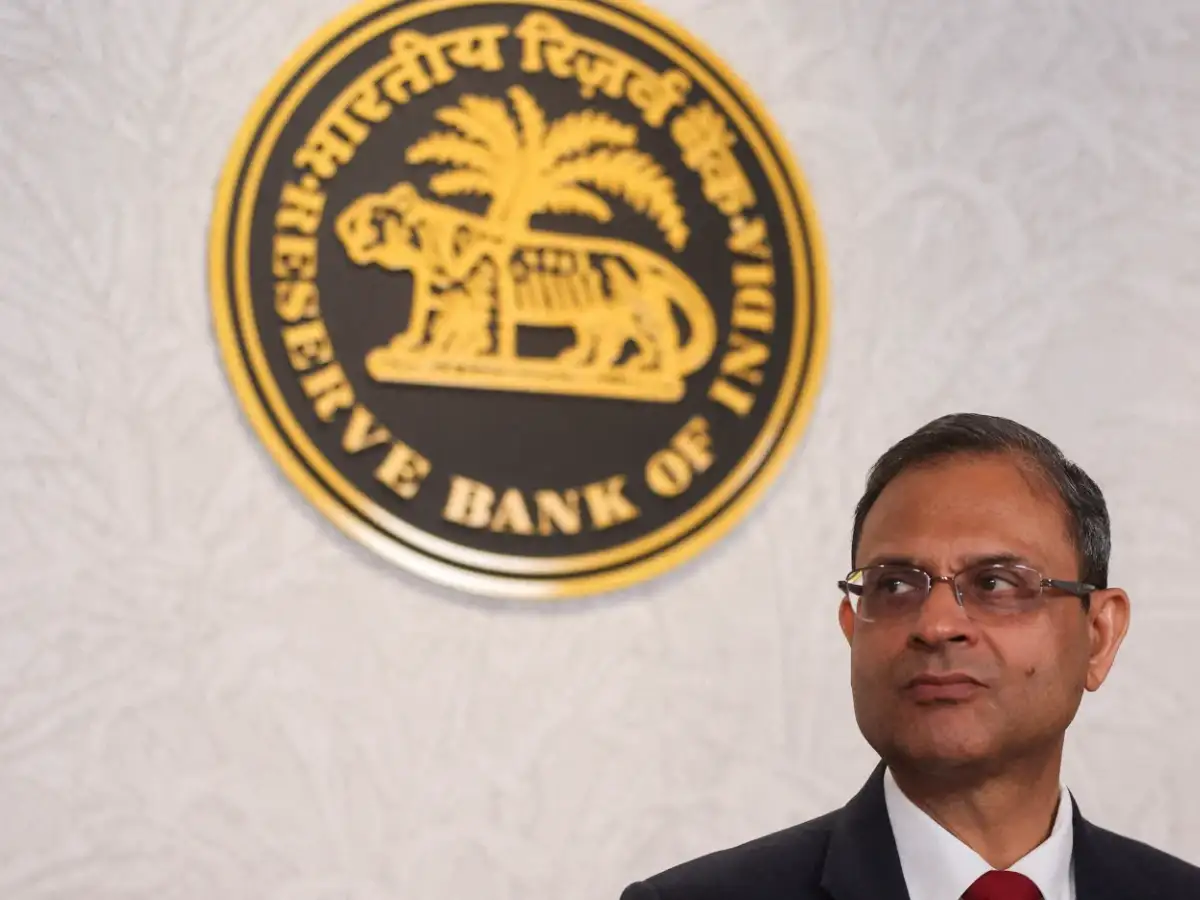
Broadening inflation, resilient economic growth and a growing chorus of global rate hikes are leaving India's central bank with little reason to hold borrowing costs steady at its October policy meeting.
The Reserve Bank of India is facing a markedly different policy backdrop from its August meeting, where it kept the benchmark repo rate at 5.25% for a fourth consecutive bi-monthly review.

Policymakers had said then that they preferred to wait for more evidence of inflationary pressures becoming generalised before moving on rates.
Data now shows that prices for nearly half of India's inflation basket rose by 4% or more year-on-year, up from around a third of the basket in March, signaling that price pressures are seeping into the broader economy.
Abhishek Upadhyay, co-head of research at ICICI Securities Primary Dealership, noted that the RBI "must opt for the prudent course" of a 25-basis-point hike at its October meeting, citing strong growth, widening price pressures, elevated crude prices and an adverse global interest-rate backdrop.
Thirty-eight of 61 economists polled by Reuters - more than 60% - expect the RBI to raise its repo rate by 25 basis points to 5.50% at the end of its October 5-7 meeting.
ROBUST GROWTH EMPHASIZES INFLATION MANDATE
Inflationary pressures have broadened at a time when India's economy expanded nearly 8% in the April-June quarter, giving the central bank room to focus on its inflation mandate without having to fret over the need to support demand.
Bank credit growth rose to more than 19% in July, nearly doubling from a year earlier and pointing to firmer domestic demand.
While easier financial conditions have supported borrowing across sectors, analysis by Barclays suggests that incremental credit is also financing stronger production and investment, and catering to the higher nominal cost of doing business.
GLOBAL HIKES
The global backdrop, too, has become less accommodating, said Krishna Bhimavarapu, APAC economist at State Street Investment Management, adding that "the RBI may find it increasingly difficult to stay on the sidelines".
Central banks in the United States, Japan, Europe, Indonesia, the Philippines, South Korea, among others, have raised borrowing costs since the US-Israeli war on Iran began in late February.
Shrinking interest rate differentials against advanced economies can hurt foreign inflows into Indian debt, especially at a time when equities have also struggled to draw interest.
Indian stocks have lagged behind peers over 2026 as investors fretted over the lack of AI opportunities and the weakening rupee. Overseas investors have yanked nearly $26 billion from local stocks in 2026 so far.
"A modest hiking cycle would help reinforce the inflation-fighting credentials of the RBI, support the rupee and complement the ongoing liquidity absorption efforts," Bhimavarapu said.
Markets are already anticipating a hike, with India's one-year overnight index swap, the closest gauge of interest rate expectations, pricing in 90 bps of hikes over the next 12 months.