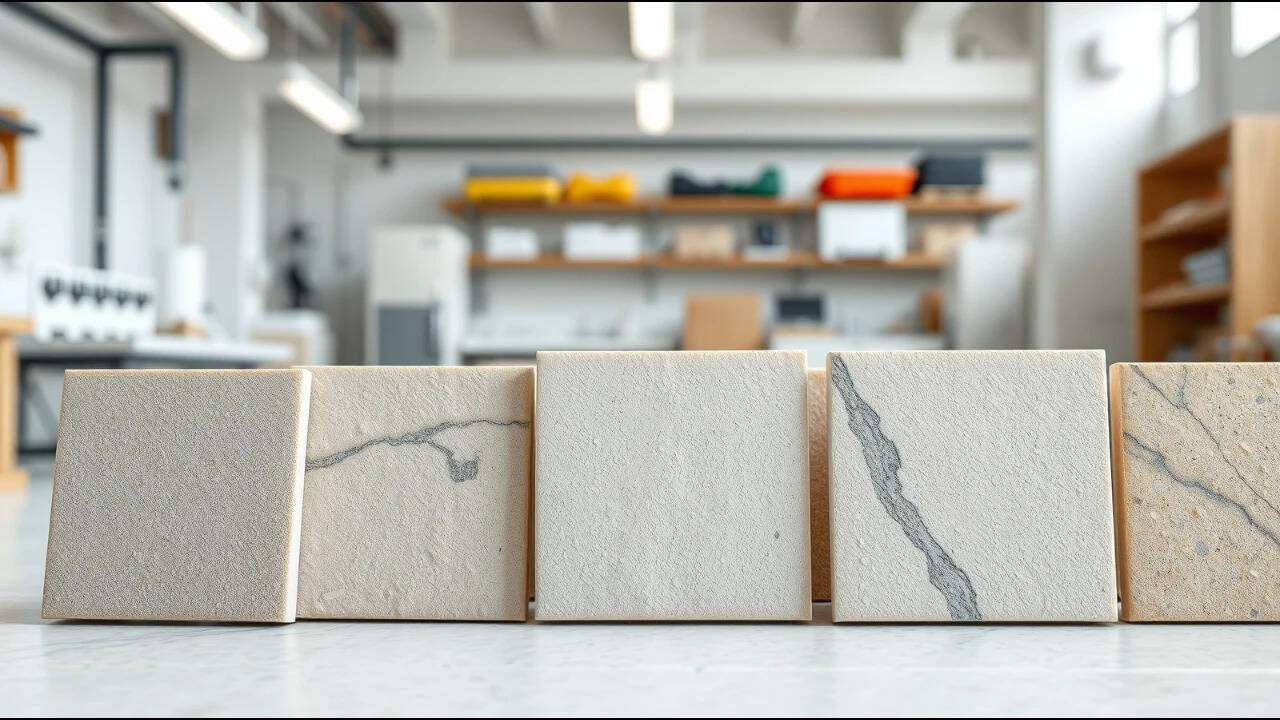
A Manchester-based materials company is developing tiles that avoid the high-temperature kiln firing normally associated with ceramic manufacturing. DeKiln's BioSintering technology uses waste gypsum plaster, a material commonly recovered from plasterboard, together with a bio-based binder to produce its Eralith tiles. DeKiln says the tiles contain more than 95% recycled content and are cured at low temperatures rather than fired in a kiln. The company describes conventional ceramic production as requiring kiln temperatures of roughly 850°C to 1,250°C and says firing and drying account for about 80% of the ceramics industry's emissions. Its current product information states that BioSintering can reduce energy consumption by up to 90% compared with conventional ceramic manufacturing. The technology is still being scaled for industrial production, however, so these environmental figures should be understood as reported comparisons rather than evidence that the process has already replaced conventional tile manufacturing at large scale.
Get breaking news anytime, anywhere. Download the TOI app now!