Throughout history, Britain’s coastlines have been shaped by tides, waves and winds, but severe storms have made new ways of protecting homes and other buildings increasingly urgent.
Get breaking news anytime, anywhere. Download the TOI app now!

One affected area is Thorpeness in Suffolk, where officials are developing a long-term plan with new measures. Due to the rapid erosion of the coastline, people started thinking about how to save their houses in the future. In addition to traditional ways of preventing erosion, offshore breakwaters can be used. This is especially relevant now because part of Thorpeness’s coastline was severely damaged last autumn and winter. As reported by the East Suffolk Council , some emergency measures have already been taken; rock protection was installed in the most vulnerable parts of the coast.
What are offshore breakwaters and how can they help?
An offshore breakwater is a barrier, often built from boulders or concrete, positioned away from the shore. An offshore breakwater acts as a barrier that absorbs wave energy before it reaches the coast. This helps reduce erosion by slowing sediment loss. Eventually, this can lead to an accumulation of sediment behind the breakwater, maintaining the beach and acting as further protection.
The use of similar methods to protect against erosion has been considered worldwide for coastal management projects. Studies in the journal Ocean Engineering have examined how offshore structures affect wave patterns, sediment transport and shoreline behavior, although their effectiveness depends on local conditions such as tidal currents and geology.
According to the Environment Agency of the United Kingdom, defenses should be designed based on specific places since there is no universal solution.
UK shores are facing increased pressure due to storms and climate change
While coastal erosion is nothing new in Britain, climate change is likely to bring added pressure to many low-lying and exposed regions.
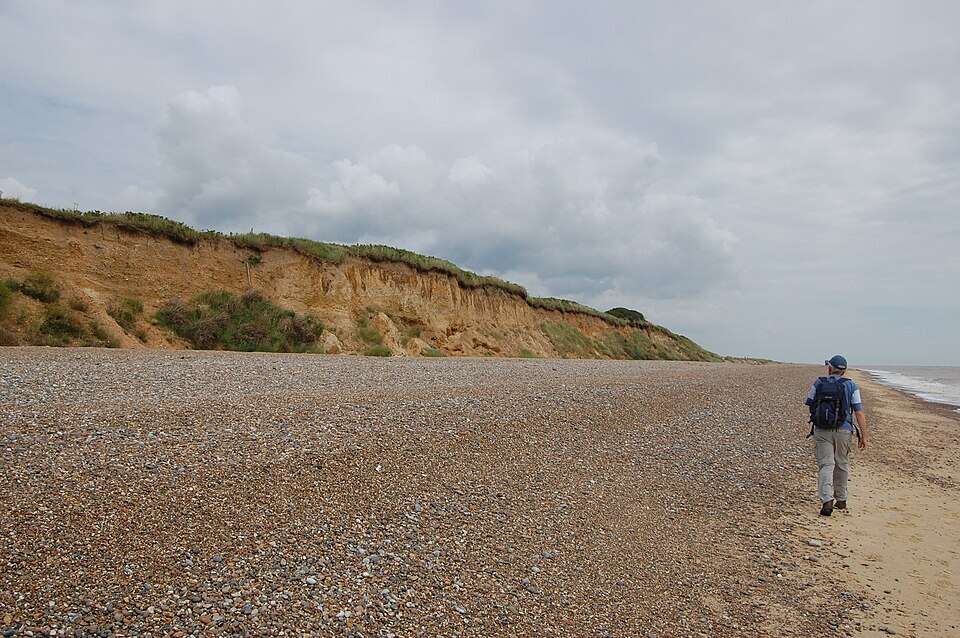
According to the Intergovernmental Panel on Climate Change (IPCC), the rise in sea level and extreme weather events are posing greater risks to coastal settlements around the world. UK coastlines are especially vulnerable because many areas are made up of soft cliffs and sediment that can be easily eroded by wave action. British Geological Survey says that many properties across Britain are threatened by coastal erosion in the coming years.
The eastern part of England, which comprises many coastal towns that exist on soft materials, is highly susceptible to coastal erosion during periods of extreme weather conditions.
Thorpeness adopts community-based efforts for coastal defense
In Thorpeness, residents have already undertaken initiatives to mitigate damage. Rock bags were deployed on a section of coastline between The Headlands, Stella Maris, and Tinkers End. This was achieved through community-based fundraising and grants provided by the East Suffolk Council. Community leaders believe stop-gap measures will not be enough, so the proposed plan will examine risks, including coastal erosion and flooding from the village's boating lake, Thorpeness Meare.
The plan is likely to consider costs, environmental impacts, and potential funding for major initiatives such as breakwaters.
Hard defenses could safeguard coastlines, yet their implementation poses several difficulties
Though breakwaters, seawalls and rock barriers may help protect shorelines, coastal experts caution that any measures should be undertaken with care. According to the reports, it would not always be possible or even beneficial to defend all stretches of the coastline. Managed retreat, in which communities gradually adapt to coastal change, could be considered in some cases.
Coastal defenses can also cause erosion elsewhere by affecting sediment movement. There is a growing preference for a combined approach, including dune restoration, beach replenishment and engineered defenses where they are most effective.
A view into the larger coastal threat to Britain
Thorpeness is one example of a much bigger problem affecting coastal towns across Britain. While some communities are focused on coastal cliffs in Yorkshire, others in Norfolk and Suffolk face difficult decisions about protecting homes while working with natural coastal processes.
If climate change continues to intensify storms and raise sea levels, breakwaters could become an important part of the solution. But until then, coastal towns are left to figure out ways of coping with a changing coast.