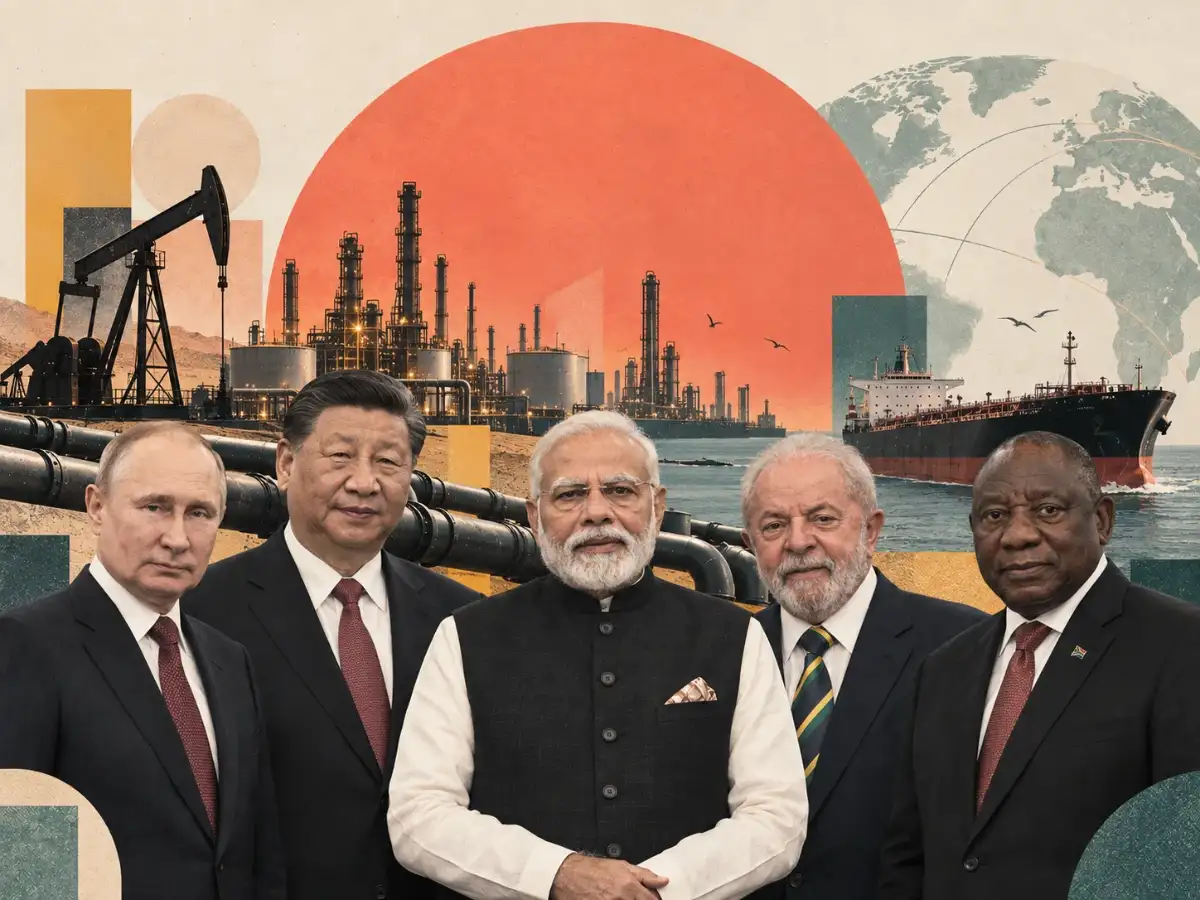
BRICS is emerging as an increasingly important force in global energy markets, bringing together some of the world's largest oil producers and consumers under one grouping. As its leaders gather in New Delhi on September 12 and 13, energy security, the West Asia conflict, and trade are likely to feature prominently in the discussions.
What started as a Wall Street acronym for Brazil, Russia, India and China, with South Africa joining later, has grown into a grouping of 11 countries. Together, they account for around a quarter of global nominal GDP and nearly half of the world's population. They also include some of the world's biggest oil producers — Saudi Arabia, Russia, Iran and the United Arab Emirates (UAE) — alongside major energy consumers such as India and China.