Brent crude rebounded on Monday following U.S. strikes against Iranian forces in the Strait of Hormuz. Concretely, the price of the international benchmark rose by 2.97% at 8:59 a.m. ET on Tuesday, clocking in at $96.20.
The incident took place on Monday, with the U.S. Central Command saying it targeted Iranian forces to protect its troops, but emphasized the ceasefire is still in place.
"Targets included missile launch sites and Iranian boats attempting to emplace mines. U.S. Central Command continues to defend our forces while using restraint during the ongoing ceasefire," said CENTCOM spokesperson Capt. Tim Hawkins in a statement.
Iran's Islamic Revolutionary Guard Corps (IRGC), in turn, said it has the "legitimate" right to respond.
"The Islamic Revolutionary Guard Corps warns against any violation of the ceasefire by the aggressive US military, and considers its right to reciprocal response to be legitimate and certain," the group said in a statement distributed in state-affiliated media.
The revolutionary guard also said it downed a U.S. drone and shot at other aircraft that had entered the country's airspace. It did not specify when the incidents happened.
Negotiations appear to continue in the meantime, and while both sides acknowledged progress had been made, Iranian Foreign Ministry spokesman Esmaeil Baghaei said there are "some issues that we have not yet finalized."
He went on to say that work remains to be done, especially given the "frequent changes in positions and contradictions" from the Trump administration.
"The frequent changes in positions and contradictions, which do not really need me to explain and which you can simply observe by looking at tweets issued by U.S. officials, show what situation we are dealing with and under what conditions we must pursue a diplomatic process with such a counterpart," Baghaei said.
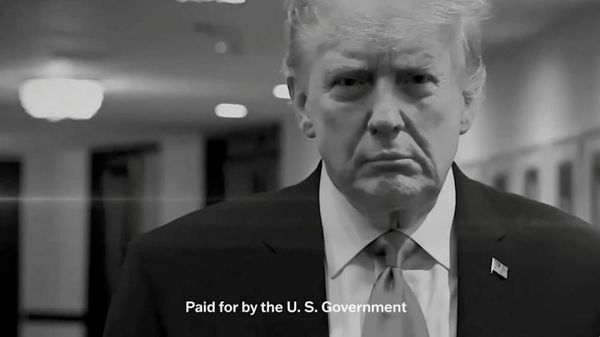
President Donald Trump on Monday linked the agreement with Iran with Arab countries improving their relations with Israel through the Abraham Accords, which his administration brokered in his first term.
"It should be mandatory that all of these Countries, at a minimum, simultaneously, sign onto the Abraham Accords," Trump said in a social media post.
"It may be possible that one or two have a reason for not doing so, and that will be accepted, but most should be ready, willing, and able to make this Settlement with Iran a far more Historic Event than it would, otherwise, be," Trump added.