
Get all your news in one place.
100's of premium titles.
One app.
Start reading
Woman & Home
Woman & Home
Lifestyle
Kat Storr

Breast cancer guidelines ‘miss 95%’ of women under 50 at risk, new study says

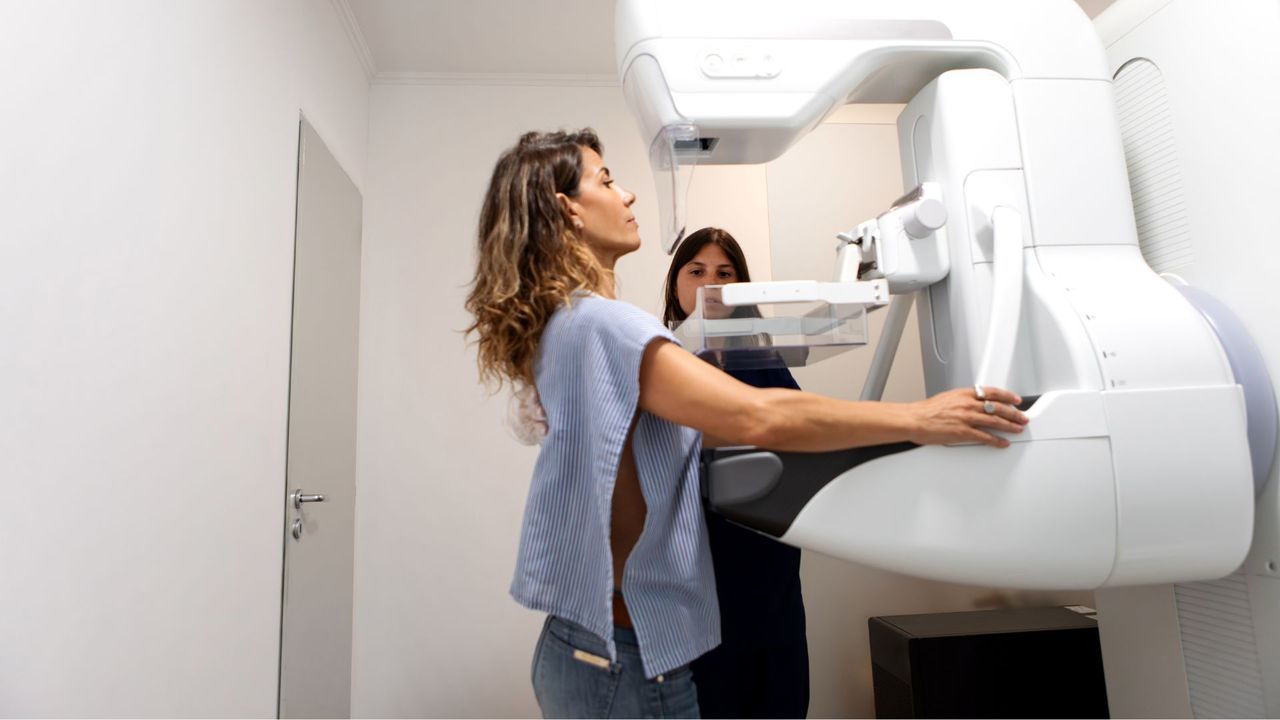
Woman having breast cancer screening .

Breast cancer is a leading cause of death among women under 50 in the UK, but the NHS doesn't offer screenings until age 50.

Under current NICE (National Institute for Health and Care Excellence) guidelines, GPs only consider family history when deciding whether to screen a patient under 50 for the disease.

A recent study has called for this to change. The team from the University of Cambridge and the Institute of Cancer Research (ICR) analysed data from 1,258 women aged under 50 years recruited to the Breast Cancer Now Generations Study between 2004 and 2011.

They compared the results from the NICE criteria to those from a newly developed tool called Boadicea. This tool combines factors such as family history, genes, lifestyle factors and reproductive history. They found that if all women aged under 50 were assessed, 26.5% would be categorised as at a higher risk and referred for more tests. This would include over a third (34.8%) of women under 50 who develop breast cancer within 10 years.

The study, published in the British Journal of Cancer, found that in comparison, the NICE criteria would result in 1.4% of women under 50 being referred for further assessment, including just 4.4% of those women who develop breast cancer.

73% of women under 50 who develop breast cancer within 10 years have no family history of it - the key criterion in the current NICE guidelines.

The team have called for NHS criteria to include other risk factors, such as genes and lifestyle factors, including alcohol intake and body composition. If a high risk is detected early, it can lead to extra monitoring and preventive treatment.

Dr Juliet Usher-Smith from the Department of Public Health and Primary Care, University of Cambridge, the study’s senior author, says: “We need to get better at identifying women at highest risk of breast cancer so that we can intervene early, when there are more options for treating, or even preventing, their disease.

“The current NICE criteria used in general practice are missing up to 95% of women under 50 who will go on to develop breast cancer. It’s time to look again at these criteria in the light of our findings.”

However, the team does recognise that using the Boadicea system on all patients would require a lot more resources and lead to an increase in referrals of women who will not go on to develop the disease.

Professor Montserrat Garcia-Closas from the Institute of Cancer Research says: “There will be a balance to strike: the NICE criteria are much easier to implement, but miss a large proportion of women at elevated risk. But a full risk assessment including genetic testing will place a heavy burden on resources.

“Ultimately, it will be a trade-off between the practical, resource, and cost implications of data collection and risk assessment, and the potential benefits and harms associated with accurate and inaccurate classification of women.”

NICE says it welcomes the findings and recognises the potential of such a risk assessment tool, but adds that the current evidence does not justify a change to its guidelines on breast cancer screening.

Can you request a breast cancer screening?

The NHS only offers screenings for breast cancer for women between 50 and 71. Most are offered one for the first time between 50 and 53, and then they are routine every three years.

If you are over 71, you can ask for screenings to continue as normal, once every three years.

Even if you are eligible for screenings, always speak to your doctor if you spot any unusual symptoms.

If you are under 50, you may be offered a screening if you have any unusual symptoms that may suggest early signs of breast cancer. A new lump, swelling in the armpit, or changes to the breast skin and/or nipple, for example. It's important to speak to your doctor immediately.

Sign up to read this article
Read news from 100's of titles, curated specifically for you.
Already a member? Sign in here
Related Stories
Top stories on inkl right now
One subscription that gives you access to news from hundreds of sites
Already a member? Sign in here
Our Picks
Fourteen days free
Download the app
One app. One membership.
100+ trusted global sources.