Get all your news in one place.
100's of premium titles.
One app.
Start reading
The Economic Times
The Economic Times

'Brahmos on May 10 was a game changer,'

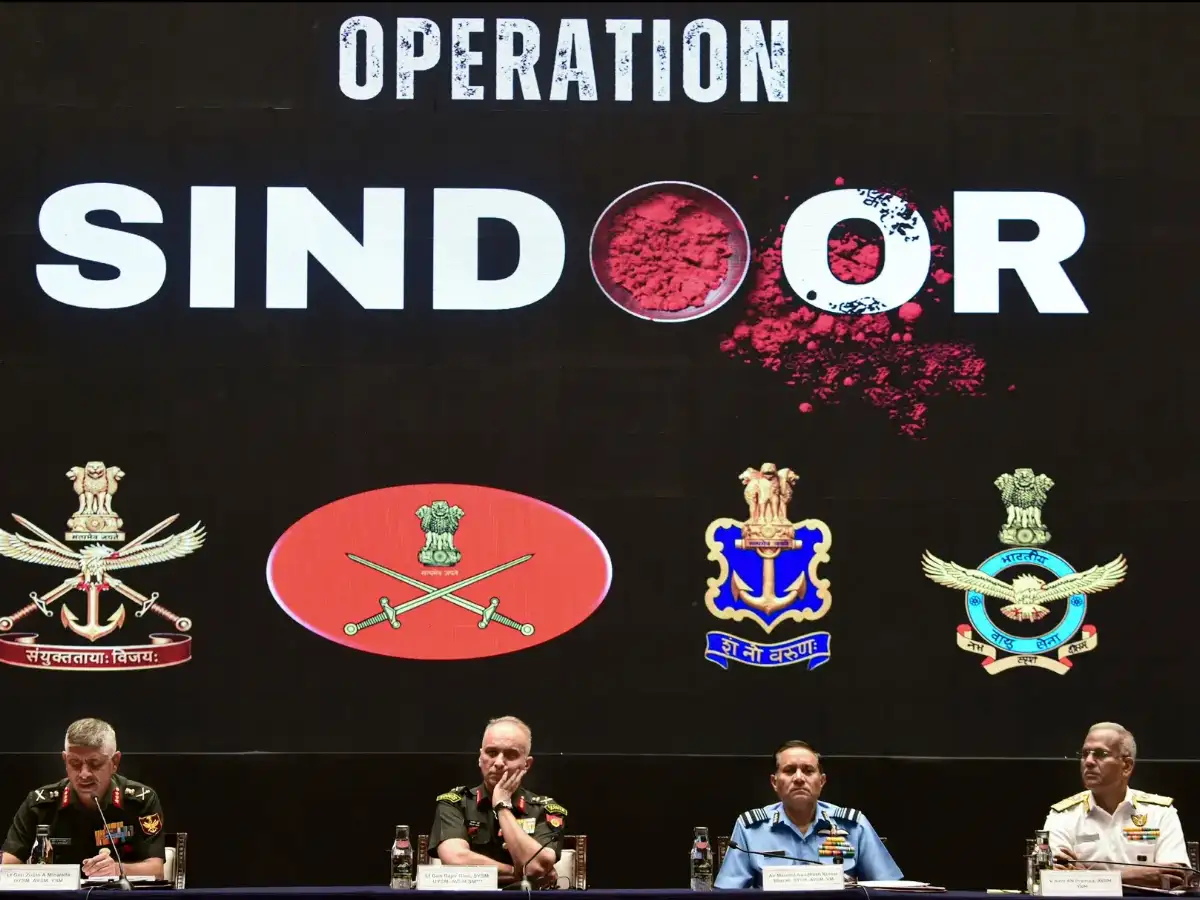
New Delhi: As India marks one year of Operation Sindoor, Air Marshal (Retd) Sanjeev Kapoor, AVSM, VM, on Thursday termed the first anniversary of the operation a "proud milestone" and assessed the operation's lasting impact on India's air power doctrine, regional deterrence, and the push for defence self-reliance.

In an exclusive interview with ANI, calling the operation a proud milestone, Air Marshal Kapoor highlighted that the IAF's standoff strikes on 7 May 2025 demonstrated surgical precision without any collateral damage to civilian infrastructure.

Also read: Powerful symbol of national resolve, preparedness: Rajnath Singh on anniversary of Operation Sindoor

"The domes and structures had just a precise hole, no damage to any civilian property nearby," he said, adding that India demonstrated its prowess as a responsible nation by selectively neutralising only the intended targets.

The turning point, he said, came on the morning of 10 May, when India deployed the BrahMos supersonic cruise missile, indigenously manufactured to strike 11 Pakistani airfields within 45 minutes.

"That was a game-changer. It brought them to the table for a ceasefire. That is the power of the Indian Air Force," he stated.

On deterrence, the former IAF officer was candid. He said that the battle space served as a real-world evaluation ground for Chinese military hardware. "Pakistan's HQ-9 and HQ-16 air defence systems, PL-15 and PL-10 missiles, and the JF-17 fighter fleet, all of Chinese origin, were exposed to live combat conditions. Beijing also provided satellite imagery to Islamabad during the conflict," he said.

Also read: 'Game of chess', 'innings defeat', 'trusted orchestra': How military leaders described Op Sindoor

"The Chinese, Americans, Europeans, and Russians would have evaluated every strike," he said. "Deterrence is a continuous process. The adversary will consolidate and return with more advanced technologies."

Air Marshal Kapoor identified strategic self-reliance as the single most critical takeaway from Operation Sindoor. He noted that DRDO has secured source codes for integrating imported weapons onto indigenous and multi-origin platforms, a capability edge, he believes, India holds over much of the world. He pointed to the AMCA fifth-generation fighter programme and the government's fresh bid for 114 Rafale jets as evidence of this shift in ambition.

Also read: India commemorates first anniversary of Operation Sindoor, marking decisive military action against terror infrastructure

Significantly, he noted that private industry Tata, L&T, and Bharat Forge have been invited to develop the fifth-generation fighter jets prototype, a departure from HAL's traditional monopoly. He also highlighted surging global demand for Indian defence exports, including BrahMos, Akash, Pinaka, and anti-tank guided missiles.

"Many countries are now asking India to export. That change has come after Operation Sindoor India is being looked at as an arms exporter," he concluded.

Sign up to read this article
Read news from 100's of titles, curated specifically for you.
Already a member? Sign in here
Related Stories
Top stories on inkl right now
One subscription that gives you access to news from hundreds of sites
Already a member? Sign in here
Our Picks
Fourteen days free
Download the app
One app. One membership.
100+ trusted global sources.