
Get all your news in one place.
100's of premium titles.
One app.
Start reading
The Economic Times
The Economic Times

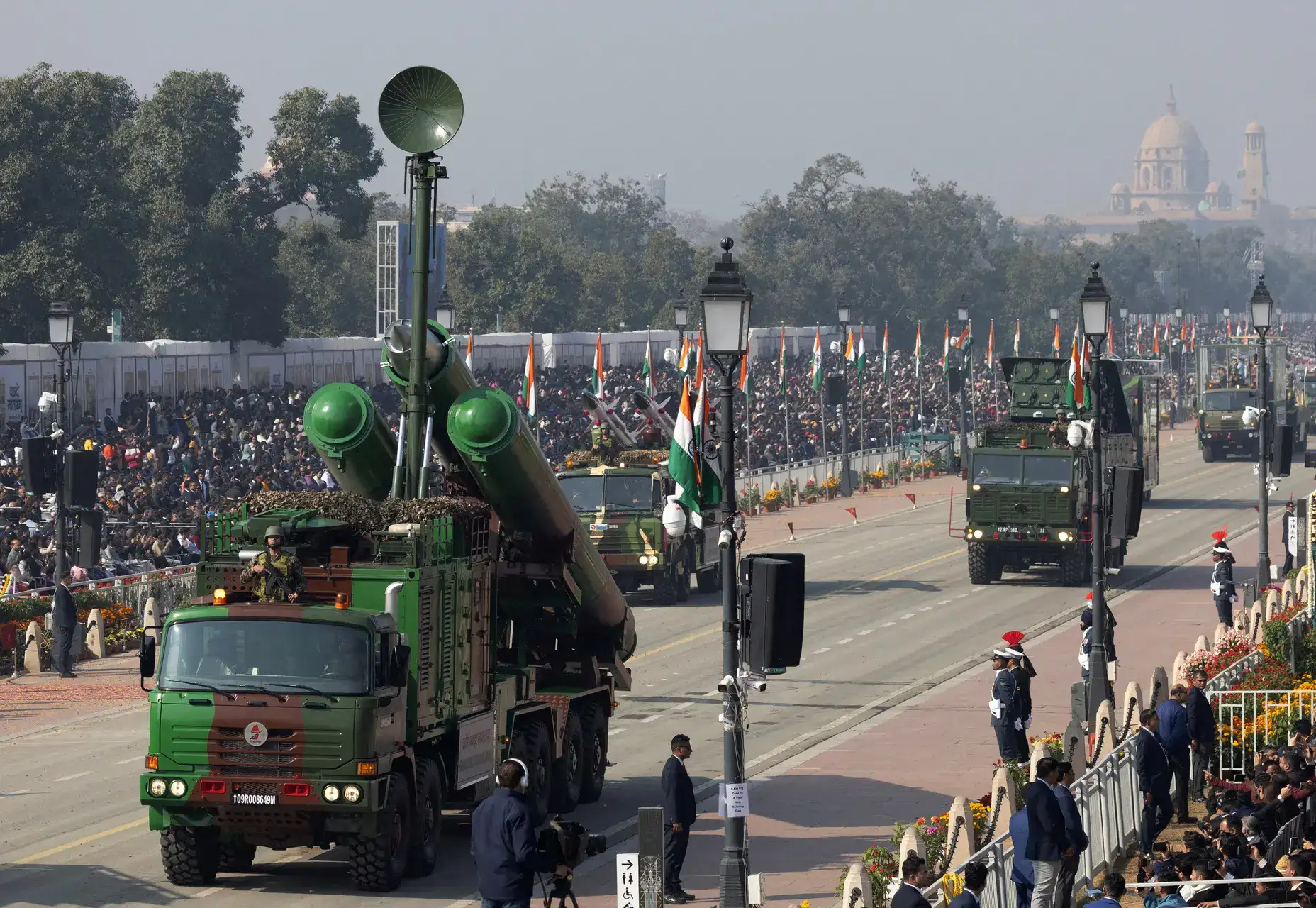
Brahmos gets another customer: One of Middle East's biggest arms importers and top US weapons buyer eyes India's BrahMos and Akashteer systems

India and the United Arab Emirates are engaged in discussions over the possible sale of several Indian defence platforms, including the BrahMos supersonic cruise missile and the Akashteer air defence network, according to a Reuters report citing Indian sources.

If the agreement is finalised, the UAE would become the fourth foreign customer for the BrahMos missile system after the Philippines, Vietnam and Indonesia. Discussions between New Delhi and Abu Dhabi are currently at an early stage but are said to be moving forward quickly as the Gulf nation seeks to strengthen its military capabilities amid heightened regional security concerns.

A source familiar with the matter told Reuters that the UAE has expressed interest in multiple Indian weapon systems, including BrahMos and Akashteer, and that negotiations are progressing rapidly.

Neither Indian officials nor the UAE foreign ministry responded to Reuters' requests for comment.

Also Read: India's submarine hunters: Why the Navy is pushing for more helicopters and P-8I aircraft

Akashteer also part of negotiations

According to Reuters, the discussions include the potential export of Akashteer, India's indigenous automated air defence command and control system developed by the Indian Army and Bharat Electronics Limited.

The system is designed to coordinate and manage air defence operations and has become a key component of India's layered air defence architecture.

BrahMos: World's fastest operational supersonic cruise missile

Jointly developed by India and Russia, BrahMos is regarded as the world's fastest operational supersonic cruise missile. The missile has an operational range of 290 to 800 kilometres and can travel at speeds of up to Mach 3, approximately three times the speed of sound.

BrahMos can be launched from land, sea, air and submarine platforms, providing flexibility across multiple combat environments. It is designed to carry a conventional warhead weighing up to 300 kilograms and is capable of conducting precision strikes against both land-based and naval targets.

The missile has emerged as one of India's most successful defence exports, with the Philippines, Vietnam and Indonesia becoming foreign customers.

Before any export to the UAE can proceed, India would require Russia's approval because of the joint development arrangement. One source told Reuters that Moscow's close relationship with Abu Dhabi is unlikely to pose an obstacle to the proposed deal.

Countries that have bought BrahMos

Vietnam signed a contract for the missile system in May 2026 in a deal valued at approximately $629 million. The agreement included coastal defence batteries, missiles, training and logistics support.

Indonesia reached an agreement for BrahMos in March 2026, with the deal valued between $350 million and $450 million. The acquisition was aimed at strengthening maritime security and protecting critical sea routes across the archipelago.

According to Reuters, countries including Thailand, South Africa, Brazil and Chile have also shown interest in acquiring the missile system.

Akashteer: Indigenous air defence command and control network

Akashteer is an indigenous automated air defence command and control system developed by the Defence Research and Development Organisation (DRDO) and Bharat Electronics Limited (BEL).

The medium-range surface-to-air system has an interception range of up to 45 kilometres and is designed to counter fighter aircraft, helicopters, drones and cruise missiles. It can track and engage multiple aerial threats simultaneously through an integrated network.

The system is equipped with the Rajendra phased-array radar and features a highly mobile design that allows deployment alongside Army and Air Force formations. Akashteer has also demonstrated its operational capabilities during Operation Sindoor.

UAE seeks greater defence diversification

The UAE's interest in Indian defence equipment comes as Gulf nations reassess their security requirements following recent conflicts in the region. Reuters reported that Abu Dhabi is also focused on enhancing security around the Strait of Hormuz, one of the world's most important maritime routes for energy exports.

Pearl Pandya, South Asia senior analyst at Armed Conflict Location & Event Data (ACLED), told Reuters that the move reflects the UAE's broader strategy of diversifying its defence procurement sources.

"A diversified supplier base gives the UAE more strategic autonomy, and closer ties with India have the added benefit of not antagonising the US as the countries remain allies," she said.

Akashteer strengthens India's air defence capabilities

Akashteer is an indigenous air defence system developed by the Defence Research and Development Organisation (DRDO) and Bharat Electronics Limited. It is a medium-range surface-to-air system with an interception range of up to 45 kilometres.

The platform is designed to engage fighter aircraft, helicopters, drones and cruise missiles while simultaneously tracking multiple targets. It is equipped with the Rajendra phased-array radar and is built for high mobility to support both Army and Air Force operations.

The system also demonstrated its operational capabilities during Operation Sindoor against Pakistan.

Defence cooperation deepens as exports rise

According to Reuters, the discussions highlight the growing strategic partnership between India and the UAE, which has expanded cooperation across trade, energy and defence sectors in recent years. Indian officials also view the talks as part of a wider effort to strengthen engagement with Gulf nations amid changing regional dynamics.

The potential deal comes against the backdrop of a sharp rise in India's defence exports. Government figures cited by Reuters showed that defence exports exceeded $4 billion in the financial year ending March 2026, compared with $7.26 million in 2013-14.

Reuters also reported that India's successful operational deployment of the BrahMos missile during last year's conflict with Pakistan contributed to increased international interest in the system.

The Philippines became the first international buyer of the BrahMos system after signing a deal worth nearly $375 million in January 2022. The first batch was officially delivered on April 19, 2024. The package included coastal defence batteries, missiles, operational training and logistical support.
Sign up to read this article
Read news from 100's of titles, curated specifically for you.
Already a member? Sign in here
Related Stories
Top stories on inkl right now
One subscription that gives you access to news from hundreds of sites
Already a member? Sign in here
Our Picks
Fourteen days free
Download the app
One app. One membership.
100+ trusted global sources.


