Get all your news in one place.
100's of premium titles.
One app.
Start reading
Louder
Louder
Entertainment
Mark Blake

"Bonzo picked George Harrison up and launched him into the swimming pool. He said it was the greatest night of his life!" How Led Zeppelin seized control of the industry and became the biggest rock band on the planet

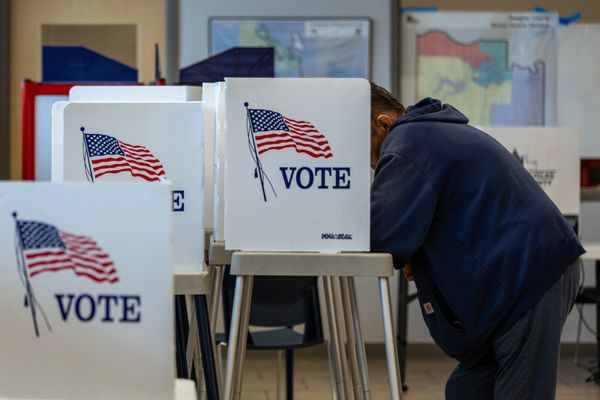
Led Zeppelin onstage at Kezar Stadium, San Francisco, CA. June 2, 1973.

'California sunshine, sweet Calcutta rain,' Robert Plant implored in the song The Song Remains The Same. This lyric summates Led Zeppelin’s journey – geographically, musically and emotionally – between February 1972 and July 1973. This was Zeppelin’s most imperial phase, as all the hard road toil and studio work of the previous three years finally paid off.

From Australia to India, to Japan, to Europe and the UK, and back around the USA, twice, Zeppelin survived failed drug busts, a sceptical music press, a showboating Rolling Stones, a mysterious robbery and no end of Dionysian excess to play some of their greatest ever live shows and become, officially, the biggest rock’n’roll band in the world.
Cast of Characters
  • Jimmy Page: Guitarist, bandleader
  • Robert Plant: Vocalist, harmonica player, frontman
  • John Paul Jones: Bassist, keyboard player, arranger
  • John ‘Bonzo’ Bonham: Drummer (died 1980)
  • Peter Grant: Band manager and protector (died 1995)
  • Richard Cole: Tour manager (died 2021)
  • Eddie Kramer: Engineer on Houses Of The Holy
  • Phil Carson: Former Senior VP at Atlantic Records
  • Danny Goldberg: Zeppelin PR-turned-Nirvana manager
  • Aubrey ‘Po’ Powell: Former partner in art house Hipgnosis
  • Cameron Crowe: Rolling Stone writer-turned -film director
  • Michael Des Barres: Led Zeppelin familiar, musician, actor
  • Lisa Robinson: US journalist and author
  • Nick Kent: Former NME journalist

Peter Grant: Jimmy is ‘Led Wallet’ because he’s always got a heavy wallet and it stays in his pocket. Robert has a farm and lives on it with his goats. John [Bonham] is happy so long as he’s got a pint of bitter. And John Paul Jones is the antithesis of a pop star. He only comes out when there’s a concert to play or an album to make.

Jimmy Page: Astrologically it’s very powerful indeed. Robert’s the perfect frontman, a Leo, John Paul Jones and I are stoic Capricorns, and Bonzo’s a Gemini.

Peter Grant: Warners had a deal with Air India and [in February 1972] we got a round-the-world trip for five hundred quid.

Robert Plant: In Perth [at Subiaco Oval] there were people coming over the fences, and people phoning the Mayor saying: “This is too much.” There were eight thousand inside and four thousand outside. The police over here haven’t really found ways of sorting these situations.

Richard Cole: After the gig in Perth I heard a loud banging on my hotel door. A bunch of cops stormed in, looking under the bed, the mattress, in the dresser, all through my luggage. The police left as quickly as they’d arrived, without an apology. Pagey said: “If they’d waited a day or two we might have had something.”

Jimmy Page: On the plane from Australia, we had to break the journey for refuelling. I had worked out a situation where Robert and I would go into a studio [EMI Studios in Mumbai] with classically trained musicians, what we would now call Bollywood musicians. I wanted to see if it was possible to go in with a guitar and an interpreter and make something happen.

Richard Cole: Jimmy brought with him a Stellavox quadraphonic field recorder, several generations more sophisticated than anything the Indians had ever seen.

Jimmy Page: I had a translator, and we went in there and said: “This is what I want to do”, and I started playing Friends [from Led Zeppelin III]. It was 1972, they didn’t know Led Zeppelin, and they were immersed in their own world. But Friends was written around the idea of Indian music. I just about managed to explain it to them. Then we did Four Sticks [from Led Zeppelin IV] and they did things in odd times and multiple beats. As far as I was concerned I was in paradise. I’d gone in to do something that seemed impossible, and I’d done it.

Robert Plant: One of the greatest moments was when the Indian orchestra applauded me because they thought I was a good singer. It’s really inspiring when you play with a bunch of people from another musical corner and they really get off on you.

Peter Grant: They were expanding their horizons. Robert wanted to be a rock god now, and would pose around the hotel with his dhoti on.

In March 1972, Zeppelin and engineer Eddie Kramer checked into Stargroves, Mick Jagger’s Berkshire mansion, to work on their fifth album, Houses Of The Holy. Further sessions took place at studios including New York’s Electric Lady in summer ’72, by which time Grant had pulled off an extraordinary coup: demanding that US promoters split the proceeds of all ticket sales 90/10 in the band’s favour (it was previously 60/40), shifting the balance of power and changing the music industry for ever.

However, while Zeppelin were performing to their biggest US audiences yet (as heard on 2003’s live How The West Was Won), the press preferred to write about the Rolling Stones. And Houses Of The Holy was critically delayed after major issues with the artwork.


Jimmy Page: I’d been to Stargroves before. The Who were rehearsing there and I popped in to say hello. I was looking for places after the Headley Grange experience [where they’d recorded the fourth album]. I thought this would be a good thing to do again because it’s fun, and these rooms are so good for making the instruments breathe.

Eddie Kramer: Stargroves was a nice mansion, and we had the Stones’ mobile recording studio parked outside. There was a marvellous vibe to everything.

Robert Plant: I don’t really think Zeppelin was ever complacent, but by the time we got to Houses Of The Holy there was a conscientious air about Jimmy’s work.

Jimmy Page: We were recording The Song Remains The Same, The Rain Song, D’Yer Mak’er, The Rover and a few others. Every track was supposed to sound different. The Song Remains The Same started as an instrumental. Then Robert had different ideas. He said: “This is pretty good. Better get some lyrics – quick!”

(Image credit: Michael Putland/Getty Images)

John Paul Jones: I knew instantly that No Quarter was a very durable piece, and something we could take on the road and expand. D’Yer Mak’er is not my favourite song personally. It got into a reggae rhythm, and we put it down, but I wasn’t happy with the way it turned out.

Jimmy Page: You can’t dismiss No Quarter or The Rain Song. Maybe you could attack The Crunge or D’Yer Mak’er for being a bit self-indulgent, but they’re just a giggle.

Robert Plant: We always intended to try to create a spectrum of music that captures as many aspects of us as we could. So we can take it down with a song like The Rain Song, which ebbs and flows.

Peter Grant: When [pre-Zeppelin] I was on tour with, say, Little Richard, the promoters were making more money than the acts. That always went against my grain.

Phil Carson: Peter Grant got friendly with an attorney in New York called Steve Weiss. Steve had been his adversary in the sixties, but Peter was impressed and thought: “If I ever need a lawyer…” It’s my understanding ninety/ten was Steve’s idea, but Peter made it happen on the next US tour.

Peter Grant: Ten per cent of Led Zeppelin was better than nothing. They took the deal.

Jimmy Page: Peter didn’t like the promoters, but he could have done whatever he wanted because Zeppelin had exploded by that point.

Phil Carson: How Zeppelin worked was Peter would agree stuff with Jimmy then tell the rest of the band. Nobody gave them any argument because the others had never seen money like it before.

(Image credit: Globe Photos/Shutterstock)

Jimmy Page: Each member of the band was playing at their best during those 1972 performances, and when the four of us were playing we combined to make it a fifth element.

Peter Grant: I cannot describe that feeling when the house lights went down, and you felt the rush from the audience, and the band hadn’t even walked out. That rush was fantastic.

Robert Plant: Something has really happened this time. Something has really clicked. The spirit within the band is just fantastic. They’d never believe how good it is back home.

Richard Cole: The thing is, the Stones were touring at the same time, and getting all the press because they had all these society people backstage. Don’t forget, before Bruce Springsteen, Led Zeppelin were the working man’s band. In America that was their following.

John Bonham: It’s the Stones this, the Stones that! Kids in England didn’t even know we were touring the States.

Nick Kent: Keith Richards once described Plant and Bonham as “a couple of clueless Ernies from the Midlands”.

Robert Plant: We had always led a very cloistered existence in Zeppelin. A lot of people avoided us like the plague. It was only the Stones that we had anything to do with, because we used to take the piss out of everybody else.

Jimmy Page, Peter Grant and Robert Plant at Hardrock Concert Theatre in Manchester, UK, December 1972 (Image credit: Camera Press/Heilemann)

Richard Cole: When we went home for the UK dates [in October 1972], the band decided to talk more to the press. They never liked the press. Chris Welch at the Melody Maker was considered alright, but there weren’t many others. But they’d hired a publicist who’d worked with Marc Bolan, called BP Fallon.

Nick Kent: John Bonham ripped [the group’s first publicist] Bill Harry’s trousers off in the Coach And Horses pub in London’s West End. His replacement was BP Fallon, a sort of glam-rock leprechaun given to talking in quaint hippie riddles.

Peter Grant: I remember ‘Beep’ on that UK tour. We played at [Glasgow’s] Green’s Playhouse. ‘Beep’ had the make-up and the glitter on and managed to get himself a good kicking outside the gig.

Aubrey ‘Po’ Powell: One day in early 1972 the phone rang in the Hipgnosis office and it was Jimmy Page. He’d seen the cover for Wishbone Ash’s Argus, a soldier standing in a misty glen with a flying saucer overheard. Sounds corny, but it was beautiful. Jimmy said he was interested in us designing a cover for their album Houses Of The Holy.

Jimmy Page: I’d never heard the Wishbone Ash album, but it looked like a Viking on the cover, and there was a lot of Viking-ology going on at the time.

Aubrey ‘Po’ Powell: We arranged to meet in Peter Grant’s office in Oxford Street. We laid a few ideas out, and everybody picked one based on the end of Arthur C Clarke’s Childhood End, where the world’s children disappear up into the sky in a ball of flame. We suggested a naked nuclear family crawling up some rocks and being led to safety by an alien, which we could shoot at the Giants Causeway in Northern Ireland.

Jimmy Page: That’s not how I remember it. I remember a presentation at Peter Grant’s office. I’d sent a tape of Houses Of The Holy to Hipgnosis so they could listen and be inspired. Storm Thorgerson, the other half of Hipgnosis, came in to show me his ideas. One had an electric green tennis court with a net and a racquet. I said: “What’s this? Storm replied: “It’s a racquet… Get it? A racket?” I said: “Hang on, are you saying our music’s a racket?” And Storm said: “Yes.” “No, no, no…” I said: “Get the other guy.” Po came in, and he had the idea of going to the Giants Causeway.

Robert Plant and the group's road manager, Richard Cole, discuss details of their upcoming show at Madison Square Garden Concert in New York City, July 1973. (Image credit: Express Newspapers/Getty Images)

Aubrey Powell: I’m sure the picture of the tennis racquet happened later, which is why Hipgnosis didn’t get asked to do Physical Graffiti. But I arranged the Houses Of The Holy cover shoot. It poured with rain, and we had to cover these poor children with spray paint. In the end we abandoned the idea of the family, and just collaged together a picture of the children climbing over the Giants Causeway which we later had hand tinted. So it was a different image from the one we’d sold to Led Zeppelin.

I had Peter ringing every day – “Where’s our fucking cover, Po?” In the end he told me he and Jimmy were getting the train to London after a gig and I was to meet them outside St Pancras station with the artwork, “or else”. I turned up with it in the boot of my Mini Cooper.

Jimmy Page: Po opened the boot, and we all went: “Oh wow, this looks so beautiful.”

Aubrey ‘Po’ Powell: Zeppelin then paid for me to fly to New York and show the artwork to [Atlantic Records boss] Ahmet Ertegun and tell him what we wanted from the printers. But I didn’t think the printers were giving it a hundred per cent, stormed out, drove to the airport and phoned Steve Weiss. Then Peter called Ahmet and informed him he wouldn’t be getting the new Zeppelin album until the artwork was done properly. I went back the next day and they’d printed it beautifully.

Jimmy Page: Hipgnosis took as much pride in what they did as Led Zeppelin.

Aubrey ‘Po’ Powell: I realised then that if Peter and Led Zeppelin trusted you, they’d give you their unequivocal support.

Houses Of The Holy was finally released in March 1973. It went to No.1 in the UK and US but received mixed reviews. By then Led Zeppelin were back on the road, including a $4million-grossing US tour. Here, they zoomed between cities by private jet, smashed The Beatles’ previous box office record, and turned Los Angeles into their own decadent private playground.

Meanwhile, some of the staff at their label, Atlantic, were convinced that Page (who owned occultist and writer Aleister Crowley’s old property, Boleskine House, near Loch Ness in Scotland) was dabbling in the dark arts.


Jimmy Page: I do not worship the devil, but I feel Aleister Crowley is a misunderstood genius.

Michael Des Barres: I was into that whole Crowley thing, until I woke up and realised that he was a lonely old dickhead who lived on boiled eggs and heroin and died in Hastings. It was absurd, but not at the time.

Peter Grant: Jimmy was interested in black magic, but it got out of hand. One day [Atlantic Records partner and music producer] Jerry Wexler got these sort of tarot cards in the post, and people thought it was a black magic hex from Jimmy. It turned out to be promotional ideas for a new Ginger Baker album.

Aubrey ‘Po’ Powell: Jimmy created an atmosphere of mystery around him in a very clever way. He was a highly intelligent, bright man, and we had some stimulating conversations, about everything from Egyptian art to the history of Nazi Germany.

Disc & Music Echo review: “On Houses of The Holy both Robert Plant and Jimmy Page are strangely sluggish and vacant, exploding only occasionally on tracks like The Rain Song, Over The Hills And Far Away and Dancing Days.”

Robert Plant: Our albums were always construed as being very off-the-wall. If we’d just carried on churning out riffs, we’d have ended up becoming… oh, Black Purple or Deep Sabbath.

Eddie Kramer: There were several songs from the sessions that were left off Houses Of The Holy and appeared on the follow-up album, Physical Graffiti. Was I surprised? Yes, but that was Page’s perverse way of doing things. You’d be like: “Why?” Then you listen to the finished album and it all seemed to fall into place.

Jimmy Page: How people should approach our albums is to forget they’ve ever heard of a band called Led Zeppelin, forget about what they expect to hear and just listen to what’s on the record.

Robert Plant onstage at the Seattle Coliseum, June 1972 (Image credit: Robert Knight Archive/Redferns/Getty Images)

John Paul Jones: By the time you get to 1973 we’re into our full-blown American phase.

Peter Grant: We had a nine-seater Falcon jet, a tremendous plane. We used to fly to every gig, into the limo, police escort, do the gig, do the encore, and then, no changing – bang! – to the plane.

Richard Cole: The Falcon was too small. And it was supposed to have ‘Led Zeppelin’ painted on the side. But the lettering was stuck on, and blew away after we took off. So for the 1973 tour I rented us a Boeing 720B jet, called ‘The Starship’. Thirty thousand dollars for three weeks.

Lisa Robinson: The walls were orange and red, there were circular velvet couches, a mirror-covered bar, a non-functioning fireplace, and a white fake-fur-covered bed in the back bedroom.

Jimmy Page: It was a proper, grown-up plane. We didn’t have to bend our heads to go in. Yes, I did have first use of the bed, because in those days I rather liked the idea of a horizontal take-off.

John Paul Jones: It made touring a lot easier because you stayed in the same hotels. The bases were New York, Los Angeles, Chicago and New Orleans, and from there every plane ride was around half an hour.

Richard Cole: We had a couple of stewardesses, Suzie and Bianca. We didn’t fuck around with them, because they wouldn’t stand for it.

Jimmy Page: We always seemed to play better when we were in the States. We were cocky, we’d show off – and it was fantastic.

Lisa Robinson: Jimmy wore velvet suits embroidered with moons and stars and all sorts of symbolic astrological nonsense. He looked angelic. He wasn’t.

Michael Des Barres: LA was their playground. They were the ultimate rock stars, so every girl down the Rainbow [Bar & Grill] wanted to be with the golden god or the dark lord, while Bonzo would just beat everyone up or stand on the table top and bellow like King Kong. Really, it was just working-class guys who played the blues really loud, looked beautiful and had long curls and no underwear. I think no underwear is the key to their success.

Jimmy Page: By 1973 we were the biggest unknown band in the world.

Jimmy Page (Image credit: Robert Knight Archive/Redferns)

Robert Plant: So we thought it was time people heard something about us other than that we were eating women and throwing the bones out the window.

Danny Goldberg: I was a twenty-two-year-old writer who wasn’t making a living, so I took a job with Solters, Sabinson, Roskin, the New York PR company who looked after Frank Sinatra. My boss asked if I wanted to do PR for Led Zeppelin. Peter Grant and the group were kind to me. I was younger and not one of the suits.

Richard Cole: The band took an immediate liking to Danny. His hair was longer than any of ours, and we nicknamed him Goldilocks.

Danny Goldberg: There were nicknames for everyone and everything – ‘Jonesy’, ‘Pagey’, ‘Bonzo’, ‘Percy’ for Robert, Peter Grant was known as ‘G’, and cocaine as ‘Charlie’. Peter and John Bonham thought it amusing to grab people, including myself, by the balls and ask: “’Ow’s yer knob?” It was terrifying being in the back of a limo with Peter, because when the car turned right you’d have three hundred pounds crushing you. He used to do it on purpose of course.

Richard Cole: We also bought in our own security. Bill Dautrich had been a cop in Philadelphia and had connections. Bill planned the band’s exit after the last song, and said it should never take more than a minute from the stage to the limousine. We often had it down to thirty seconds.

Jimmy Page: That tour began outdoors in Atlanta, then Tampa Stadium, both on massive scales. At Tampa [on May 5], we broke The Beatles’ Shea Stadium record [55,600], which was a big deal at the time [with 56,800 tickets sold].

Phil Carson: I will never ever forget the reaction when they came on stage at Tampa. It was just mind-blowing.

John Bonham (Image credit: Robert Knight Archive/Redferns)

Peter Grant: For Bonzo’s birthday party we hired a programme director’s house in the Hollywood Hills. We ended up putting in new carpets for him.

Robert Plant: Lots of luminaries arrived at this house after we’d played the LA Forum – George Harrison, Roy Harper, Keith Moon…

Peter Grant: [Singer] PJ Proby’s mate [LA scenester] ‘Bongo’ Wolf wanted to take a photo of George Harrison and Bonzo, but his camera didn’t work, so Bonzo ripped it off his neck and stamped on it. Bonzo’s birthday cake was a wedding cake, and George Harrison lifted the top layer straight into Bonzo’s face, with all this hard icing. There was no lateral thinking with Bonzo. He picked Harrison up and launched him into the swimming pool. [Harrison’s partner] Patti Boyd came out screaming, so Colesy threw her in the pool. George said: “This is the greatest night of my life!” And Atlantic made a poster of the bill for all the damages.

Robert Plant: Everything went up in the air – the cake, George, John… A car got wedged between two palms, and I stood in the boughs of a tree and declared I was a golden god! Cameron Crowe was at the party, and used the line in his movie Almost Famous. I suppose it sounds a bit sad now.

Cameron Crowe: Robert Plant had a wonderful sense of humour about his position as a big-time rock star.

Danny Goldberg: After some newspaper articles started mentioning the gross revenue at Zeppelin’s concerts [one of which was $312,400 for Tampa], Steve Weiss told me never to reveal sensitive financial information again. He implied that the large numbers invited the scrutiny of the IRS [Inland Revenue Service]. Later it occurred to me that Weiss’s real concern might have been that the members of the band would question where all the money went.

For the final leg of Led Zeppelin’s US tour, the band were accompanied by a film crew and director Joe Massot, for what would become 1976’s The Song Remains The Same movie. Massot was later fired, but still captured Peter Grant berating the building’s manager at the Baltimore Civic Center (“Don’t fucking talk to him! It’s my bloody act…”) for allowing bootleg merchandisers into the venue.

The show was bigger than ever, with a state-of-the-art PA system, lasers, dry ice and a vast mirrored backdrop.

Then, on July 29, after the last of five sold-out dates at New York’s Madison Square Garden, the band discovered that $180,000 in takings had disappeared from a safety deposit box in their Manhattan hotel.


Robert Plant: When we do something, we do it bigger and better than anybody else. When there are no holds barred, there are no holds barred.

Jimmy Page: The idea for the film was that people who couldn’t get to see Zeppelin play live could go to the cinema and watch us. There was this massive demand to see us, and we couldn’t always meet it.

Peter Grant: That scene in Baltimore, the cameraman just turned up. He came in with a camera just as we caught the guy selling dodgy posters. I steamed in. I wasn’t going to stand for that.

Jimmy Page: We did three nights of filming at Madison Square Garden, but there were intros missing, endings chopped off. They never got a complete take of Whole Lotta Love.

New York Daily News: “The theft of $180,000 was discovered at 7:15 on Sunday morning [July 29] at the Drake Hotel by tour manager Richard Cole.”

Richard Cole: Three fans had got into the Drake hotel, knocked on Jimmy’s door and offered him some guitars for sale. Jimmy chose a Les Paul, and called me at three in the morning. I went to the box, and the cash was definitely there then. I had the only key to the safe, and I hid it on the lip of my bed frame, between the box spring and the frame.

Jimmy Page: Richard went down to the lobby to get the money out to pay this guy. The night porter was there, as he held the duplicate key to undo and then counter-lock the safety deposit box. He would have seen the cash.

Richard Cole: The next day, when we were just about to get into the limousines, I opened the thing and there was fuck all in there.

Lisa Robinson: The Drake was crawling with cops and FBI agents. The band’s roadies had to get into the rooms and get rid of the drugs.

(Image credit: Michael Putland/Getty Images)

Danny Goldberg: I organised a press conference, and Peter handled the questions calmly and gracefully, although he’d had a disagreement with a photographer.

Peter Grant: He hit the back of my head with his camera. I said: “Give us your bleedin’ film.” So he did and I threw it in the gutter – and the next day I got arrested.

Richard Cole: Steve Weiss, ‘Weissy’, sorted it out. Peter can’t have been in that precinct for more than forty minutes.

Jimmy Page: I was led to believe it was one of the night porters who took the money, as he had a duplicate key for the safe. Of course, by the time they realised that, he was gone, off to Puerto Rico.

Michael Des Barres: Peter told me Richard did it. It was a tax thing. He said: “Why would you let all that money go to these other c**ts?”

Richard Cole: To this day, I do not know what happened to that money.

Phil Carson: Led Zeppelin were surfing the wave in 1973. But by then there was such a lot of money coming in, it was papering over the cracks. Things started to change.

Robert Plant: We were always surrounded by question marks and consternation. We weren’t reliable and nobody knew what we were going to do next.

Danny Goldberg: What I learned from that time was that the artist matters and you represent the artist. When later I managed Nirvana, I’d talk to Kurt Cobain and tell him: “Led Zeppelin did it this way.” Even though they were a different generation, Nirvana respected Zeppelin. I owe my career to them.

Richard Cole: The trouble is, me, Peter and Jimmy were like naughty schoolboys together. It ruined me, in a sense, but you can’t blame anyone else for your own behaviour.

Jimmy Page: You can’t just play safe. Dancing on the edge of a precipice – you’ve got to live like that.

Robert Plant: In 1975 Peter Grant had to turn around and say: “Look, there’s nothing else I can do for you guys. There’s no more I can do. Because now you really can go to Saturn.”

Further reading: Bring It On Home: Led Zeppelin And Beyond – The Story Of Rock’s Greatest Manager (Mark Blake, Constable, 2018). Evenings With Led Zeppelin: The Complete Concert Chronicle 1968-1980 (Dave Lewis & Mike Tremaglio, Omnibus, 2018); Led Zeppelin By Led Zeppelin (Reel Art Press, 2018); There Goes Gravity: A Life In Rock’N’Roll (Lisa Robinson, Riverhead Books, 2014).

Sign up to read this article
Read news from 100's of titles, curated specifically for you.
Already a member? Sign in here
Related Stories
Top stories on inkl right now
One subscription that gives you access to news from hundreds of sites
Already a member? Sign in here
Our Picks
Fourteen days free
Download the app
One app. One membership.
100+ trusted global sources.