Key Takeaways
- President Rodrigo Paz left Bolivia on Saturday, September 19, for an eight-day U.S. trip that includes his first address to the UN General Assembly, scheduled for Thursday, September 24.
- Bolivia's Senate ratified a $1.9 billion IMF loan the day before Paz's departure, sealing a program that requires the country to fully eliminate fuel subsidies by January 2027.
- Officials say the credit is designed to unlock roughly $5 billion more in financing from the World Bank, the Inter-American Development Bank and CAF.
- The trip caps a foreign-policy reset that began the day after Paz's October 2025 runoff win, when he pledged to restore diplomatic ties with Washington after a 17-year rupture.
Bolivia is arriving at this year's United Nations General Assembly carrying something more persuasive than a prepared speech: a freshly approved $1.9 billion credit line from the International Monetary Fund. The Senate sanctioned the loan on Friday, September 18, one day before President Rodrigo Paz boarded a flight to New York, where he'll deliver his first address as head of state during the Assembly's 81st session.
The overlap in timing isn't coincidental. Ten months into a term that began amid a fuel and dollar shortage still weighing on the country, Paz is walking onto the world's most-watched diplomatic stage with the financial backing his government has chased since its first week in office.
A First Speech, Ten Months Into Office
Presidential spokesperson José Luis Gálvez confirmed Paz would spend eight days in the United States, describing a schedule packed with commitments beyond the UN floor itself. Foreign Minister Héctor Huanca had already locked in the September 24 date days earlier, framing it as Paz's first appearance before the General Assembly since he was sworn in on November 8, 2025, after edging out former president Jorge "Tuto" Quiroga in an October runoff.
How the IMF Credit Cleared Congress in Under 24 Hours
The financing moved through Bolivia's legislature at striking speed. The Chamber of Deputies passed it by a wide margin the night of Thursday, September 17, and the Senate followed Friday afternoon with what its chamber secretary described, per La Razón, as "formal support of two-thirds" after Economy Minister Christian Morales briefed lawmakers on the program's terms. Paz later called the vote a sign of "political maturity, unity and economic certainty".
That fast approval came one day after an equally quick vote extending Bolivia's state of emergency for another 90 days — the same decree Paz issued after 53 days of nationwide protests in June and July that demanded his resignation, according to wire reporting picked up by La Nación.
What the Loan Costs Politically
The IMF program isn't free of strings. Bolivia has committed to phasing out every remaining fuel subsidy by January 2027, narrowing its fiscal deficit, trimming current spending and letting its exchange rate float — conditions that have already put transport and farming unions on alert for renewed street action, per the same wire report. Inflation closed out last year near 20 percent, a backdrop that helps explain why Paz's administration is eager to show tangible progress on the world stage.
Bolivian officials argue the payoff reaches well past the IMF's own $1.9 billion. The credit's "seal of approval," as Economy Minister Morales has put it, is meant to clear the way for close to $5 billion more from the World Bank, the Inter-American Development Bank and CAF, the regional development bank, according to Infobae.
From a 17-Year Diplomatic Freeze to a Washington Reset
Paz's UN trip caps a foreign-policy pivot that began the moment he won. Within a day of his October 2025 runoff victory, the president-elect announced Bolivia would restore diplomatic relations with the United States, frozen since 2008, when then-president Evo Morales expelled U.S. Ambassador Philip Goldberg over accusations — which Washington denied — of backing opposition movements, as Infobae reported at the time. Months of shuttle diplomacy between La Paz and Washington followed, involving the IMF, the World Bank and the U.S. Treasury.
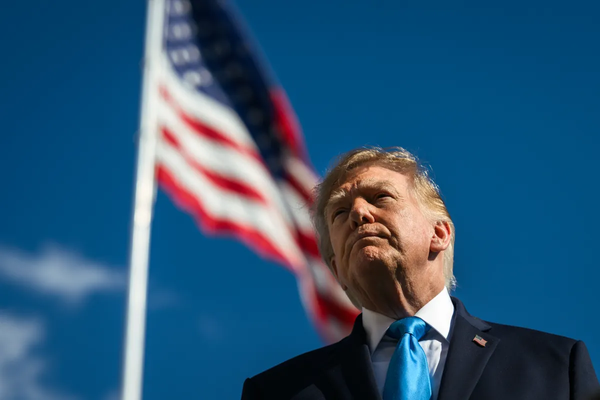
That realignment helps explain why the Trump administration is watching Bolivia so closely this particular week. The same UN gathering puts Trump face to face on Tuesday with Venezuela's interim president, Delcy Rodríguez, in what U.S. officials are describing to Infobae as an informal sideline conversation rather than a full bilateral meeting — a sign of how much the region's diplomatic map has shifted this year.
What Paz Wants the World to Hear
Ahead of the trip, Paz said he plans to lay out his government's development agenda and court private investment. He also pushed back on the idea that the international financing amounts to a rescue, telling reporters that the loans aren't arriving "to save us," but because his administration chose the right path.
The contrast he'll have to manage in front of investors and multilateral officials is stark. The World Bank has flagged Bolivia as the only South American economy projected to contract in 2026, a distinction no other country in the region carries this year, according to El Deber. Every word of Paz's first UN address will be measured against that backdrop.