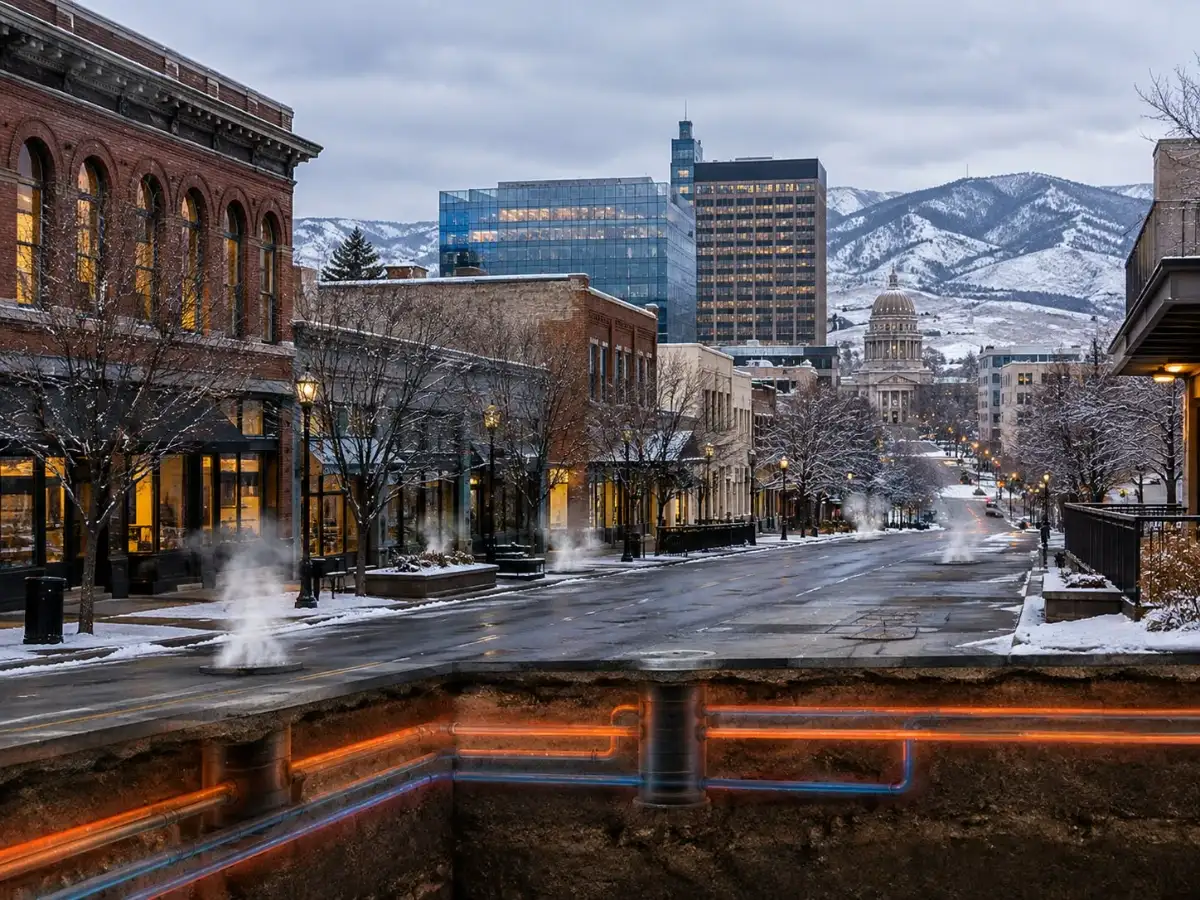
Your winter heating bill probably makes you wince a little. In the city of Boise, Idaho, though, a large section of downtown is warmed with water that has been heated in the ground already, and has been that way, in various forms, since the 1890s. According to a 2017 paper, "The Nation's Oldest and Largest Geothermal District Heating System," by Leland Mink, published in the journal GRC Transactions, drilling for hot water there began in the late 1890s. Boise now has four geothermal heating systems, which together heat an estimated 7.4 million square feet. The figures Mink cited are as of 2017, so take them with a grain of salt. The details behind the numbers are more interesting.
A 19th-century system with real staying power