- BMW CEO Milan Nedeljković says some Chinese cars are sold in Europe at prices that “make no business sense.”
- He warns that distorted competition could fuel protectionist measures across Europe.
- BMW supports free trade but wants competition on terms it considers fair.
BMW’s new CEO is raising concerns about the pricing of Chinese cars in Europe, arguing that some models are being sold at prices that don’t make business sense. Milan Nedeljković stopped short of calling for higher tariffs, though, instead backing a negotiated solution with China to address what he sees as a distortion of competition.
In an interview with Frankfurter Allgemeine Zeitung (FAZ), Nedeljković was asked whether Chinese automakers are selling cars in Europe at dumping prices. His answer was notably careful, but the message was clear.
'Some Chinese cars are being offered here at prices that make no business sense. This is leading to protectionist tendencies in Europe and efforts to protect domestic markets. BMW operates globally; we support free trade, and we embrace competition. But a distortion of competition caused by incomprehensible pricing is dangerous.'
Fair Play
Of course, BMW is hardly asking Europe to close the doors to Chinese cars. The German automaker has spent decades building a global production network and benefits enormously from international trade itself. BMW even builds some vehicles in China for export to Europe, including the electric Mini Cooper hatchback and its Aceman crossover sibling.
But at the same time, Chinese automakers have become an increasingly serious force in Europe. Brands such as BYD, SAIC, and Geely are expanding their presence with vehicles that can undercut established European competitors on price while offering increasingly sophisticated technology.
The EU has already imposed additional duties on China-built battery-electric vehicles following an anti-subsidy investigation, with tariffs varying by manufacturer from 17 to 35.3 percent. Nedeljković would apparently prefer not to turn that into another tariff war.
He supports political discussions between Europe and China to establish what he considers fair, market-based pricing. If that can be achieved through voluntary agreements, he believes it would be preferable to piling additional tariffs onto Chinese imports:
'Additional tariffs would be an even greater intervention, which is why I favor voluntary agreements based on fair framework conditions. These are negotiations that must now take place at the political level. As a retaliatory measure, the Chinese could restrict the supply of battery cells, on which Europe depends.
“No one wants an escalation. But the goal is to ensure sound market conditions in the long term, because jobs and the ability to attract investment depend on them. That is why one thing is certain: policymakers in Brussels and Berlin must strengthen the competitive conditions for our economy. Competitiveness cannot be achieved through isolationism.'
BMW Is Feeling The Chinese Pressure At Home And Abroad
Meanwhile, the company is being squeezed from both sides. In China, BMW is fighting increasingly competitive domestic brands in a market that has moved rapidly toward electrification and high-tech features. The numbers don’t lie, as BMW Group (including Mini) sales plunged from a record 847,900 cars in 2021 to 626,000 units last year, according to the company's Annual Report 2025. In Europe, meanwhile, Chinese automakers are bringing that competitive pressure directly to BMW’s home turf.
Of course, the issue isn’t limited to BMW. The European Commission has been discussing ways to address the widening trade imbalance with China, while European automakers and governments debate whether additional protectionist measures are needed. For example, the Volkswagen Group, Renault Group, and Stellantis have issued a joint statement about “Made in Europe,” a proposed European Union industrial framework.
Made In Europe
The initiative calls for 70 percent of the parts going into a car to come from the region. However, Euronews cites the independent research institute Bruegel as saying that this could increase an EV’s asking price by more than €2,000. EU-sourced battery cells would cost significantly more, and those additional costs would ultimately be passed on to consumers.
Nedeljković’s preferred approach (free trade on fair terms) sounds considerably less dramatic than another round of tariffs. Whether Europe and China can actually agree on what constitutes a “fair” price is another matter entirely.
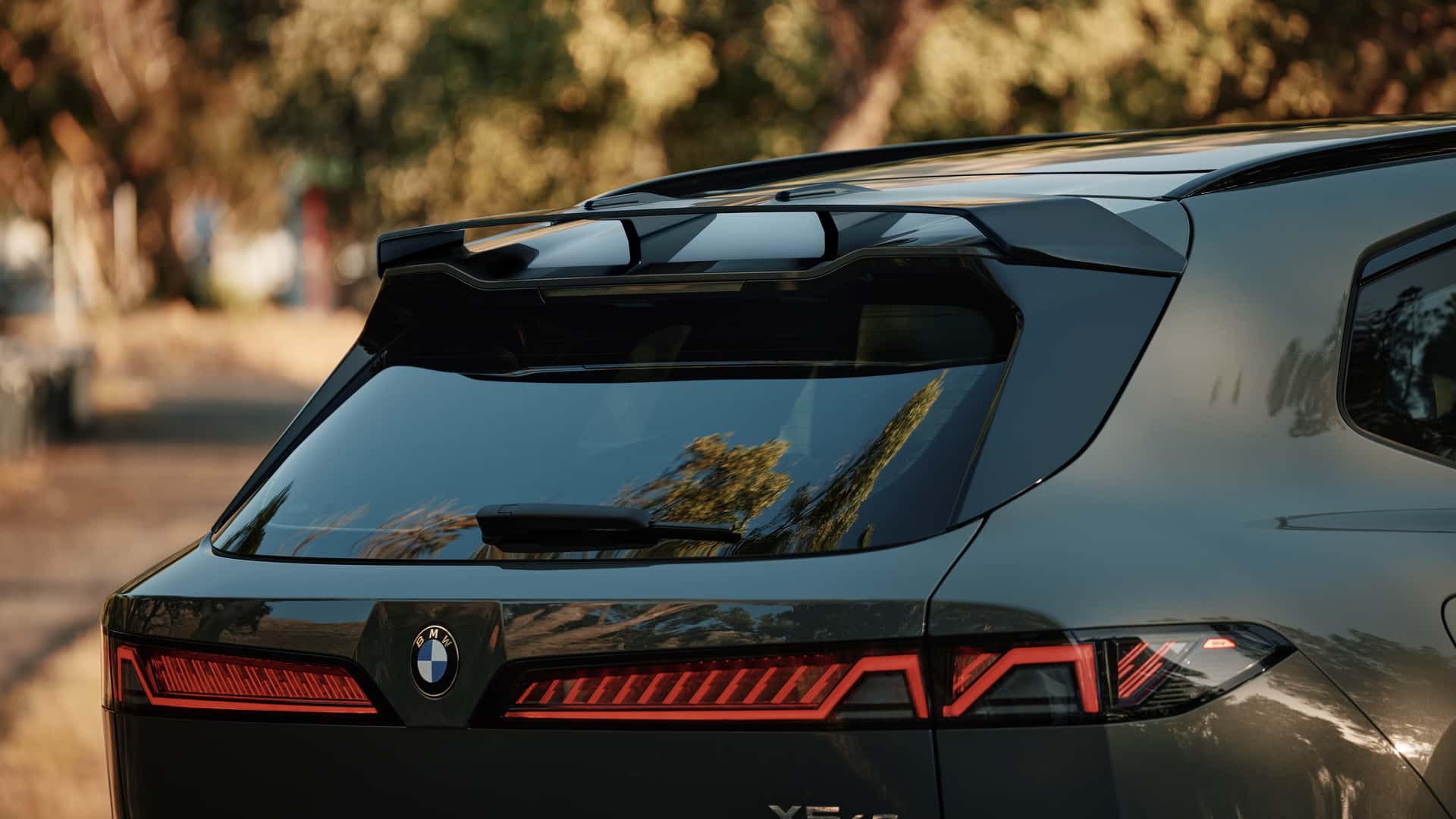
BMW M Concept Neue Klasse in Monterey
Motor1's Take: BMW spent decades benefiting from globalization, and now globalization is coming back with a vengeance. Chinese automakers are no longer the distant competitors they once were. They have the technology, the manufacturing scale, and, increasingly, the confidence to bring their products directly to Europe.
That’s a fundamentally different challenge from what BMW faced a decade ago. But Nedeljković’s comments also highlight a legitimate question: How low can a car’s price go before the economics start raising eyebrows? If a Chinese automaker can genuinely build a competitive car more cheaply because it has lower costs, massive scale, or a more efficient supply chain, that’s competition.
European automakers can’t reasonably complain simply because someone else figured out how to make cars cheaper. Well, unless subsidies or other forms of state support are distorting pricing. That’s precisely where the EU’s anti-subsidy investigation and tariffs come into play.