
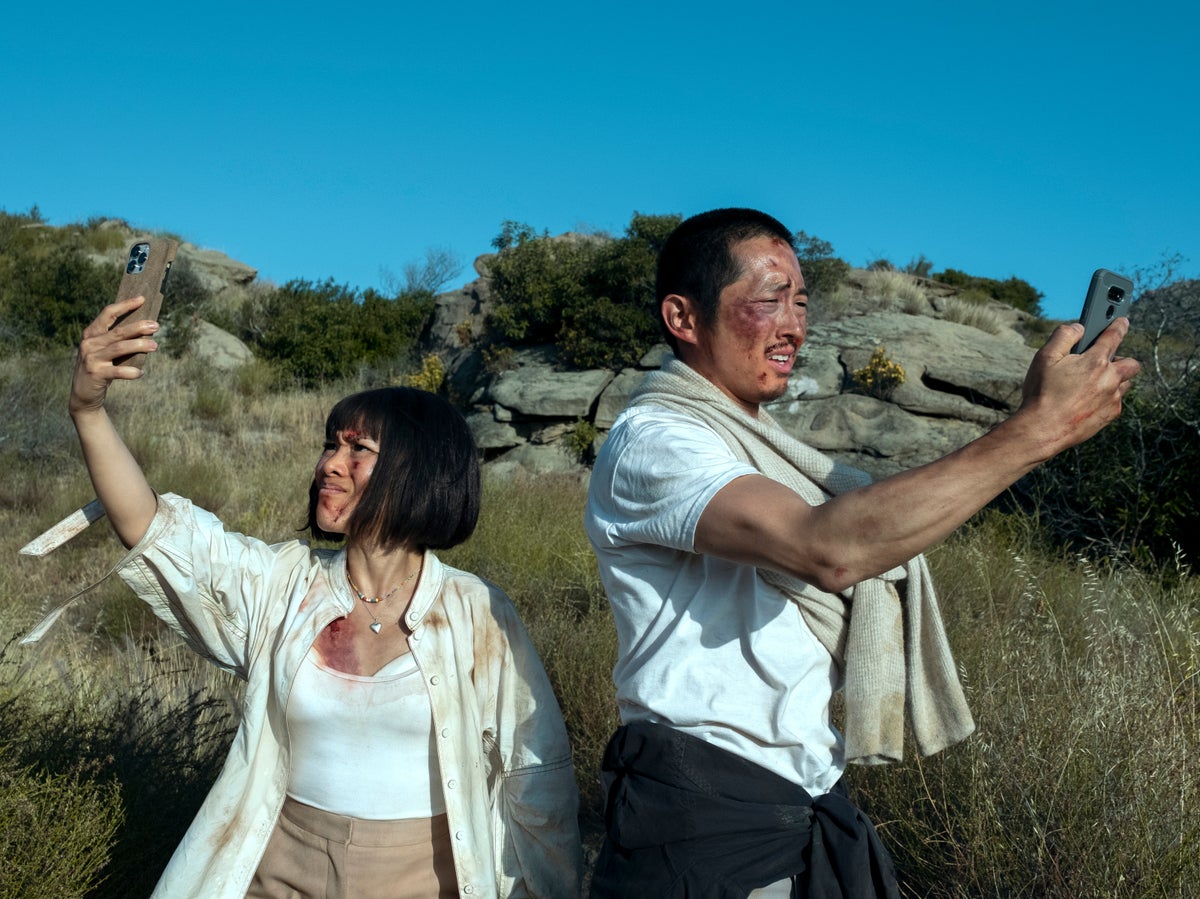
At a glance, Beef may look like a tale you already know well. The 10-part Netflix series follows a road rage spat between two dissatisfied millennials (Steven Yeun and Ali Wong) that snowballs into a bitter, dangerous feud. This notion – of a perennially escalating conflict between strangers – has been brought to the screen many times before, in everything from Steven Spielberg’s Duel to old Laurel and Hardy shorts like Big Business or Tit for Tat. “Blood will have blood,” said Macbeth, and it’s true. Or at the very least, property destruction will have property destruction.
But outside this age-old conceit, Beef is a distinctly modern parable, one that could only exist in the age of social media. In fact, its whole story – of misplaced rage, futile grudges and petty one-upmanship – is pretty much the perfect metaphor for online behaviour. Its very title tugs at this fact: these days, we seldom hear the word “beef” (outside the usual culinary context) without it being prefixed by the word “Twitter”. The penchant for caustic tete-a-tetes on the timeline is something that has consumed many celebrities, from Kim Kardashian to Piers Morgan. Donald Trump, prior to his (recently overturned) expulsion from the platform, was the de facto master of the Twitter feud, capable of zeroing in on his critics’ weaknesses and insecurities with genuine – albeit crass and often ungrammatical – aplomb. Twitter’s current CEO, Elon Musk, is also no stranger to a social media fracas: he’s even found himself sparring humiliatingly with his own employees. But Twitter beefs are by no means the refuge of the elite. From pauper to king, we’re all just one “@” away from our next mortal enemy.












