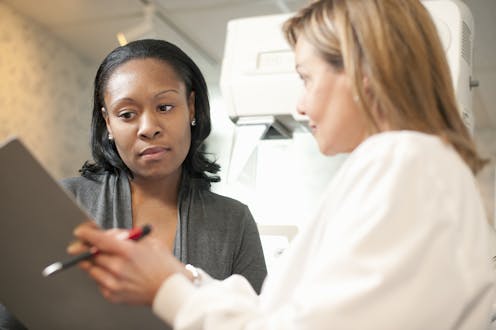
While mammograms are often the first step to detecting breast cancer, patients need additional tests after an abnormal screening result. Further imaging can determine if a finding is truly suspicious for cancer, and sometimes a biopsy is required to confirm a diagnosis. But biopsy delays reduce the benefit of early detection, putting patients at a higher risk of treatment failure and lowering their chances for survival.
Breast biopsies involve removing a small piece of tissue from a suspicious area and examining the sample under a microscope. Once doctors are able to confirm the presence of tumor cells and what type they are, they are then able to devise a treatment plan.