
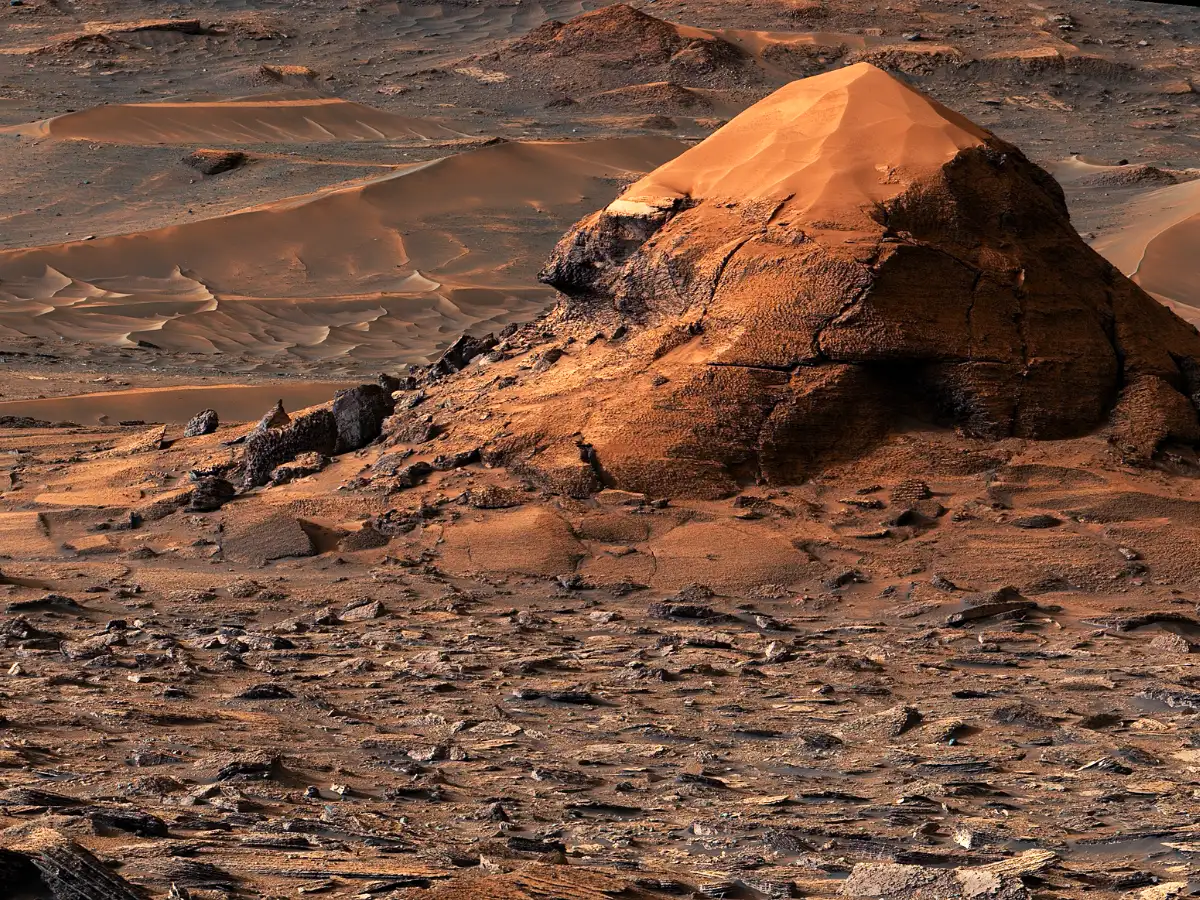
Mars hasn’t always been the dusty, dry planet that we see in pictures today. NASA’s Curiosity rover has been climbing Mount Sharp in Gale Crater for more than a decade, passing through ancient lake beds, dried-up streams and fields of ancient sand dunes. For a long time, scientists have known that Mars transitioned from a warm, wet planet to a cold, dry one. What they didn’t have was a reliable way to date when this happened exactly. In a new study published in the journal Science, researchers Marek Szczerba and Tanya Peretyazhko may finally have found that timeline in a common rust-colored mineral called hematite.
A rusty clue buried in the rock















