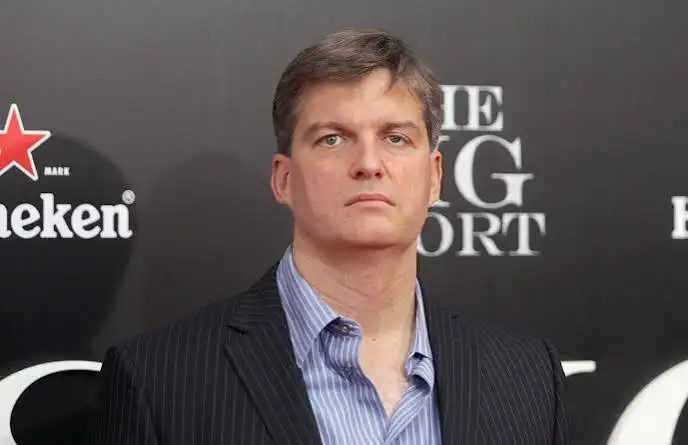
While global tech giants continue to increase their massive AI spending, popular American investor Michael Burry, best known for correctly predicting the 2008 housing crisis, is ramping up his bets against leading chipmakers and raising worries over a possible market crash in the near future.
The veteran market investor has now shorted a series of companies operating in the artificial intelligence infrastructure space. In a post on June 30, Burry disclosed he refreshed his short position in iShares Semiconductor ETF, an exchange-traded fund that exclusively invests in firms selling chips and components powering the AI boom, Business Insider reported.
Michael Burry's bet against iShares Semiconductor ETF
This means that if the ETF falls below a certain price level, Burry's options will likely make him a lot of money. The iShares Semiconductor ETF has fallen around 7% in one week but has rallied more than 68% in just three months, tracking the sharp rally in semiconductor stocks.
AMD, Micron, Nvidia, Broadcom and Intel are the top companies in terms of weight which are part of the ETF. All these companies are seen as the face of the growing frenzy over artificial intelligence.
Also read: Why Warren Buffett called Big Short fame Michael Burry ‘Cassandra’
Michael Burry's AI warnings
This is not the first time Burry has shorted against AI companies. Earlier this year, he placed bets against Tesla, Caterpillar, Nvidia, Applied Materials, Palantir and other companies. This comes as investors increasingly worry about the extreme optimism over artificial intelligence.
Earlier this year, Burry wrote on a Substack post that he sees many indicators, both technical and fundamental, lining up for the same conclusion as the Dotcom crash. "1999 went where no market had gone before, and I would say so can this one...It is already there on a number of indicators," he said, arguing that massive venture capital flows, rising AI debt issuance, and extreme market optimism are creating conditions where valuations may detach from economic reality.
South Korea's Kospi plunge sign of AI bubble?
Notably, South Korea’s Kospi, which saw a massive surge earlier this year amid the AI frenzy, entered bear market territory on Wednesday, plunging 20% from its peak of 9,386 as tech rout after a massive rally continued to keep investors on edge.
Despite the sharp selloff in South Korea’s stock market, Kospi continues to hold its position as the world's best-performing major stock index in 2026, having advanced 74% so far this year, driven largely by the surge in AI-linked semiconductor stocks.
Also read: South Korea's Kospi enters bear market, plunges 20% from peak. What's spooking investors?
Michael Burry’s 2008 prediction
Just before the 2008 financial collapse, people believed that the US housing market was secure and booming, and that home prices would not fall. Banks increasingly issued subprime loans, riskier mortgages were given to borrowers with weaker credit, under the assumption that rising prices would shield them from losses. Despite the misplaced optimism, Burry voiced his opinion that the market was on the brink of collapse, which most people did not believe.
After tirelessly studying mortgage securities, he concluded that subprime loans would collapse by 2007, taking down the broader economy with them. In 2005 and 2006, he warned his clients in letters that the meltdown was coming — but almost no one believed him. Against all odds, Burry bought credit default swaps against subprime mortgage securities, effectively betting that the market would crash. As premiums mounted, investors grew furious and demanded withdrawals, forcing Burry to restrict redemptions in his fund in order to hold the positions. The backlash was so intense that it nearly destroyed his firm — until the market finally collapsed exactly as he predicted. Burry made around $100 million personally and $725 million for investors when the housing market finally collapsed.
Burry’s popular bet against the housing market was depicted in the 2015 movie titled 'The Big Short', which starred Christian Bale, Ryan Gosling, Steve Carell and others.
(With inputs from agencies)
(Disclaimer: Recommendations, suggestions, views and opinions given by the experts are their own. These do not represent the views of The Economic Times)