Get all your news in one place.
100's of premium titles.
One app.
Start reading
The Economic Times
The Economic Times

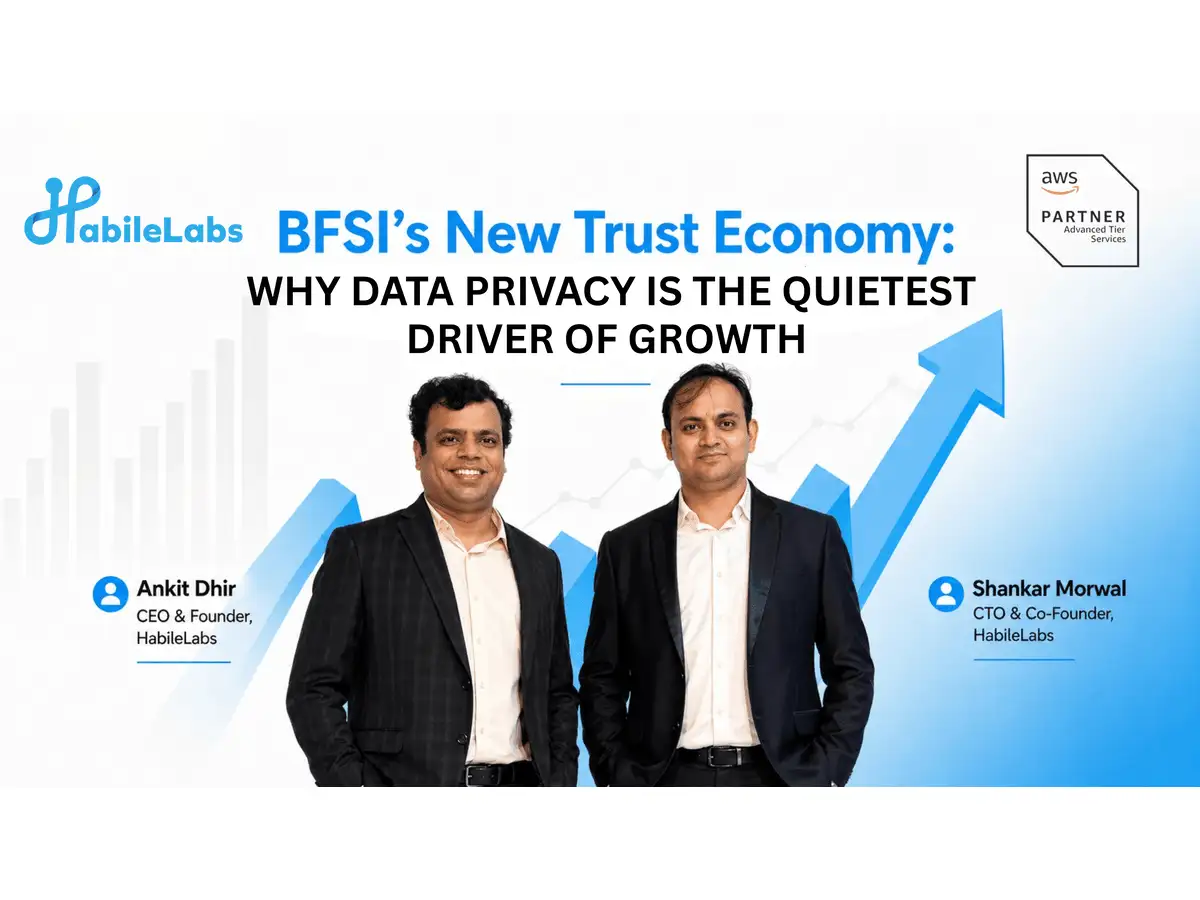
BFSI’s new trust economy: Why privacy is the quietest driver of growth

Trust has always been one of the most dependable engines of growth. Tata, Apple, and Disney didn't rise through innovation alone; they made trust an enduring part of their identity.

In finance, this principle carries even greater weight.

Customers don't merely admire their financial institutions; they depend on them. Savings, loans, insurance claims, life goals. Few commercial relationships are as personal as the one between an individual and their bank, insurer, or fintech platform.

That is why trust in BFSI is never abstract. It is practical, daily, and deeply personal.

The silent check

India's digital customer base has changed. More aware, more connected, more discerning, they may not always speak loudly about data governance, but they notice quietly. Unnecessary app permissions, repeated KYC requests , careless handling of personal information.

Much like a motorist instinctively glancing at the fuel meter before refuelling, customers now perform their own silent checks. Those quiet judgments shape lasting decisions.

For years, BFSI competition has centred on rates, reach, and convenience. But as India's digital economy matures, another differentiator is emerging confidence in how institutions handle identity. Customer data isn't just a set of records. It is fragments of a person's life: their income, aspirations, and future plans.

From compliance to confidence

With DPDP penalties reaching ₹250 crore, privacy has moved from a legal footnote to a boardroom priority. But the greater risk is reputational. Trust can weaken quickly when customers feel their data is mishandled.

Many institutions still operate with fragmented systems, permissions in one platform, documents in another, archives elsewhere. That fragmentation creates a critical vulnerability: the broken link between consent and information. Without unified linkage, a simple ‘Request for Erasure’ becomes an expensive, uncertain manual hunt.

You cannot fully protect what you cannot locate.

You cannot confidently erase what you cannot trace.

And you cannot build trust on uncertainty.

Privacy by design

The stronger path is system-led privacy built into the everyday architecture of the institution, not bolted on as an afterthought. Legal teams define responsible boundaries. Technology teams make those boundaries real. Business teams ensure customers experience security without friction.

One principle may define the next era more than most: need-to-know access. Teams often need patterns and trends, not raw identity data. The institutions that win won't necessarily be those who use the most customer data, but those who use it most intelligently, remaining data-driven without becoming identity-dependent.

Such models do more than reduce risk. They demonstrate respect. And respect is memorable.

The HabileLabs perspective

Turning these principles into working systems requires a partner that understands both global standards and Indian realities.

HabileLabs , headquartered in Jaipur, represents a modern Indian success story with world-class capability from a city long associated with craftsmanship and trusted commerce. Having served 200+ global clients with GDPR- and HIPAA-aligned solutions, the company understands that trust isn't an abstract promise. It is an operating discipline.

Sign up to read this article
Read news from 100's of titles, curated specifically for you.
Already a member? Sign in here
Related Stories
Top stories on inkl right now
One subscription that gives you access to news from hundreds of sites
Already a member? Sign in here
Our Picks
Fourteen days free
Download the app
One app. One membership.
100+ trusted global sources.