Get all your news in one place.
100's of premium titles.
One app.
Start reading
The Economic Times
The Economic Times

Beyond the 7% headline: S&P maps the forces driving India’s next growth phase

India’s economy has delivered the number that grabs attention: 7.7% growth in 2025-26, followed by 7.8% in the first quarter of 2026-27.

But S&P Global and Crisil’s latest India research is looking beyond that headline. S&P is reiterating its outlook for India to grow around 7% in 2026-27, with growth moderating from the previous year even as domestic demand and public investment provide support.

The bigger question in 'India Forward: Reimagining Growth,' is what India needs to build underneath that growth rate to sustain it.

Also Read: After S&P & Fitch, ADB raises India's growth aim to 7% but El Nino clouds food story

The research argues that India enters this phase with formidable macroeconomic buffers, but also with a different set of vulnerabilities. The economy is becoming more exposed to global capital, energy markets and supply chains even as its domestic foundations remain relatively strong.

For S&P Global economists Dharmakirti Joshi and Hanna Luchnikava-Schorsch, the 7.7% expansion in 2025-26 demonstrates the resilience of domestic growth drivers despite high US tariffs and geopolitical uncertainty. Their 7% growth outlook for 2026-27 remains in place, but they argue that sustaining that pace will increasingly depend on reforms, investment and deeper integration with global trade.

That sets up the central question running through the research: what will power India’s next leg of growth?

Growth needs a new investment push

India begins with a strong cushion.

Foreign exchange reserves cover more than nine months of imports, banks’ gross non-performing assets are at a decade-low 1.8%, and foodgrain stocks stood at 92.6 million tonnes in July, more than twice prescribed buffer norms.

But S&P’s researchers see a more complicated picture once the focus shifts from buffers to capital formation.

Net foreign portfolio inflows fell 16.6% in 2025-26. Gross FDI remained healthy at $94.5 billion, but net FDI was only $7.8 billion after accounting for repatriation by foreign investors and outward investment by Indian companies.

India is increasingly both a capital importer and exporter.

That matters because sustaining high growth requires more investment.

The investment rate is around 32% of GDP, while the World Bank estimates that annual growth of 7.8% would be required to meet the Viksit Bharat 2047 objective.

S&P’s message is that public investment can continue to build the platform, but private investment needs to take the lead.

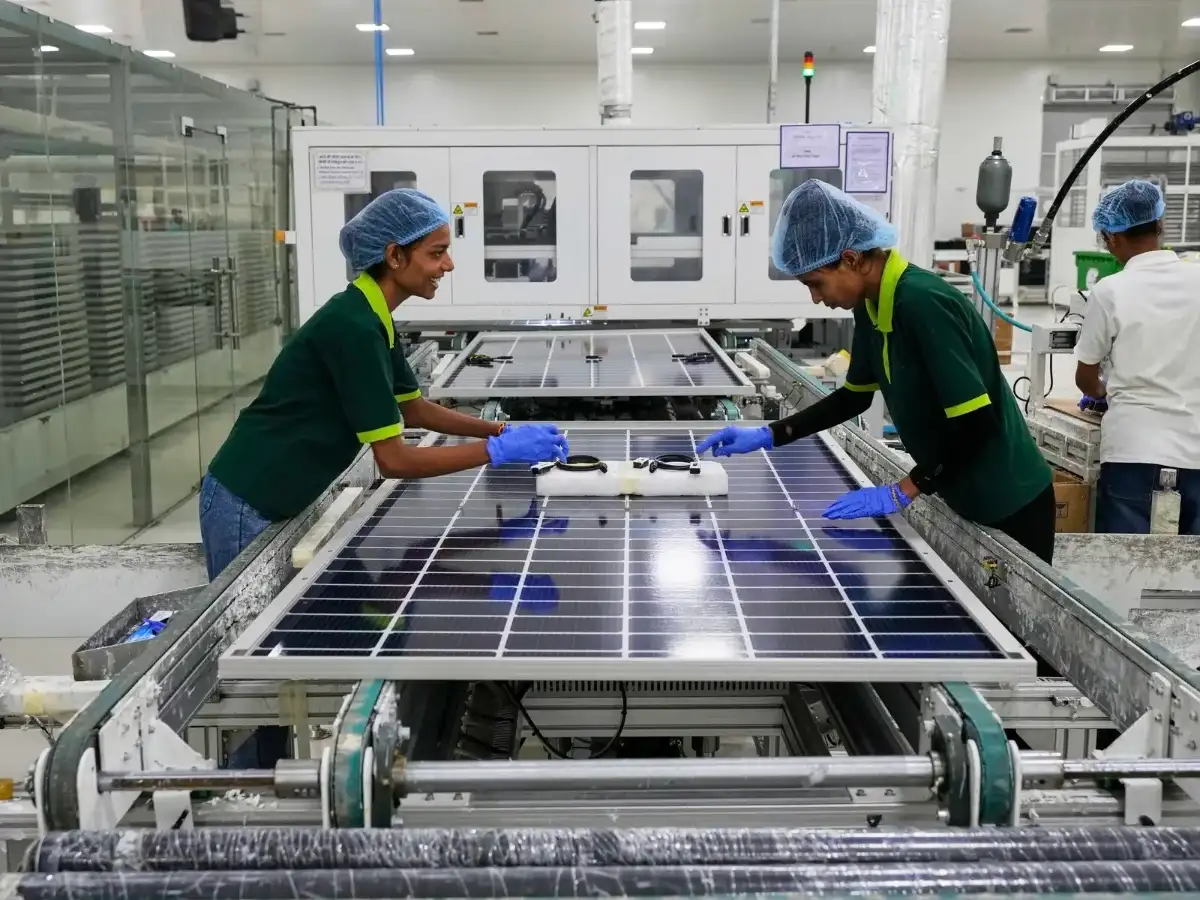
Crisil estimates that emerging sectors such as defence, data centres, solar photovoltaics, batteries, semiconductors and electronics, and electric vehicles could account for 25-27% of industrial investment over the next five years, compared with 12% in the previous five.

The challenge, therefore, is not simply to attract capital. It is to convert that capital into the productive capacity that can support the next economic cycle.

The capital India needs to capture

S&P researchers see India’s recent free-trade agreements as more than vehicles for market access. They can also help attract investment and embed India more deeply in global supply chains.

Also Read: S&P Global Ratings raises India FY27 growth aim to 7% from 6.6%, estimates 25 bps RBI rate hike

Six trade deals signed over the past four years, with an EU agreement expected later in 2026, would give India FTAs covering more than half of the world’s top importing economies.

The logic is straightforward: trade access can pull investment in, while investment can build export capacity.

Free trade agreements to lift export demand in phases

Immediate beneficiaries Medium-term export drivers
Ready-made garments Solar PV
Leather and footwear Defence
Automobile and auto components Chemicals
Traditional Capital goods
Emerging Electronics
Strategic Drones
Gems and jewellery Pharmaceuticals
Semiconductors
Food processing

The next growth wave will need more power

S&P Global researchers Ashish Singla, Mohd. Sahil Ali and Jessica Jin see a structural shift underway in India’s power system.

Electricity demand is expected to grow 5.56% annually between 2025 and 2035, more than twice the 2.47% growth expected in total energy demand. Electricity’s share of India’s energy basket could rise to nearly 25% by 2035 from about 19% in 2025.

Some of the fastest-growing sources of demand are also sectors India wants to build: data centres, green hydrogen, electric mobility and increasingly electrified industry.

Sign up to read this article
Read news from 100's of titles, curated specifically for you.
Already a member? Sign in here
Related Stories
Top stories on inkl right now
One subscription that gives you access to news from hundreds of sites
Already a member? Sign in here
Our Picks
Fourteen days free
Download the app
One app. One membership.
100+ trusted global sources.