
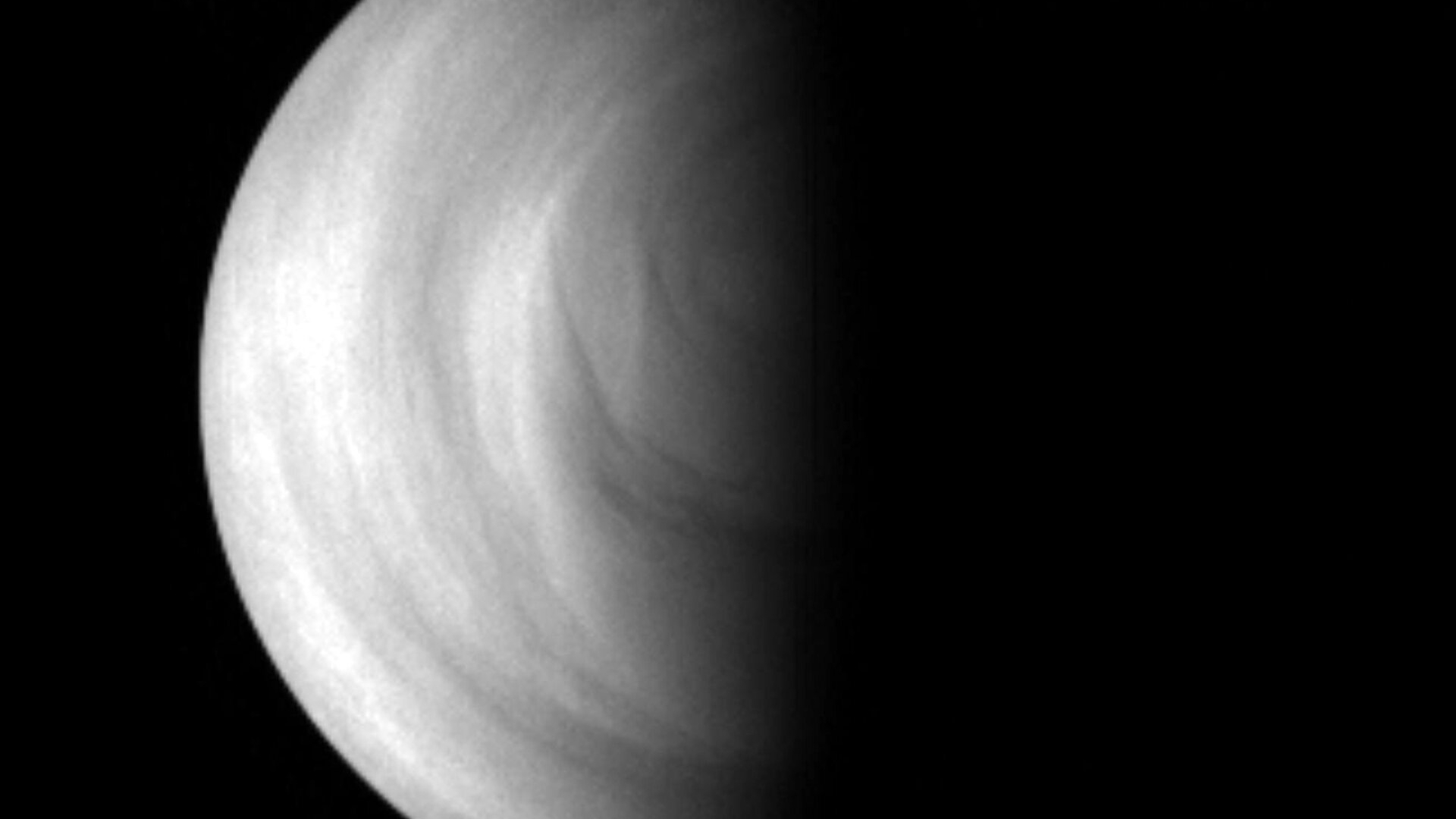
Today, our sister planet Venus resembles an environment as close to hell as one can imagine. Surface temperatures on the amber world soar to 450 degrees Celsius (842 degrees Fahrenheit), while about 96% of the planet's crushing atmosphere is made up of carbon dioxide. Once upon a time, however, Venus may have resembled something much closer to our balmy home — Earth.
That was until runaway greenhouse gas processes, likely triggered by volcanic activity, sent Venus on a trajectory that resulted in the noxious neighbor we see today. However, in new research that furthers our understanding of the planet's atmospheric evolution, astronomers announced they've directly detected the presence of atomic oxygen in both the day and night side of the Venusian atmosphere.














