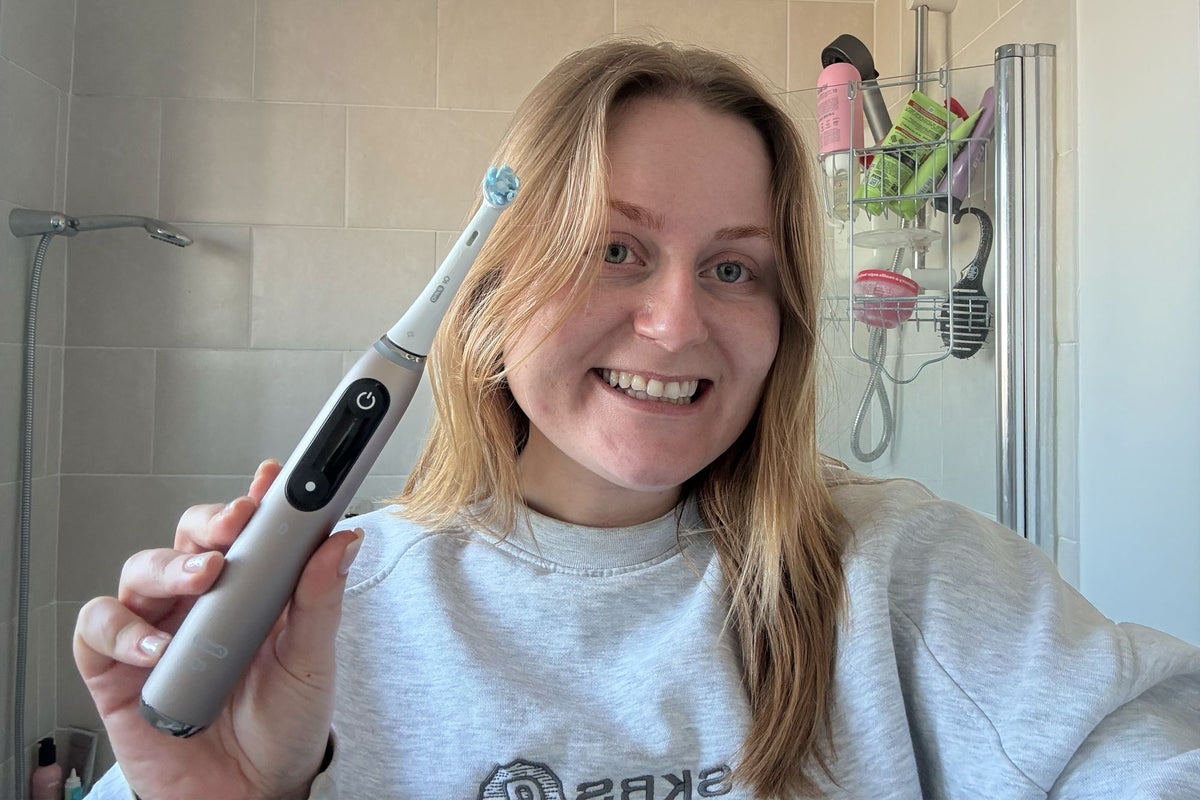
Choosing the best electric toothbrush could make a marked improvement to your oral health. “The evidence shows powered brushes reduce plaque and gingivitis (gum disease) more than manual brushes, and the pressure feedback reduces the risk of excessive force on the gums, which can cause gum recession and abrasion cavities,” says dentist and clinic director Dr Hannan Imran.
Finding the best electric toothbrush isn’t as simple as opting for one that’s high in price and from a reputable brand, though. According to aesthetic dentist Dr Edoardo Felici, “Most dentists recommend oscillating-rotating or sonic brushes with pressure control. The brand matters less than the presence of a pressure sensor, a timer and consistent plaque removal performance.”

How to choose the best electric toothbrush
“Most dentists are looking for good plaque control with minimal damage. Look for:
- A two-minute timer (with 30-second prompts)
- A head that’s small enough to reach your back teeth
- Some form of pressure control if you tend to brush hard
The ‘smart’ extras are optional. They’ll be useful if they improve your habits, but irrelevant if they don’t,” says Dr Imran.
Armed with expert opinion, I set out to find the best electric toothbrushes for a range of budgets and needs, from tackling plaque build-up to supporting sensitive gums. Over six months, I combined hands-on testing with in-depth research, including analysing customer reviews and weighing up long-term value for money to find the electric toothbrushes worth buying.
Read more: Best water flossers, tried and tested
The best electric toothbrushes for 2026 are:
Best electric toothbrush overall: Philips sonicare 9400

Philips’ sonicare 9400 takes the top spot as the best electric toothbrush because of its combined value and superior performance. While it’s a little expensive at full price, it routinely retails for £200 (or less) and offers thoughtful design features, such as a mess-free charging cup. In testing, its sonic pulse technology delivered the most thorough clean of all the brushes I used, leaving teeth noticeably smoother. Ultimately, the 9400 hits a sweet spot between ticking all the essential boxes (pressure sensor and timer, for example) and offering excellent cleaning power.
Buy now £199.99, Amazon.co.uk
Best budget electric toothbrush: Ordo sonic+

The Ordo sonic+ is the best budget electric toothbrush, thanks to its deep, gentle clean, sonic technology and four brushing modes all at an affordable price. Lightweight, with long battery life and a USB travel case, it was easy to use. The soft bristles and a silicone polishing element were comfortable enough for everyday use, leaving teeth smooth and thoroughly cleaned.
Buy now £40, Argos.co.uk
Best dentist-recommended electric toothbrush: Oral B iO3

Not only did I find Oral-B’s iO3 one of the best mid-range electric toothbrushes, but it was also endorsed by both the experts I interviewed. It “strikes a good balance between affordability and functionality,” notes Dr Felici, while Dr Imran called it a “go-to recommendation.” With a quadpacer timer (30-second intervals), visible pressure sensor and useful modes including sensitive and whitening, it covers all the essentials without overcomplicating things.
Buy now £75, Boots.com
Best for sensitive teeth: Philips sonicare 7100

The Philips Sonicare 7100’s gentle yet thorough clean made it the best electric toothbrush for sensitive teeth. The built-in pressure sensor and adjustable intensities kept brushing comfortable and gum-friendly, while the soft vibrations left teeth polished without harsh scrubbing. The experts I consulted agreed it’s a safe, reliable pick, with Dr Imran noting the pressure feedback is “genuinely useful” for most people, even if you don’t need all the extra modes.
Buy now £129.99, Boots.com
What I looked for when choosing the best electric toothbrushes

With prices ranging from £20 to £800, electric toothbrushes live on a spectrum, and so do their features. When weighing up value, it’s easy to be distracted by extras like companion apps or leather travel cases, but I focused on the elements that genuinely make a difference to daily use. Here’s what made the cut:
- Improved brushing: Every model included here had to offer a clear step up from a manual brush. That meant no aggressive back-and-forth brushing, but rather a smooth glide and a superior clean.
- Targeted treatment: Concerns such as gingivitis, halitosis and weak enamel are common, so brushes that offered genuinely effective modes to tackle these issues ranked higher than those with a simple on-off function. Crucially, those settings had to feel distinct. For instance, if one model’s whitening mode performed no differently from another’s standard clean, it wasn’t worth highlighting.
- Useable feedback: While real-time app tracking may sound appealing, it’s not something most people will stick with. Instead, I prioritised intuitive, easy-to-implement feedback – from pressure sensors to visual cues on the charging base – that made improving technique feel effortless.
- Timing: Most electric toothbrushes now include a timer, but not all are equally user-friendly. Some offer quadpacer prompts every 30 seconds, while others interrupt brushing up to six times. In practice, fewer prompts proved more effective, and I decided a quadpacer struck the right balance between guidance and simplicity.
- Charging: Not every home is equipped with a two-pin shaver socket (mine included), so USB charging was a welcome addition. That said, convenience means little without longevity. I favoured models that delivered at least a week’s use per charge. If it can’t last a holiday, it’s hard to justify the price.
I also leaned on expert input from Dr Imran and Dr Felici throughout, ensuring each pick held up beyond their marketing claims.
Read more: Best at-home teeth whitening kits
Philips sonicare 9400 diamondclean smart

Best: electric toothbrush overall
Battery life: 28 two-minute brushing sessions
App connectivity: Yes
Replacement head cost: Around £8
Pressure sensor: Yes
Cleaning modes: Clean, white+, gum health, deep clean with three intensity levels
Power: 62,000 brush movements/min
Why we love it
- Elongated brush head covers larger area of teeth when held in one spot
- Features useful and aesthetic 2-in-1 charger and toothbrush cup
- Leaves teeth feeling thoroughly cleaned
Take note
- A full charge can take up to 24 hours
The Philips sonicare 9400 toothbrush is a great all-rounder, combining a thorough clean, a thoughtful design and useful tech additions.
It has four cleaning modes – a standard clean, a whitening function (which feels slightly more powerful), a gentle gum health setting and a deep clean (the most intense). There are also three intensity levels. If opting for the strongest setting, you’ll want to pay close attention to the pressure sensor to avoid accidental gum abrasion. I found combining the deep clean with the highest intensity left my teeth feeling squeaky clean, though I’m not sure my gums could handle it twice daily.
While there’s no setting for sensitive teeth, I was able to recreate the same gentle feel by lowering the intensity setting to one and using the gum health mode. You can control the modes and intensities on the brush itself, unlike on Philips’s other premium models, where you’ll need the app to switch between them.
It also has a pressure indicator to minimise gum abrasion. The base of the handle lights up, which is the perfect placement for easily spotting when to ease off. (The brush head lit up on other models I tested, which was almost impossible to see.)
After every brush, my teeth felt astonishingly smooth and fuzz-free, much like they do post a hygienist appointment. Dr Felici corroborates my testing, noting that “the cleaning performance is very strong”.
Aside from its excellent performance and cleaning ability, another reason I was impressed with the Philips sonicare 9400 was the thoughtful design. The charging base, for example, includes a glass holder that lifts off easily for cleaning, avoiding build-up that is common on other models. It also means that the brush charges continuously, even when in the holder, eliminating the tedious 24-hour full-charge. When away from the charging dock, I was also able to eek just over one week’s worth of use.
The app is easy to navigate, and as Dr Felici notes, it’s “excellent for patients who like data and real-time coaching”. It taught me that I neglect the inside of my teeth, favouring the outer, more visible surface.

Overall, the Philips sonicare 9400 delivered a deeper, more thorough clean than Oral-B’s oscillating action – and I say that as someone who really likes the Oral-B devices. It delivered on my testing criteria, making it an easy recommendation.
Buy now £199.99, Amazon.co.uk
Oral-B iO3

Best: dentist-recommended electric toothbrush
Battery life: Not disclosed, but our tests found it lasts for approx. 14 days of twice-daily brushing
App connectivity: No
Replacement head cost: Around £6
Pressure sensor: Yes
Cleaning modes: Daily clean, sensitive, whiten
Power: 8,800-10,500 movements per minute
Why we love it
- Level of clean achieved rivals the most expensive Oral B models
- Reasonably priced
- Pressure sensor gives light-up feedback, which is easy to spot while brushing
Take note
- Battery life isn’t as impressive as the cheaper iO2
Oral-B’s iO3 electric toothbrush is dentist-recommended, with both Dr Felici and Dr Imran praising the model.
The iO3 “strikes a good balance between affordability and functionality. It includes pressure sensors and a timer, which are two of the most important features I look for” in an electric toothbrush, explains Dr Felici.
After testing, I found its cleaning abilities to be comparable to the Oral-B iO10, but without the eye-watering £800 price tag. And despite being only slightly more expensive than the iO2, it provided a noticeably smoother brushing experience.
While it doesn’t feature the same LCD screen found on Oral-B’s premium brushes (iO6 and above), I found I rarely used it, so this isn’t a deal-breaker.
It vibrates when you should move to another section of your mouth (standard across the iO range), which I appreciated. There’s also a pressure sensor light (below where the brush head meets the handle), which offers a visual cue to prevent you from brushing too hard or not hard enough. Another handy feature is that the mode button turns amber when it’s time to replace your brush head – a nudge I’m guilty of needing.

The two-week battery life is solid rather than standout, which feels fair for the price. That said, I’d hold off paying the full £160, as it’s regularly discounted to £75 or less.
Buy now £160, Boots.com
Ordo sonic+ electric toothbrush

Best: budget electric toothbrush
Battery life: 80 two-minute brushing sessions
App connectivity: No
Replacement head cost: Around £5
Pressure sensor: No
Cleaning modes: Clean, white, sensitive, massage
Power: 40,000 movements per minute
Why we love it
- Affordable
- Long-lasting battery life, especially for price
- Silicone polisher leaves teeth feeling fuzz-free and thoroughly cleaned
Take note
- No pressure sensor
- Not all modes suitable for sensitive teeth
If you’re on a budget, I’d recommend the Ordo sonic+ electric toothbrush, which Dr Imran notes as being “a good value, well-designed sonic brush with four modes, a built-in two-minute timer and four weeks of battery life.
There are four brushing modes (clean, white, massage and sensitive) so you can choose the intensity depending on your needs. I favoured the massage and sensitive settings, with the whitening and clean modes too aggressive for my sensitive gums. Speaking of sensitivities, “there’s no pressure sensor, so if you suffer from gum recession, you’ll need to be mindful and keep the pressure light”, explains Dr Imran.

It features a built-in two-minute timer that briefly pulses every 30 seconds to encourage even coverage across your mouth – a useful, if not analogue touch in lieu of an app.
Although it may lack the app connectivity and advanced sensors found on more expensive models, the long battery life and easy-to-use features make it a practical upgrade from a basic toothbrush.
Tested by senior shopping writer, Daisy Lester
Buy now £59.99, Amazon.co.uk
Philips sonicare 7100

Best: for sensitive teeth and gums
Battery life: 42 two-minute brushing sessions
App connectivity: Yes
Replacement head cost: Around £6
Pressure sensor: Yes
Cleaning modes: Clean, white, sensitive, gum health
Power: 62,000 movements per minute
Why we love it
- Plenty of customisation options
- Useful app feedback on pressure while brushing
- Great battery life
Take note
- Could take or leave the app
Following a brief interlude with Suri’s viral toothbrush – which I controversially didn’t get along with (it’s style over substance) – this Philips sonicare 7100 electric toothbrush has been a welcome addition to my dental routine. The 7100 combines effective, thorough cleaning with genuinely comfortable, non-aggressive brushing, making it the best electric toothbrush for sensitive teeth and gums. It also comes approved by Dr Imran, who notes it has a “very safe, gum-friendly pick” owing to the “visual pressure sensor and multiple modes and intensities”.
It has four brushing modes: clean, white, gum health and sensitive – my favourite was the gum health for a gentle everyday clean, which runs for a total of three minutes, allowing time for both a thorough clean and extra focus on your gum line. There are also three intensity levels – the lowest setting was my preferred mode, providing a softer clean that still leaves my teeth feeling thoroughly clean. Overall, I found the brushing experience to be gentle and appreciated the genuinely useful built-in pressure sensor, which alerts you and reduces power when you press too hard.
Brushing habits are tracked in the app, and feedback is provided on duration and consistency. While this isn’t necessary for a thorough clean because the main tech benefits come from the toothbrush itself, I did appreciate the reminders on when to replace the brush head.
Another area where this brush excels is its battery life. On a full charge, it lasted me well over a month, meaning it rarely needs to sit on its charging stand. This is particularly useful when travelling.

A polished step up from basic models, the brush delivers a strong cleaning performance and battery life, with a handful of smart features that don’t overcomplicate the simple task of brushing your teeth. For sensitive teeth, the low-intensity setting and gum health mode are welcome additions and dentist-approved.
Buy now £329.99, Boots.com
Oral-B iO10

Best: AI-integrated electric toothbrush
Battery life: 28 two-minute brushing sessions
App connectivity: Yes
Replacement head cost: Around £6
Pressure sensor: Yes
Cleaning modes: Daily clean, sensitive, whiten, gum care, intense, smart adapt, and tongue cleaner
Power: 8,800-10,500 movements per minute
Why we love it
- Attractive design
- Brushing feedback shows on charging dock, removing the need to rely on the app
- Smart adapt setting slows oscillations and vibrations to protect your gums
Take note
- Ludicrously expensive at full price (though it’s almost never on sale for that amount)
The Oral-B iO10 is a good example of technology that’s both clever on paper and in practice. Unlike with the advanced Philips models, brushing feedback isn’t confined to the app – Oral-B has mapped the real-time cleaning report onto the magnetic charging dock itself: six blue bars circle the base, gradually turning white as you brush your way around your mouth.
The AI app feedback is innovative and will, over time, help improve your technique, but I’m unlikely to be glued to my phone at 6am. Keeping an eye on the dock might not be perfect either, but it’s certainly more practical. It also doubles as a clock, which I found a surprisingly handy addition in my bathroom.
Taking the guesswork out of brushing is the real luxury of the iO10. The smart adapt setting – not unlike Philips’ SenseIQ – automatically reduces the brush’s intensity if you apply too much pressure. It caught me off guard at first with the vibrations feeling gentler than my usual toothbrush, the iO7. As it turns out, the iO10 was simply dialling things back to prevent the gum damage I was mindlessly inflicting.
After each session, my teeth felt impressively clean, and I particularly appreciated the dedicated tongue-cleaning mode as someone overly conscious of bad breath.

Ultimately, £800 for a toothbrush feels exorbitant, even for something this well-engineered. That said, it rarely sells at that price. The iO10 is one of the more expensive options, but the inflated RRP is somewhat misleading as I’ve seen it listed above £300-£400, which is certainly easier to swallow at that level. Given how AI-driven brushing feedback occasionally advises longer brushing sessions (in response to the effectiveness of your clean), anyone with time constraints and chaotic mornings won’t be able to take full advantage of this toothbrush. That said, I’ve got to give it to Oral-B here: the dock-based brushing feedback is genuinely clever.
Buy now £300, Boots.com
Oral-B iO kids

Best: electric toothbrush for kids
Battery life: 28 two-minute brushing sessions
App connectivity: Yes
Replacement head cost: Around £6.50
Pressure sensor: Yes
Cleaning modes: Super sensitive, sensitive, daily clean
Power: 8,800-10,500 movements per minute
Why we love it
- Musical alarm after two-minutes is a brushing incentive for little ones
- Oscillation mimics manual back and forth motion of parents brushing, while giving kids independence
- Disney Stitch design brings playful element to tooth brushing time
Take note
- Quadpacer vibrations are hard for parents to hear
- Would benefit from a wider base to prevent tipping (if not using charger base by sink)
- Replacement heads are expensive
My six-year-old niece was delighted to bring Disney’s Stitch into her brushing routine, and even more so when the Oral-B iO kids electric toothbrush rewarded her with a cheerful melody after two minutes. In her words, she liked “that it has Stitch because he’s [her] favourite” and enjoyed how the “fast” oscillations felt similar to how her dad brushes her teeth with a manual brush, while giving her a sense of independence. But you will “still need an adult to supervise technique until they have good enough manual dexterity”, says Dr Imran.
“The iO kids toothbrush is a solid kids brush (for children aged six and above) because it has a kid-friendly sensitive mode and a two-minute music timer through the Disney magic app to keep them brushing long enough,” says Dr Imran. The Oral-B magic timer app turns brushing into a game, unlocking characters and rewards the longer your little one sticks with it.
From a parent’s perspective, the quadpacer vibrations are just about audible and could be a little louder to aid parental guidance as you move onto the next group of teeth. The end-of-brush tune could be a touch louder, but there is no doubt it helped encourage longer brushing sessions.

Priced between £40 and £100, depending on promotions, the Oral-B iO kids toothbrush has one standout feature that similarly priced adult models lack. While the Oral-B iO3 electric toothbrush alerts users when they’re applying too much pressure, this version automatically adjusts the oscillations if a child presses too hard, providing reassurance when dealing with sensitive gums and wobbly milk teeth. That said, replacement brush heads cost almost as much as the adult versions, which somewhat detracts from the appeal.
Tested by Aurelia, six years old
Read more: Best kids’ toothbrushes, tried and tested
Buy now £100, Argos.co.uk
Philips sonicare diamondclean 9900 prestige

Best: for app connectivity
Battery life: 28 two-minute brushing sessions
App connectivity: Yes
Replacement head cost: Around £8
Pressure sensor: Yes
Cleaning modes: Clean, white+, gum health, sensitive, deep clean
Power: 62,000 brush movements/min
Why we love it
- Petite brush head makes it easy to clean hard-to-reach zones
- Feels like a hygienist-level clean
- Most aesthetic toothbrush
- Vibration guidance ensures a thorough clean
Take note
- Expensive both initially and for replacement heads
You don’t buy an electric toothbrush because it looks nice, but if that is your priority, the Philips 9900 prestige is a good choice. But beyond its looks, it’s a high-tech model. It’s as functional as it is refined, with in-app cleaning feedback and a light-up purple pressure sensor to keep your brushing in check. It’s “the most advanced in the Philips range”, explains Dr Imran, adding that it “has a premium ‘hands-off’ feel. It uses senseIQ to adapt in real time if you brush too hard and comes with a USB-C charging travel case; it’s excellent.”
It’s not realistic to bring your phone to every brushing session, but if halitosis (bad breath) or decay are concerns, the app’s 2D mouth mock-up is genuinely impressive. Gentle vibrations at 20-second intervals prompt you to move between six brushing zones, while on-screen visuals flag any areas you’ve missed. At the end of the two-minute clean, the optional TouchUp feature guides you back over any neglected teeth. “Due to the increased surface area of exposure of the bristles, it allows for more coverage of the tooth and brackets when cleaning. The narrow and slim elongated head is also useful to target those hard-to-reach areas at the back of the mouth (especially wisdom teeth),” adds Dr Imran.
You can also log on the app how often you floss, use mouthwash and clean your tongue – although these extras will likely matter more to the hyper-diligent than the average brusher.
As someone who’s used an Oral-B iO-series toothbrush for more than three years, I was genuinely surprised by how different Philips’ sonic technology feels compared with Oral-B’s oscillating motion. For a start, it’s far less messy, avoiding the dreaded toothpaste dribble. And while the Philips brush head is technically larger, it felt more nimble and easy to reach my wisdom teeth and molars. After use, my teeth had the same glossy feel you get after a hygienist appointment and, judging by how smooth everything felt, plaque I hadn’t even noticed must have shifted.

It is, however, an expensive model and replacement heads can add up, so if you’re looking to spend less, I’d recommend the Philips sonicare 9400 diamondclean smart if you can forgo the leather-style carry case and sensitive teeth settings. That said, I often see this toothbrush drop to as little as £180.
Buy now £549.99, Amazon.co.uk
Foreo issa 4 hybrid silicone sonic toothbrush

Best: for receding gums
Battery life: 730 two-minute brushing sessions
App connectivity: Yes
Replacement head cost: Around £17
Pressure sensor: Yes
Cleaning modes: Deep clean, whitening, sensitive
Power: 11,000 movements per minute in whitening mode
Why we love it
- Incredible year-long battery life
- Silicone bristles are more hygienic than nylon
- Gentler than traditional electric toothbrushes
Take note
- Back and forth motion necessary
- Pulsations only really noticeable in whitening mode
From a brand better known for its LED facial devices, Foreo’s issa electric toothbrush range takes an entirely different approach to powered brushing. Rather than relying on oscillating or pulsating heads to do the work for you, it mirrors the motion of a manual brush. But it swaps traditional nylon bristles for silicone, making it the best electric toothbrush for receding gums. According to Dr Imran, silicone is “proven to be more hygienic” than nylon brushes, and, crucially, more flexible, making it noticeably gentler and “reduces the risk of excess abrasive forces when brushing,” which is what causes gum recession.
The more gentle bristles were immediately apparent in testing. The base level of force you can apply is far lower than with a nylon brush, be it manual or electric, so I felt in full control of the pressure on my teeth and gums. While the strongest setting (whitening) delivered a clean closer to what I’m used to, the sensitive mode was truly whisper-light.
The Foreo issa 4 toothbrush isn’t for you if your priority is an ultra-thorough clean that removes every last trace of plaque. Rather, it’s an intervention for anyone dealing with sensitive, swollen or receding gums.
Unless I’ve been a bit overzealous with the flossing, I don’t typically struggle with sensitive gums, so I found the return to a manual-style back-and-forth motion slightly tedious. That said, the battery life is unrivalled (up to a year!).

Plus, if the long-lasting brush heads give you pause, Dr Imran assured me that he “would also expect them to retain their structural properties even after many weeks of usage, so they’ll continue to be gentle around the gums for months.” All in all, the brand has identified a gap in the market.
Buy now £89, Boots.com
Your electric toothbrush questions answered
What is the best electric toothbrush?
The Philips Sonicare 9400 diamondclean smart is the best electric toothbrush. My teeth felt noticeably cleaner, and my wisdom teeth were easy to clean and reach. Philips’ signature sonic pulses left my teeth feeling fresher than Oral-B’s oscillations, and at around £200 on promotion, this model – versus others from Philips – stood out for its thoughtful extras, such as its combined charger and sink holder.
For anyone on a budget, the Ordo Sonic+ also impressed with its excellent battery life, multiple modes and competitive 40,000 movements-per-minute clean. Meanwhile, the dentists’ pick is Oral-B’s iO3 electric toothbrush, which houses “two of the most important features” – a pressure sensor and timer – that Dr Felici looks for in a powered toothbrush.
What electric toothbrushes didn’t make the cut?
Colgate’s 360 slim sonic toothbrush didn’t quite measure up. While Dr Imran suggested it would “be fine as a budget option or if travelling light,” I found it delivered much the same level of clean as a standard manual brush, despite costing around £10 more.
I felt similarly about Oral-B’s iO2. Beyond its entry-level price point, it didn’t offer much to justify the spend. In my experience, savvy shoppers can often find the more advanced iO3 model for a similar price by keeping an eye out during sales periods. And without an alert to flag when you’re brushing too lightly, I found it harder to gauge the overall effectiveness of my brushing.
How I tested the best electric toothbrushes
I tested each toothbrush over several weeks as part of my day-to-day brushing routine, focusing on performance, value, aesthetics and usability. Specifically, I used the brushes in the following settings:
Is an electric toothbrush actually worth it?
“For many patients, yes,” claims Dr Felici, “Studies consistently show electric toothbrushes remove more plaque and reduce gingivitis more effectively than manual brushing, particularly when patients struggle with technique.”
Is there a downside to an electric toothbrush?
“The ongoing cost of the heads on your wallet and the environment,” answers Dr Imran.
“Some people may brush too aggressively if they ignore pressure warnings; however, modern brushes are designed to minimise this risk,” adds Dr Felici.
What is the best electric toothbrush for gum disease?
“The Oral-B iO3 would be my pick,” says Dr Imran. “For gum disease, pressure control is essential,” states Dr Felici. “A brush with a visible pressure sensor and a gentle gum-care mode is ideal. Oscillating-rotating brushes such as the Oral-B iO range are particularly effective at plaque removal along the gumline, which is critical in managing gingivitis and periodontal disease,” adds Dr Imran.
Is an electric toothbrush better for periodontal disease?
“Yes, plaque is the biggest risk factor for periodontal disease and plaque control is proven to be better with an electric toothbrush,” says Dr Imran.
Dr Felici adds: “Electric brushes can provide more reliable cleaning for patients with reduced dexterity or established periodontal pockets.”
That said, Dr Imran stresses that “Periodontal disease requires multifactorial management, including professional ultrasonic cleaning, interdental aids and good lifestyle habits.”
Do electric toothbrushes cause gum recession?
“Electric toothbrushes do not cause gum recession when used correctly,” responds Dr Felici. “Gum recession is usually linked to excessive pressure or aggressive technique – which is why a pressure sensor is so important,” he details.
What is the 2-2-2 rule for brushing teeth?
“It’s a popular rule-of-thumb: brush twice a day for two minutes and see your dentist twice a year,” replies Dr Imran.
Why you can trust IndyBest reviews
Having written reviews for IndyBest since July 2024, Lucy Smith has garnered a breadth of testing experience and ensures all the products that land a spot in her guide are genuinely worth your time and money. She’s reviewed the best teeth whitening kits and covered the launch of Oral-B’s iO10 electric toothbrush. What’s more, she’s been using an electric toothbrush personally since 2023 and has experienced tooth decay in the past – so she knows the value of a thorough clean.
Ditch the string and upgrade your daily dental routine with our pick of the best water flossers