
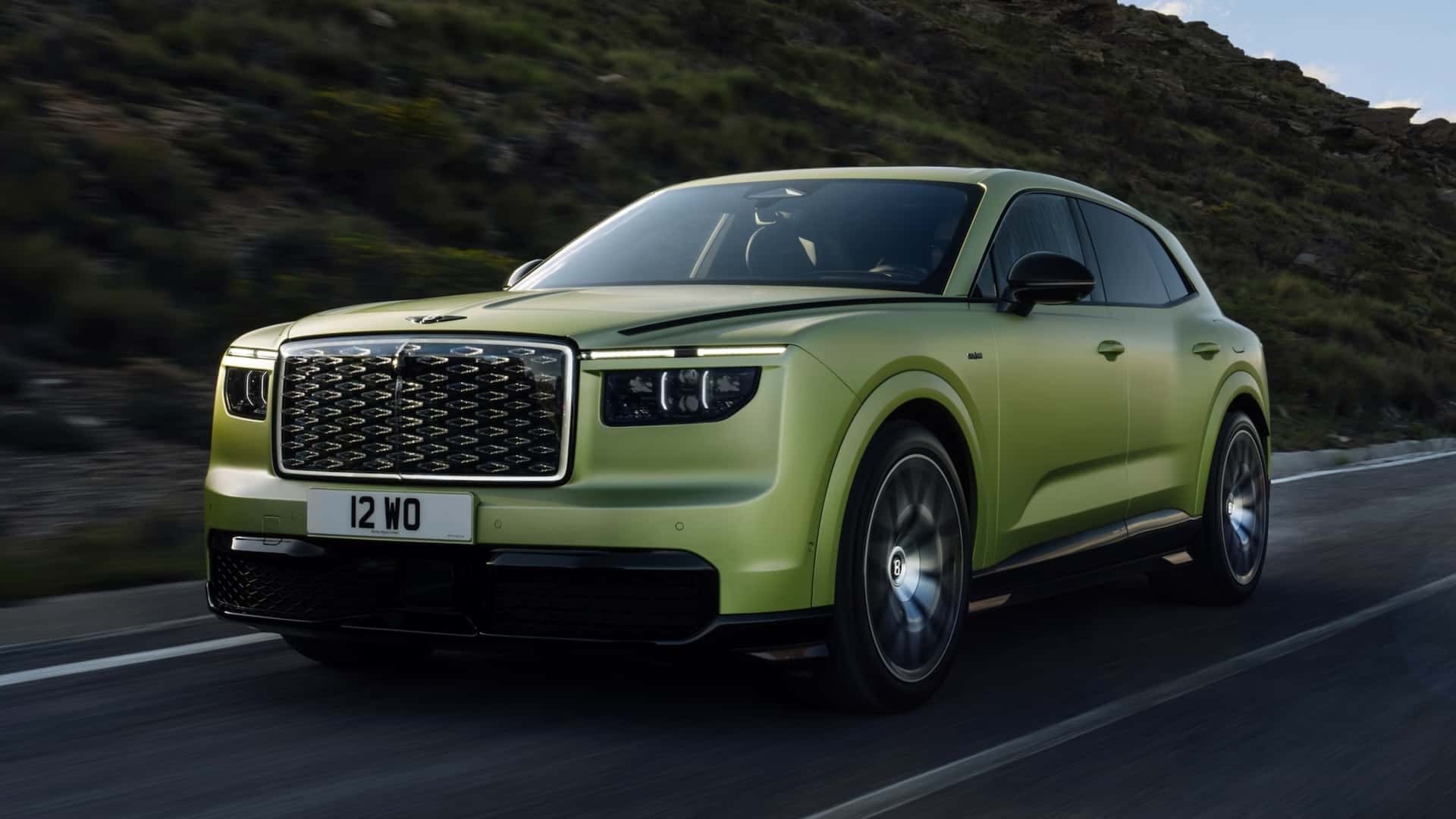
Luxury and electrification are a natural pairing, and a string of high-end British automakers are now fully embracing it. After Rolls-Royce and Jaguar Land Rover, Bentley is the latest automaker from the U.K. to reveal its first fully electric model, called the Torcal.
The Torcal is a midsize SUV and the automaker’s most technologically advanced vehicle ever. It’s a Bentley first and foremost, the automaker said, which just happens to be electric. However, it’s more of a Porsche underneath, sharing the Premium Platform Electric with the battery-powered Cayenne.

Gallery: 2028 Bentley Torcal
Its 113 kilowatt-hour (gross) battery capacity will deliver 375 miles of range on the WLTP cycle, which Bentley says will translate to over 300 miles of range on the EPA cycle. That may not be class-leading, but any Bentley owner who needs to travel more than 300 miles in one go will likely fly in their private jet, not by road.
And if they don’t have a private jet, their charging stops will be quick. Just like the Cayenne Electric, the Torcal too is a charging monster. Its 800-volt battery architecture is capable of 400 kilowatts of peak charging rate, which means a 10-80% charge in less than 20 minutes. The automaker said 100 miles of WLTP range can be added in just seven minutes, assuming the EV is plugged into a charger that can dispense such high speeds.
The Torcal is also the most powerful and the torquiest Bentley to ever come out of Crewe. With 876 horsepower and 995 pound-feet of torque, the Torcal will accelerate from 0-60 miles per hour in just 2.8 seconds.
China is a big market for Bentley, and the busy front-end design seems well suited for buyers in that country. There’s an illuminated diamond grille and a Rolls-Royce Cullinan-like squared-off front end with a long bonnet. The grille is flanked by slim, eyebrow-like daytime running lights with the headlights under them, which also appear to have an embedded DRL signature. The rear end is far more understated with simple horizontal taillights and a clean, uncluttered design.
Inside, the biggest hint of the shared platform with the Porsche comes from the curved OLED infotainment screen. But refreshingly, it doesn’t have a passenger display, which a lot of new premium EVs come with. During a media briefing at the company’s headquarters in Crewe, Product Line Director Martin Page said the automaker will never add a passenger screen to its cars, our sister publication Motor1 reported. “Technology has to add value. It should not dominate the experience,” he said.
The automaker also has a unique synthetic sound system for the propulsion called Dynamic Symphony, which it claims was human-generated from real musical instruments including drums, viola, and bass guitar. The sound is engineered to mimic the company’s iconic V8, but owners can completely turn it off if they want to cruise silently.
Other notable things include exquisite seat fabrics made from Merino wool, which the company claims comes from responsibly sourced materials. And owners will also be able to personalize the interior design from dozens of color choices and combinations. A standard 16-speaker, 620-watt audio system is standard, but owners can upgrade to a 1,780-watt Naim system with 28 speakers and the latest Dolby Atmos 7.1 surround sound.
The automaker said the Torcal will go on sale in the U.S. early next year as a model year 2028 vehicle. U.S. pricing isn’t final yet, but officials told Car and Driver that it will cost less than the flagship Bentayga SUV, which starts at around $230,000.