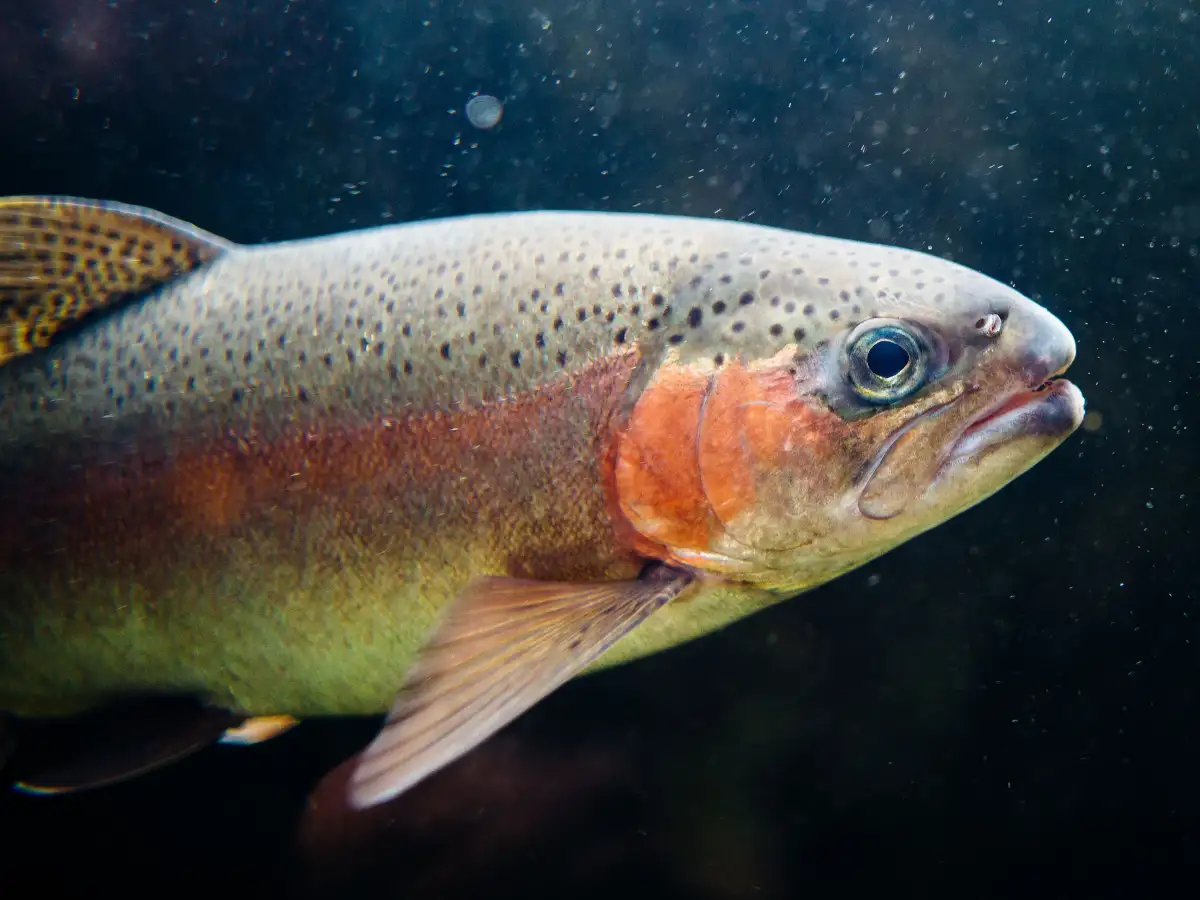
In 1877, Japan received its first shipment of rainbow trout from California, according to Japan's National Institute for Environmental Studies (NIES). The fish, also known in some areas as steelhead, were deliberately introduced for food and sport fishing. At the time, the introduction seemed practical. Rainbow trout are favored by both fish farmers and anglers for their fast growth, good taste, and strong fight on a line.
Rainbow trout are native to the Pacific coast from Kamchatka, Russia, and Alaska to Baja California. The species prefers clean, well-oxygenated water, usually in fast-flowing streams, but some populations also establish in lakes and reservoirs. Some of the trout stocked in Japanese fish farms eventually escaped into nearby rivers. They didn't just survive in the wild once they were free; they started competing with fish that had lived in the rivers of Japan for thousands of years.

From fish farms to Japan's wild rivers
NIES records show that the species has since spread to all of Hokkaido, Tokyo, the Kumanogawa River System in Wakayama, and certain parts of the Chugoku region. That spread was sufficient for rainbow trout to be named one of Japan's 100 worst invasive alien species. This matters because Japan's rivers already support native salmonids, including white-spotted charr and masu salmon. These native fish have evolved in the absence of rainbow trout. The introduced fish changed competition for survival downstream.
Why timing and territory both matter
A part of the problem is competition for space and resources. In 2020, the Ecology of Freshwater Fish journal published a study examining the effect of introduced rainbow trout and brown trout on Japanese salmonids. The research found that in streams where non-native trout and native charr coexist, their preferred feeding and resting areas overlap, pushing native fish out of the habitat they need to survive and reproduce. NIES data adds another piece to the puzzle. White spotted charr spawn in the fall, laying their eggs in gravel nests called redds, where the eggs incubate through the winter. Rainbow trout spawn months later, in spring, and research on Hokkaido streams has documented rainbow trout digging new redds directly on top of the charr's existing nests, destroying the eggs still incubating underneath. Stream ecologists call this redd superimposition, and it is one of the clearest ways an introduced trout can wipe out a native fish's next generation without ever eating an egg directly.