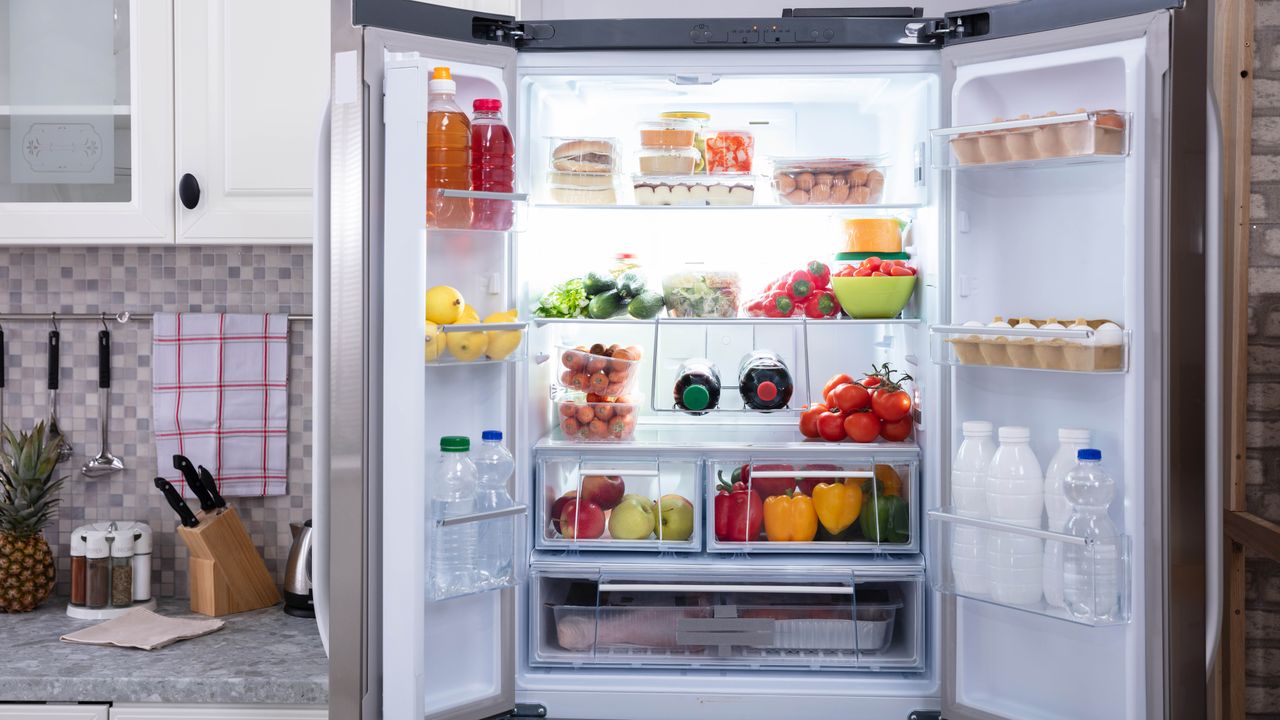
When a heatwave hits, I want to escape into my fridge. It’s the only place in my home that feels cool. However, opening the door and enjoying the cool chill is the last thing I should be doing.
As the temperature soars outside, our trusty refrigerators work overtime to keep our milk from turning into cottage cheese and our proteins safe to eat.

And just as we take extra precautions to keep ourselves cool and hydrated during a heatwave, we need to take extra measures to ensure our fridges and freezers perform efficiently and survive the heat.
So, to avoid an appliance disaster during a heatwave, I'm sharing my golden rules for keeping your refrigerator chilled in the height of summer.
Let it breathe
It’s important to give your refrigerator room to breathe so it functions properly. The cooling system absorbs heat from inside the unit and expels it into the surrounding room. If there is insufficient space for heat to be expelled, it remains trapped around the unit, raising the inside temperature and causing the compressor to run continuously to maintain the desired level.
To provide sufficient space for air to circulate, allow 5cm of clearance around your appliance for ventilation.
What’s more, consider where you place your refrigerator in your kitchen, as it’s best to avoid putting it next to any hotspots, such as an oven or radiator.
Don't put hot food in a refrigerator
When the temperature is high, it’s tempting to put hot food straight into your refrigerator to cool it quickly. However, this is one habit you should stop. While leaving hot food on your countertop to cool for too long is a major food safety hazard, placing it into your refrigerator is also ill-advised.
When hot items are placed in a fridge, the temperature rises, creating a breeding ground for bacteria and putting other food into the ‘danger zone’. To solve the conundrum, the best solution is to either place your food into an ice bath to cool, or use one of the best coolers, before placing the food in your fridge. You could use something similar to Coleman’s Xtreme Marine 28-quart Cooler Box, £68 at Amazon.
Get the temperature right
Rather than just guessing whether to turn the thermostat up or down in my fridge, I use a thermometer to regularly check whether it’s at the right temperature. The optimal temperature should sit between 3 °C and 5 °C, so if it’s higher or lower, I know I need to make an adjustment. Too low and I’m wasting energy, and too high and the food’s freshness and safety are at risk.
If you have a smart fridge, you can control your appliances through an app, meaning you can be away from home during a heatwave and be reassured you won’t return to a meltdown. You could try the LG InstaView American Style Smart Fridge Freezer, £1,295 at Amazon, which lets you control your refrigerator remotely via the LG ThinQ app.
Check the door seals
If the rubber seals around your refrigerator are worn, they will leak out cold air and let hot air in. This causes the appliance to work harder than needed to keep the inside perfectly chilled. You can check how well your seals work by placing a piece of paper between the door and the unit. If the paper holds steady when the door is closed, you know your seals are fine. But if the paper slides down, it indicates that the seals need replacing.
Don't keep opening the door
I’m guilty of constantly opening the fridge door when I’m preparing a meal. Instead of taking everything I need out at once, I hop back and forth, opening my refrigerator multiple times.
However, every time that door gets opened, I’m making my fridge work harder to keep the temperature in check. And especially during a heatwave, when it’s hotter than usual in my kitchen, I’m setting off a heat exchange.
So, now, I think about how often I open my fridge door, and limit the number of times its get open
Keep your fridge full
Your fridge runs more efficiently when it's full rather than empty, so don't let it run down completely before going to the grocery store.
The food inside acts as a thermal mass, and retains its heat much better when the door is opened. Whereas, if there's more space for air, it spills out when the door is opened and is replaced by hot air, causing the compressor to work harder to restore the internal temperature.