'Together we rise. Many congratulations to every member of the Indian women team for lifting the Asia Cup!! Total dominance throughout the tournament.' These were the words of BCCI president Mithun Manhas a day after Harmanpreet Kaur's team beat Sri Lanka by a whopping 72 runs to win the tournament.
Except, Manhas is wrong. India did not lift that trophy. Again.

The champion team refused to accept the trophy from Mohsin Naqvi, president of Asian Cricket Council (ACC), the body that conducts the Asia Cup. Naqvi is also Pakistan's interior minister and president of Pakistan Cricket Board (PCB).
The Indian team did not decide to hold a private ceremony in which the fielding coach handed a medal to the best fielder, even as Sri Lanka collected their runners-up silverware. 'That stand has been taken by BCCI, and we stand by it,' said coach Amol Muzumdar. This clarification is useful. When Suryakumar Yadav, captain of the men's Twenty20 team, was asked about not shaking hands with Pakistan's players and not receiving the trophy from Naqvi in February, he stopped short, on multiple occasions, from saying that this was because of a BCCI directive.
To make matters even more plain, BCCI secretary Devajit Saikia explained the move after the women's team's win. 'We had taken a conscious decision considering all prevailing aspects, and our position had been communicated to the ACC in advance, that the Indian team would not participate in the trophy presentation under the circumstances,' said Saikia. He added that India had participated in the Asia Cup to fulfil commitments as an ACC member.
The question that this now begs is whether BCCI now believes it's a competent-enough body to take decisions that seem to be based on GoI's foreign policy.
GoI's Pakistan policy is relatively clear: the two countries will not play each other bilaterally, but they will fulfil any commitments in multi-team events. In cricket, whether it's Asia Cup or any of the World Cups, India don't just play against Pakistan, schedules ensure that the two teams meet as often as possible. A lot rides on these games in terms of finances and sentiment, although how long that will remain the case when on-field action is so one-sided remains to be seen.
It's not part of any stated government directive that Indian teams or players will not shake hands with Pakistani opponents. In all sports other than cricket, players from both sides of the border observe all the traditions of competition, starting with the most basic: respect for the opposition and the game.
The men's cricket team began this no-handshake business, which spilt onto the women's cricket team. Now, it seems accepting a trophy from Naqvi has become another line no one should cross.
It cannot be merely because Naqvi is Pakistani. After all, Indian players have no trouble interacting with Pakistani match officials or former players who are broadcasters. It does not appear to be because he is PCB president. That position has little relevance to an Indian cricketer. It must be because Naqvi is Pakistan's interior minister.
But this raises an uncomfortable question: should India's cricket teams not seek direction from GoI before staging such acts of protest? If a team represents the country, it's bound not only by the laws of the land but also by the stated policies of the government at the time. From what Muzumdar and Saikia have said publicly, it's clear that BCCI is owning the decision not to receive a trophy from Naqvi.
The broader question is whether it is their decision to take in the first place. It goes without saying that GoI is unlikely to back this decision, and has probably done so informally.
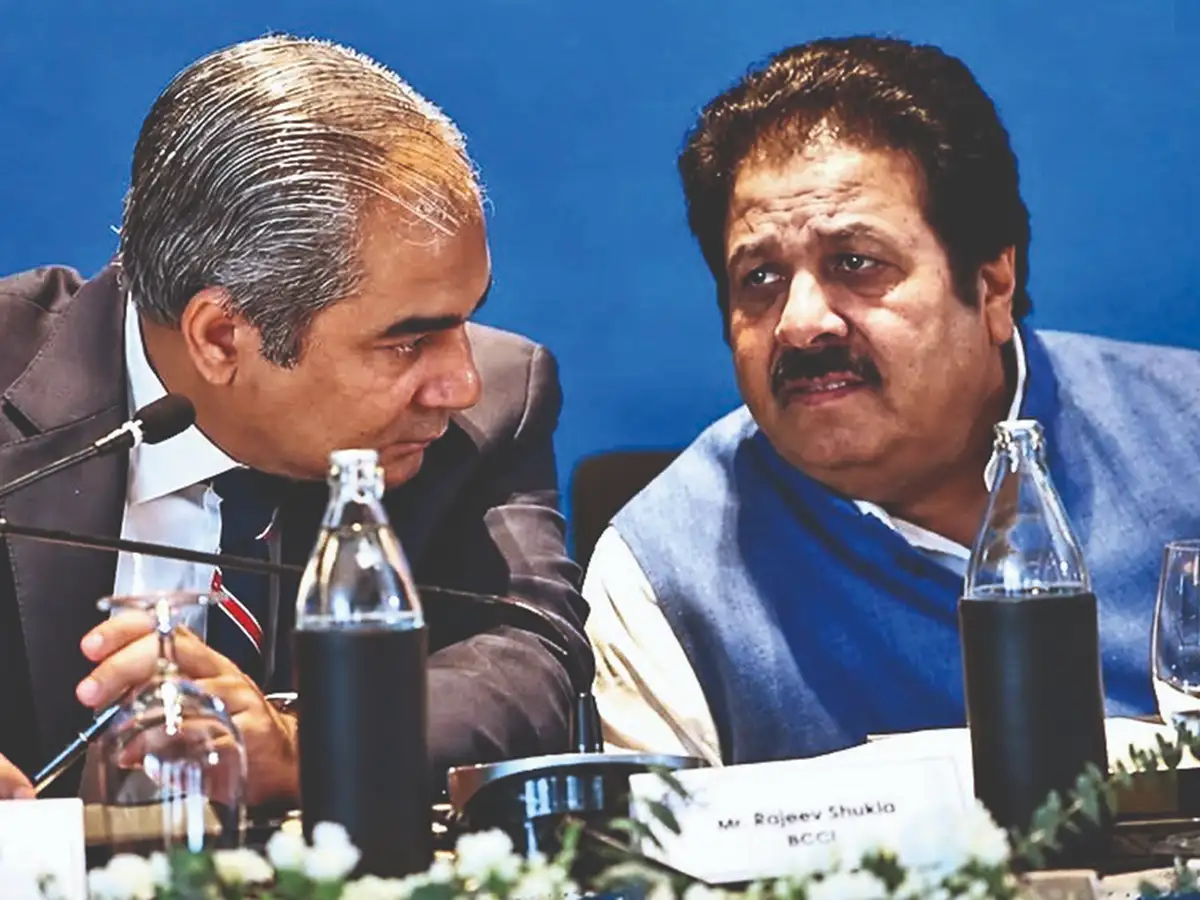
But with a continental sporting event ending in a farcical manner once more, the Indian government owes it to fans who support their team to explain the decision. After all, players are the public face of the Indian team, not the cricket board or its elected functionaries, who had no qualms fraternising with Naqvi at the same event.
The players may symbolically be used as puppets, and even if they disagree, they may reconcile themselves to this fate. But at the very least, they have a right to know who is pulling the strings.