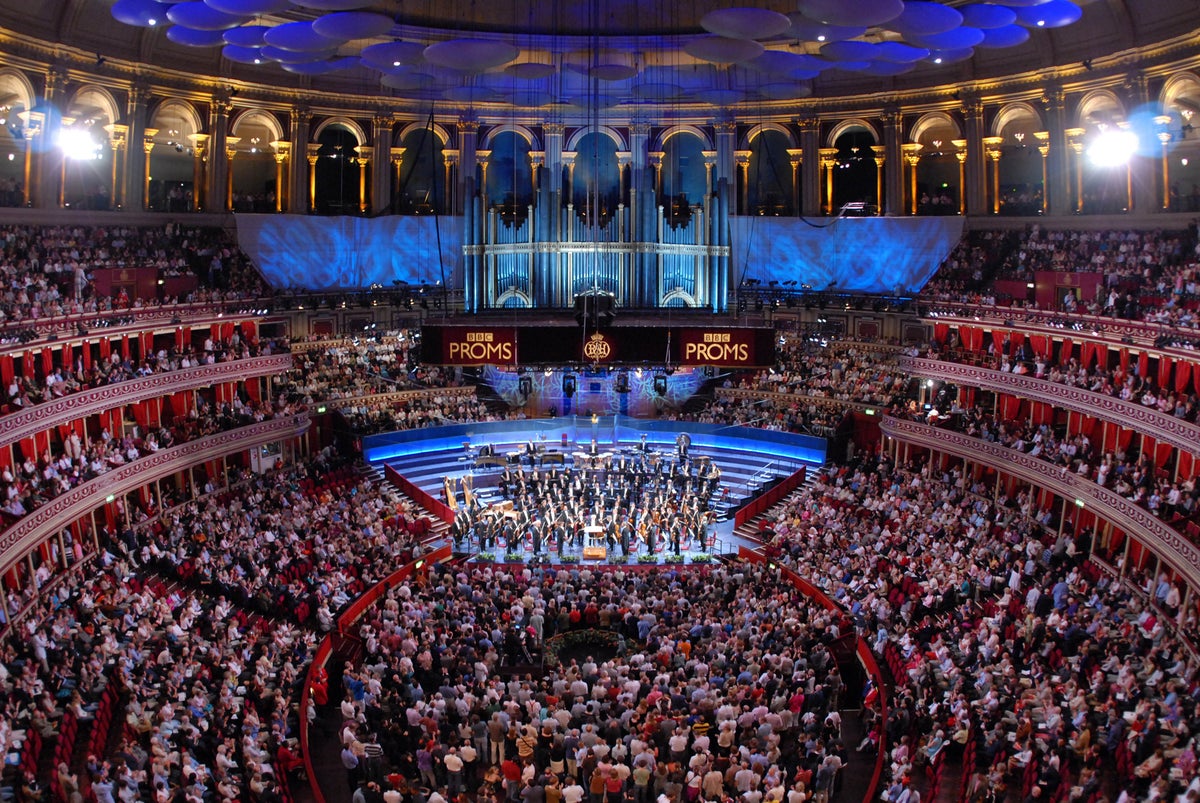
What are the Proms for? Until recently, the aim of the world’s biggest classical music festival was always clear: cram in as much of the standard classical repertoire as possible, while inserting a rich leavening of forgotten works and freshly commissioned new ones. Now, on the eve of the Proms’ 128th season, those goals are history.
The hiatus of the pandemic – during which the Proms ran in reduced and partly digital form – has led to a rethink, with radical results: the priorities now are governed by a social and geographical drive for inclusivity, plus a fervid search for ever more ways of enticing in a youthful and “non-musical” audience. The latter aim is of course not new, and with concerts in Belfast and Bristol, Truro and Glasgow, the BBC can indeed claim to be covering the country. However, some of this year’s events are experimental to a point where it’s impossible to tell in advance whether they will work, or whether they will prove damp squibs.