
Get all your news in one place.
100's of premium titles.
One app.
Start reading
The Conversation
The Conversation
Environment
Anthony Ricciardi, Professor of Biology, Redpath Museum & Bieler School of Environment, McGill University

Ballast water management is reducing the flow of invasive species into the Great Lakes

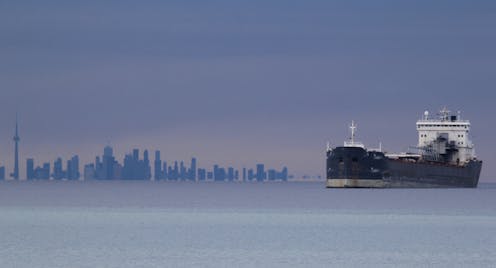
Ballast water discharge from transoceanic ships introduces invasive species to the Great Lakes. (Shutterstock)

Freshwater ecosystems are threatened by a host of environmental stressors from human activities. Among the most insidious and impactful of these is invasion by non-native species.

Over the past two centuries, established populations of nearly 190 non-native species of invertebrates, fishes, plants and microbes have been discovered in the Great Lakes basin. They were introduced through several sources and pathways including canals, pet release, bait bucket dumping, aquaculture escapes and — most notably — ballast water discharge from transoceanic ships.

Sign up to read this article
Read news from 100's of titles, curated specifically for you.
Already a member? Sign in here
Related Stories
Top stories on inkl right now
One subscription that gives you access to news from hundreds of sites
Already a member? Sign in here
Our Picks
Fourteen days free
Download the app
One app. One membership.
100+ trusted global sources.







