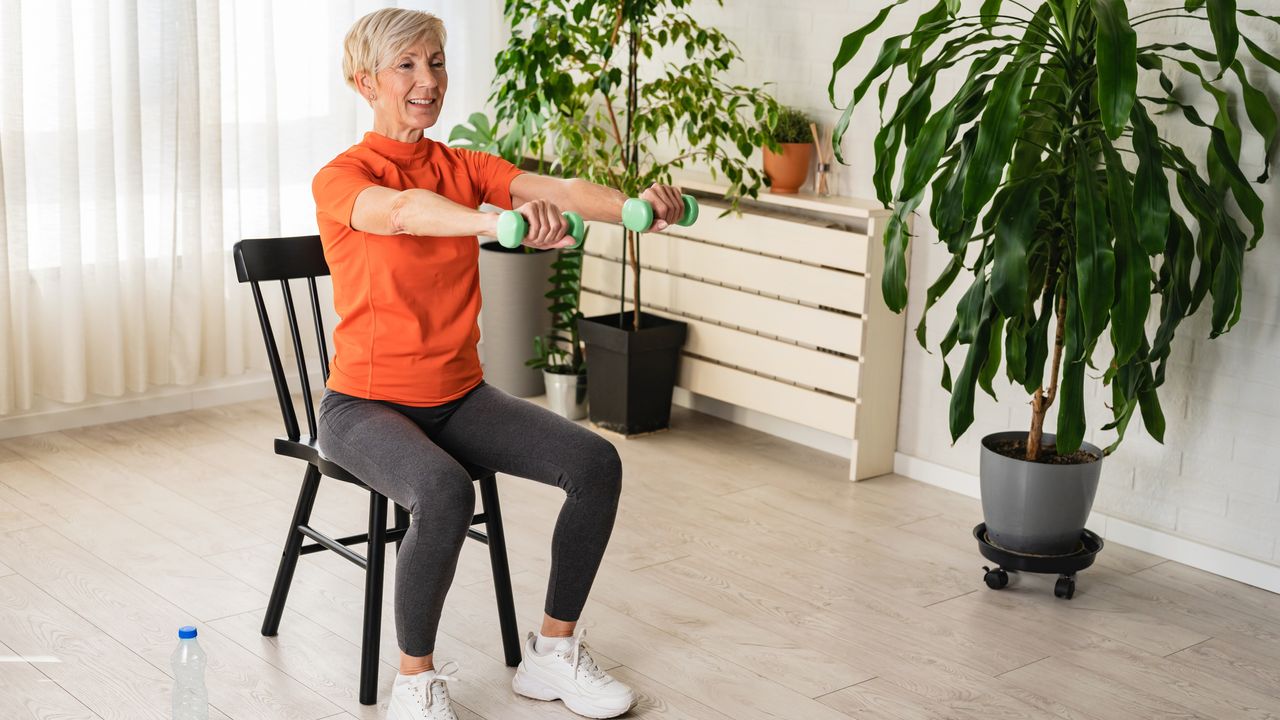
If you want to ensure you're building strength across your whole body but don’t like workouts that put a lot of strain on your joints, especially the knees, you’ve come to the right place. You don’t need to worry about squats or burpees. Instead, try this low-impact, strength-building circuit from trainer Ed Gemdjian.
As we get older, tightness can build up around the quads, hips and glutes, but stopping movement isn’t the answer. Which is why Gemdjian has created this full-body workout to help keep you moving, release tension and safely build strength, even if you’re after gentler, joint-friendly exercises.
Please only try this routine if you are able and listen to your body, especially if you have any injuries or limitations.
Some of the exercises in this routine are purely bodyweight, but you may need a chair or bench for support. A few moves use a pair of the best adjustable dumbbells or one of the best resistance bands.
Before you give the routine a go, just note that there is no pressure to lift heavy; the weight is just there to add a little challenge and help engage your muscles more.
1. Chair Sit-to-Stand
- Focus: Quads, glutes and core
- How: Sit on a sturdy chair with feet hip-width apart. Lean slightly forward, brace your core and drive through your heels to stand tall. Slowly lower back down under control.
- Regression: Use your hands on the chair for support. After all, we all need to be able to sit and stand up from a chair.
- Progression: Hold a dumbbell.
2. Hip Hinge Deadlift
- Focus: Glutes, hamstrings and spinal erectors
- How: Stand tall with knees soft. Push your hips back as your torso tilts forward, keeping your spine neutral and shoulders pulled back. Squeeze your glutes to return to a standing position.
- Regression: Perform with no load, focusing on hip movement. Use the back of a chair to provide a target for your hips to reach behind you.
- Progression: Add dumbbells or a resistance band looped under your feet.
3. Dumbbell or Banded Row
- Focus: Lats, rhomboids, posterior shoulders
- How: Hinge slightly at the hips with a flat back, holding dumbbells or band handles. Pull your elbows back and squeeze your shoulder blades together.
- Regression: Perform one arm at a time with hand support on a chair.
- Progression: Add a pause at the top or increase resistance.
4. Incline Push-Up or Standing Shoulder Press (choose based on comfort)
Option A: Incline push-Up
- Focus: Chest, shoulders, triceps
- How: Place your hands on a bench or countertop, step back so your body forms a straight line, then lower your chest toward your hands. Press away and fully extend your arms.
- Regression: Use a higher surface, like a wall.
- Progression: Lower the surface height.
Option B: Standing shoulder press
- Focus: Shoulders, upper back and triceps
- How: Stand tall with feet grounded and dumbbells at shoulder height. Press overhead, avoiding arching the lower back, then lower slowly.
- Regression: Use one arm at a time or lighter weights.
- Progression: Alternate arms or add a slow eccentric phase.
5. Supported Step-Back or Reverse Tap
- Focus: Glutes, quads, hip stabilizers
- How: Hold a chair or wall for balance. Step one foot back, lightly tapping your toe behind you while keeping the front knee soft and tracking over the ankle. Return to standing.
- Regression: Keep both feet grounded and shift weight backward.
- Progression: Add a small knee bend or light dumbbells.
6. Lateral Lunge with Contralateral Reach
- Focus: Glutes, adductors, obliques, balance
- How: Step out to one side and push your hips back into a shallow lunge. Reach your opposite hand toward the outside foot (right hand to left foot, for example), keeping your spine long and core braced.
- Regression: Keep the reach small and range shallow.
- Progression: Add a light dumbbell or band, or increase range if comfortable.
7. Standing Banded Pallof Press
- Focus: Core, anti-rotation strength, posture
- How: Anchor a band at chest height. Hold it close to your chest with tension, step away from the anchor and press your arms straight forward. Hold for two seconds, resisting rotation, then return.
- Regression: Sit in a chair for more stability.
- Progression: Increase band tension or perform from a half-kneeling position.

Follow Tom's Guide on Google News and add us as a preferred source to get our up-to-date news, analysis, and reviews in your feeds.