Get all your news in one place.
100’s of premium titles.
One app.
Start reading
The Times of India
The Times of India
National
Sribala Vadlapatla | TNN

BA.4 case: South African national enrolled in Hyderabad business school

HYDERABAD: A day after India's first case of BA.4 subvariant of Omicron was reported from Hyderabad, it has now emerged that the South African national, who tested positive for the variant, had enrolled himself under a corporate educational exchange programme in a city business school a week ago.

The authorities traced his infection after genome sequence data from both GISAID (Global Initiative on Sharing all Influenza Data) and Indian SARS–COV-2 Genomics Consortium (INSACOG) was revealed two days ago.
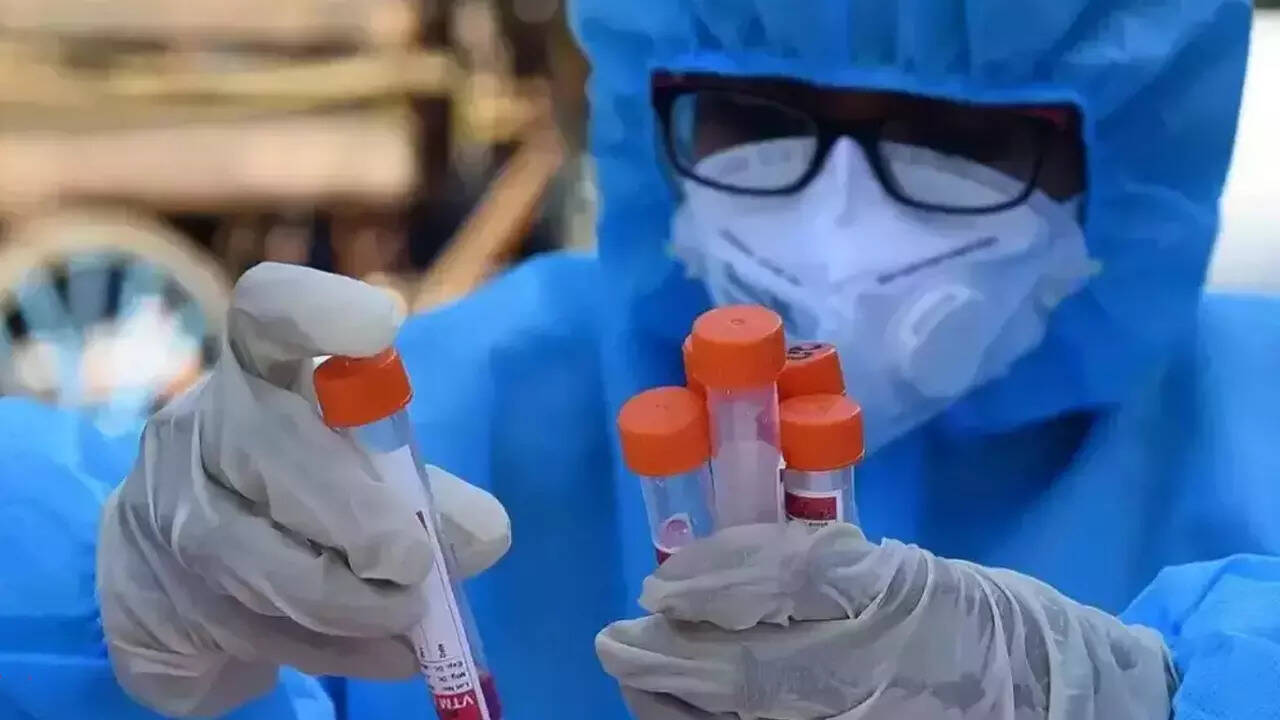
According to sources, the educational exchange programme lasted three days and those who came in contact with the South African national have been isolated. Four more samples have also been collected from asymptotic people following contact tracing on Thursday.

While the business school adhered to social distancing norms, it is learnt that authorities had to persuade the school to take samples from suspects — mostly food handlers — who were present during the time when the foreign national stayed there.

Meanwhile, during the global genome sequence analysis, it was discovered that 99.9% of samples collected, analysed and updated to date in India (up to May) are BA.2 type.

At the same time, global analysis reveals that 61,190 samples have been analysed and updated, with only 549 of BA.4 subvariant and majority (123) of them emerging from Africa.

Omicron has five major variants, ranging from BA.1 to BA.5 and only BA.1, BA.2 and now BA.4 have been discovered in India. There are 60 sub-types of these major variants.

"BA.4 was first discovered in Africa in January this year. The sub-variant of Omicron has recently caused a spike in South Africa and some European countries such as the UK. This is primarily a sister lineage from BA.1 and BA.2. It has been designated as a variant of concern by the World Health Organisation," Dr Kiran Madala, an ICMR-certified researcher, explained.

Since there are no major health concerns with this variant, there is no need to be worried about it, he added.

Sign up to read this article
Read news from 100’s of titles, curated specifically for you.
Already a member? Sign in here
Related Stories
Top stories on inkl right now
One subscription that gives you access to news from hundreds of sites
Already a member? Sign in here
Our Picks
Fourteen days free
Download the app
One app. One membership.
100+ trusted global sources.