Get all your news in one place.
100’s of premium titles.
One app.
Start reading
TechRadar
TechRadar
Mike Moore

AWS re:Invent 2025 - all the day three news and updates live from Las Vegas

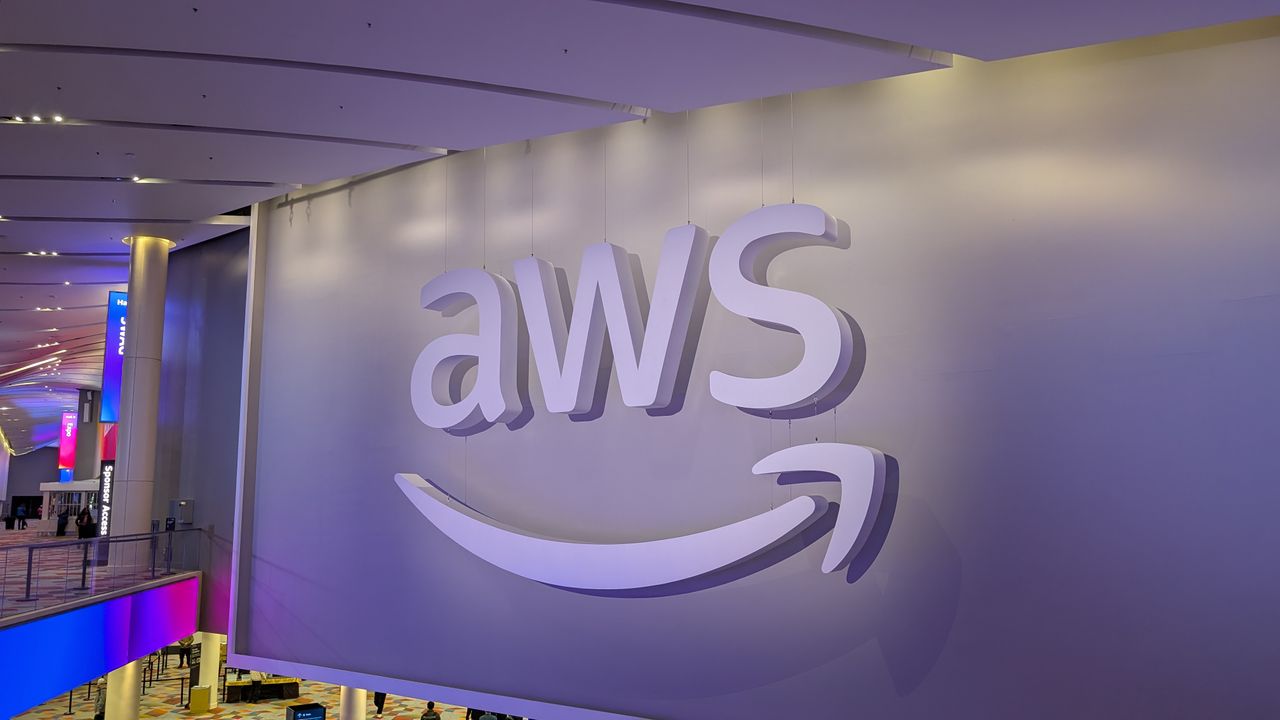
AWS reinvent 2025.

We're live in Las Vegas for AWS re:Invent 2025!

The show has seen a packed few days full of news and updates from the company. We've already had the opening keynote by AWS CEO Matt Garman , and a more AI-focused talk from Dr. Swami Sivasubramanian, VP, AI and Data, AWS

The show then wrapped up a morning talk from Peter Desantis and Dave Brown, before the traditional closing keynote from Dr Werner Vogels, VP and CTO at Amazon.com.

The show is now over, but you can revisit our live blog below for all the updates as they happen at AWS re:Invent 2025 - and here's the biggest stories we saw:

Hello from Las Vegas! We're all ready for a packed few days of AWS news and announcements.

Things will be starting off tomorrow with a keynote from AWS CEO Matt Garman, beginning at 8am PT, so tune in then to see all the updates as they happen.

Good morning from Las Vegas! It's day one of AWS re:Invent 2025, and we're raring to go.

Time for some breakfast and coffee before Matt Garman's keynote starts at 8am PT.

The opening keynote is one of the high points of the show, and there's huge queues to get in - but we are in and seated now!

As always, there's loud pumping tehcno to welcome us in, courtesy of DJ Kara...

(Image credit: Future / Mike Moore)

So what should we expect from Matt Garman's keynote? There will doubtless be a number of new product announcements, and also some special guests.

We've been told top execs from Sony and Adobe will be here, plus some surprises, we have no doubt...

(Image credit: Future / Mike Moore)

Here we go! After a prety fun little light show, and brief video outlining how (surprise surprise) AI is going to help change the world, and AWS is powering this, the lights go down and AWS CEO Matt Garman takes to the stage.

Apparently this keynote is being streamed on Fortnite...who would have expected that?

Garman starts with a recap of the last year for AWS, which has been a big year - just the $132bn, in fact.

Over 500 trillion objects are now stored in Amazon S3, and Bedrock and other systems also saw a huge boost.

There's also a shout-out for Ocelot, it's quantum chip prototype.

This is all backed up a global resilient network, with 38 regions, with three more to come soon, Garman says.

"But at Amazon, everythign starts with the customer," Garman says, "the largest enterprises in ever single industry and vertical, are running their businesses on us."

He has a particular fondness for his start-up customers, and it's time to hear from some of them.

(Image credit: Future / Mike Moore)

"So what motivates us?" Garman asks.

"We wanted to make it possible for every developer...to access the technology, infrastructure and capabnilities to build whatever they want."

Garmn notes developers often struggle to have the time to get all of this together, and less time building - and this is what AWS wants to help solve.

"Giving all of you the freedom to keep inventing is why we're here today...every single industry is in the process of being reinvented," he says - with AI playing a key role.

"But the true value of AI has not yet been unlocked," he says - with AI agents now playing a key role.

"I believie the advent of Ai agents has brought us to an inflection point," he says, "this will have as much impact on your business as the Internet or the Cloud."

But doing all of this will require an all-new tech stack, Garman says.

(Image credit: Future / Mike Moore)

Garman starts with a note on hardware - namely Nvidia GPUs.

He notes the two companies have worked together for 15 years, and AWS is "the best place to run Nvidia GPUs."

"Nothing is too small for us to focus on - those details really matter," he says.

A new P63 GPU offering will bring Nvidia's GB200 and GB300 will bring the biggest organizations more power and efficiency - including OpenAI, which is using it to run and improve OpenAI.

(Image credit: Future / Mike Moore)

Garman says AWS wants to take this further - and announces AWS AI Factories. Essentially acting as a private AWS region, the new offering allows customer-specific AI infrastructure to be deployed directly into a customer's data centers.

There's also a shout-out for Trainium, which Garman says is becoming increasingly popular for inference work, including Perplexity's Claude AI service.

He also gives us a look at Project Rainier, where over 500,000 Trainium 2 chips are helping power and scale Claude's AI development.

But that's not all - Garman also reveals the new step-up - Trainium 3 - with new ultra servers now available, offering 4.4x compute over the previous generation.

(Image credit: Future / Mike Moore)

Garman unveils one of the new racks on stage - it's certainly...tall? Thr crowd goes wild for the new hardware though.

(Image credit: Future / Mike Moore)

Garman also reveals AWS is hard at work on Trainium 4, which will provide more performance, bandwidth and memory capability - but there's no news on a possible release date just yet.

Now, we're moving on to Inference platforms - a critical consideration for AI development.

"We're seeing nearly every single application in the world being reinvented by AI," Garman notes, with inference playing a key role.

Amazon Bedrock is playing a major part for customers across the world, he notes - so what's new for the platform?

Model choice is critical when building, Garman notes - and Bedrock offers a whole bunch to pick from - including the likes of DeepSeek, Meta, OpenAI and Writer.

But there's more to come! New models from Google, Nvidia, Kimi and Minimax are making their debut - including some new offerings from Mistral.

Amazon Nova, which provides foundation models, is also getting an upgrade - an all new Amazon Nova 2, available in three tiers - scaling from everyday workloads up to more complex work, and a new speech-to-speech humanlike conversations.

Garman says Nova 2 stands up well in offering fast, cost-effective reasoning models for everyday workloads against the competition.

Now we move on to your data - what makes your business special, Garman notes, and having the right model can make all the difference.

Customization is key, he notes - but training your own model can be super-expensive, and building from an open weights model can work, but these can have limits on how effective they can be.

So what's the answer?

Garman reveals Amazon Nova Forge, which lets customers build their own frontier model with access to "open training" models, mixing your data with Amazon-curated datasets, before deploying on Bedrock.

(Image credit: Future / Mike Moore)

Now it's time for our first major customer talk - John Kodera, Chief Digital Officer and Corporate Executive Officer, Sony Group Corporation, comes to the stage.

He wants to talk about "Kando" - a term which covers a range of definitions, but includes the feelings one has when watching a film or playing a game.

Sony has a proud history of reinventing itself, he notes, and is no longer just a hardware company, but so many areas of entertainment.

(Image credit: Future / Mike Moore)

AWS and Sony have been working together since 2010, connecting up to 129 million gamers to connect and experience "Kando" together, he notes - with creators also given more tools and insight.

This Sony engagement platform brings fans and creators closer together, and needs tools to harness the wealth of data within the company's data ocean using AWS platforms.

AI is also playing a key role, with Sony's internal generative AI tools running on Amazon Bedrock.

Garman returns, and it's time to talk about agents.

"Agents are exciting, because they can take action and get things done," he notes, moving on to talk about Amazon Bedrock Agentcore.

But with agents only set to play a bigger role in the future, what is next for AWS in this space?

(Image credit: Future / Mike Moore)

Garman likens building agents to raising children - you want to make sure they grow and prosper, but don't get into trouble, and use the right tools.

Customers can struggle with this, but luckily AWS has the answer - Policy in AgentCore, which provides real-time, deterministic controls for how your agents interact with your enterprise tools and your data, making sure they stay in bounds.

(Image credit: Future / Mike Moore)

Time for another customer case study - and it's a big one.

Shantanu Narayen, Chair and Chief Executive Officer, Adobe, takes to the stage to talk about how his company is using AI.

"We're clearly witnessing a golden era of creativiy, with AI amplifiying and enabling people to take the next step," Narayen says, "we're constantly pushing the boundaries of what's possible."

"When it comes to AI for creativity, we're reimagining every stage of the process."

Firefly and Photoshop are taking a leading role in amplifying AI, he notes, all backed up by AWS tools such as Amazon S3 and EC2.

(Image credit: Future / Mike Moore)

Garman returns, and moves on to AWS' own agentic solutions.

The company focused on areas where it feels it can offer real expertise, he notes - as a massive, multi-national business, it can provide real-world experience.

Customer service is another key area Amazon knows a lot about, Garman notes - with its Amazon Connect platform offering a range of contact center services.

(Image credit: Future / Mike Moore)

Our final major customer case study is from May Habib, Chief Executive Officer and Cofounder, WRITER, who outlines how AWS is helping it boost and develop its AI agents.

The company is now bringing Amazon Bedrock guardails to its platform, giving customers much more oversight and control over their entire AI stack.

(Image credit: Future / Mike Moore)

Garman is back, and it's time to talk about developers - and especially, technical debt.

This is something costing companies billions of dollars every year - so how can AI help?

Garman reveals some new tools for AWS Transform, aimed at supporting all kinds of modernization, giving custom options to create code transformation agents for any code or API framework.

(Image credit: Future / Mike Moore)

That's not all though - as Garman says there is a chance for all software development to be reimagined.

The company announced Amazon Kiro earlier in 2025, aiming to make coding simpler and more effective - and now, there's some new expansions coming.

Garman reveals start-ups can now get a year of Kiro for free, and that Amazon itself is now relying on Kiro as its own in-house development platform.

Garman reveals Frontier Agents - a new kind of agents which are autonomous, scalable and long-running.

These include the new Kiro autonomous agent - which looks to help developers create faster and more effectively.

(Image credit: Future / Mike Moore)

There's also a new AWS Security Agent, which helps users build applications that are secure from the start across AWS, multicloud, and hybrid environments.

Garman notes how AI-accelerated development can greater lengthen security strain, but the new agent can proactively scan code for vulnerabilites, and even carry out penetration testing, taking time-intensive tasks away from over-stretched security workers.

(Image credit: Future / Mike Moore)

Finally, there's AWS DevOps Agent, looking to simplify, resolve and proactive spot incidents before they happen.

The always-on service is able to continuously monitor your code and sources, giving in-depth insights and alerts to spot issues.

"This is a big leap forward in the journey towards unlocking the value of AI," he notes.

We're onto the final stretch now, as Garman switches to everything else being announced at the show.

He's planning to quickly rush us throught 25 new launches - in just 10 minutes.

Pray for the fingers of us live-bloggers...

(Image credit: Future / Mike Moore)

Garman is talking so fast, I'm not even going to try and keep up with everything being announced and talked about here - I'll just try and get a photo of the sum-up slide at the end.

Garman is being kept honest by a shot clock - so eyes on the prize...

(Image credit: Future / Mike Moore)

It got a bit tight at the end, but Garman rattles through all 25 announcements in just a snifter under 10 minutes - an impressive end to all the news being revealed here.

As promised - here's everything he covered...

(Image credit: Future / Mike Moore)

And with that salvo of news, it's a wrap on the opening keynote of AWS re:Invent 2025! It's been a back few hours, so we're off to digest everything we heard, and take a trip around the show.

We'll be back soon, so stay tuned to TechRadar Pro for all the latest updates soon.

That's a wrap on day one - but be sure to tune in tomorrow for even more news and updates as they happen.

Good morning from day two of AWS re:Invent 2025!

It's another early start for us, so we're off to get coffee and breakfast before this morning's keynote from Dr Swami Sivasubramanian, Vice President, Agentic AI - starting at 8.30am PT.

We're in and seated - passing by a Guiness World Record attempt out in the lobby for the world's largest game of Rock, Paper, Scissors (which isn't a sentence I ever thought I'd type...)

(Image credit: Future / Mike Moore)

So what should we expect from this morning's keynote?

In a word (or two, depending on how pedantic you want to be) - more AI. Sivasubramanian is one of AWS' top minds when it comes to all things AI, and often structures his keynotes around themes on how the technology can do good and benefit workers of all levels.

We're also expecting more news and announcements today - possibly more from Kiro?

Here we go - after a short video once again outlining the potential AI technology can bring to the world, the lights go down and Swami Sivasubramanian, AWS Vice President, Agentic AI, takes to the stage.

Sivasubramanian asks us to think back to earlier technological successes, and how this made us feel.

The possibility of building anything, of limitless creativity, is what's really important, he says.

AI agents are helping builders around the world realise this feeling even more than ever, he says.

(Image credit: Future / Mike Moore)

We are no longer limited by the syntax of language, or the parameters of past systems, Sivasubramanian says.

"We are living in times of great change," he says. "Agents give you the freedom to build without limits."

He highlights customer use cases from ocean clean ups to brain analysis to show how effective AI agents can be in a wide variety of use cases.

"The reality is, building and scaling these systems can be harder than the problems they solve, " Sivasubramanian says.

So what's the answer?

Surprise surprise - it's agents!

Agents can go above and beyond what simple chatbots and services can offer, Sivasubramanian says, proactively searching for solutions and assistance.

(Image credit: Future / Mike Moore)

Agents require a strong model, effective code and useful tools to bring them to life, Sivasubramanian says.

The true power of AI is making all of these work together effectively - but this is often a labor-intensive and tricky process, he notes.

(Image credit: Future / Mike Moore)

"In this new world, we believe how you build agents should be really simple," Sivasubramanian says.

He highlights AWS' Strands Agents SDK, which offers a whole new way at developing agents that saves time and stress across the board.

(Image credit: Future / Mike Moore)

Sivasubramanian announces new expansions for Strands - support for TypeScript and Edge devices, hopefully unlocking new agentic capabilities.

With so much activity going on, how can companies see true results when it comes to development and PoCs?

Getting agents to production is still too hard, Sivasubramanian notes, and complexity slows down innovation.

(Image credit: Future / Mike Moore)

Amazon Bedrock Agentcore looks to solve many of these problems, Sivasubramanian notes, providing the tools and services that keep everything running smoothly, while you focus on buidling breakthroughs.

He uses the examples of identity authentication, which can be a hugely complex process, but with agents to take much of the heavy lifting, developers can focus on other key tasks.

Now, Sivasubramanian wants to talk about what's next for AgentCore, with new capabilities being announced here at re:Invent 2025.

Memory is the key differentiator going forward, Sivasubramanian notes, but can be something agents struggle with - especially when it comes to the when, or the why of decisions.

What you need is not just the memory of the past, but also the context of the current interaction, Sivasubramanian notes.

He reveals the new AgentCore Memory episodic functionality, which he says can build agents which truly understand user behavior and recognize patterns across similar situations.

"The more your agents experience, the smarter they become," he notes,

Now, we're taking a look at how Blue Origin is using AWS for its space exploration work. It's certainly a break from the normal use cases, as the company explains how it uses AWS AI technology for its automated landing and takeoff procedures.

Sivasubramanian returns, and it's time to talk about efficiency - the next big question, especially when it comes to latency and scale.

Model customization is the answer, he notes - and AWS wants to help turn your vision into reality.

(Image credit: Future / Mike Moore)

Over-training can be a bad thing, he notes, as the model may become so focused on specifics, it loses focus on what made it effective in the first place.

(Image credit: Future / Mike Moore)

These are the big questions, Sivasubramanian says, unveiling Reinforcement Fine-tuning in Amazon Bedrock, which promises to improve model accuracy with advanced customization.

Next, there's new model customization tools in Amazon SageMaker AI, which allows users to customize models in days instad of months.

(Image credit: Future / Mike Moore)

There are a lot of challenges around customization, Sivasubramanian admits - and often this entails starting from scratch, which can be hugely expensive and inefficient.

Sivasubramanian outlines how the newly-annoucned Amazon Nove Forge can go a long way to helping with this, providing businesses with a smoother and easier passage.

(Image credit: Future / Mike Moore)

Next, Sivasubramanian announces checkpointless training on Amazon SageMaker HyperPod, which allows users to recover training from faults in minutes acorss thousands of AI accelerators - what he calls "a paradigm shift" in training development.

(Image credit: Future / Mike Moore)

Next, we have another customer story - Guillermo Rauch, CEO of Vercel is here.

He explains how Vercel Fluid Compute is powered by Amazon EC2 and AWS Lambda, helping the company create "fully self-driving compute infrastructure".

Sivasubramanian is back, and it's time to talk about trust.

"As we hand over more tasks to AI agents...we need to be able to trust they will be able to perfrom as expected," he notes.

"Agents introduce a whole new world of challenges which require radical new approaches."

To explain more about how AWS is making its agents more trustworthy, Sivasubramanian introduces Byron Cook, VP, Distinguished Scientist, Automated Reasoning Group, AWS, to the stage.

Like giving a teenager access to your credit card, giving an agent access to your more precious information can be dangerous, Cook says - you might not get back exactly what you want.

(Image credit: Future / Mike Moore)

Automated reasoning is the key to making AI agents most trustworthy, Cook notes, using algorithms to logically prove or disprove the behavior of a system.

(Image credit: Future / Mike Moore)

Internally, Cook notes how AWS is using automated reasoning for tasks such as policy interpretation, storage, virtualization and more - "basically any place where failure is unacceptable".

This approach, he says, is now being brought to agentic AI.

(Image credit: Future / Mike Moore)

Sivasubramanian is back, and wants to talk about relaibility - a crucial consideration for businesses.

Agents often struggle with being asked the same question repeatedly, he notes - so how can this be improved?

How do we make this easier, Sivasubramanian notes - and a better model is the answer.

The new Amazon Nova Act is the solution - a new service to build and manage fleets of agents for automating production UI workflows at scale.

(Image credit: Future / Mike Moore)

Nova Act provides a whole new way of agent training, Sivasubramanian notes, offering end-to-end training for everything an agent will ever interact with.

(Image credit: Future / Mike Moore)

Now, Sivasubramanian moves to look at the Frontier Agents announced yesterday - covering Kiro, DevOps and security with new, smarter services.

These agents are smart and more autonomous, he notes, allowing them to work alongside human workers much more effectively.

Time for another guest - Sivasubramanian wlecomes Colleen Aubrey, Senior VP, AWS Applied AI Solutions, to the stage.

She notes that transformation and agility aren't opposed - they're partners, and can be critical for business success.

"The real prize of AI is new products, services and business models," she notes, but the journey is accelerating - with the ability to reimagine how we work the only limitation.

(Image credit: Future / Mike Moore)

Sivasubramanian is back, and it's the home straight for us.

"Everything we're showing is just the beginning of what's possible with AI," he says, "with every step we are making it easier for anyone to build."

(Image credit: Future / Mike Moore)

And that's a wrap - Sivasubramanian thanks us for coming, and we're off to see more of the show floor, so come back later for more updates at re:Invent 2025.

(Image credit: Future / Mike Moore)

Good morning from the final day of AWS re:Invent 2025! After a couple of full days, the show wraps up today.

First off, Today, we've got a morning talk from Peter Desantis and Dave Brown, before the traditional closing keynote from Dr Werner Vogels, VP and CTO at Amazon.com.

There will be plenty to see, so stay tuned for all the latest updates.

We're in and seated...and in a lovely change of pace, today's pre-keynote is a four-piece band playing rock covers.

Although they've started with The Proclaimers "I Would Walk (5000 miles)", so I'm not sure how the rest of the set will go next...

(Image credit: Future / Mike Moore)

(it was Tears for Fears, "Everybody Wants to Rule the World", in case anyone wants to know)

OK, after that thunderous set, I think it's fair to say the crowd is ready for some AWS fun...

The lights go down and Peter DeSantis, SVP, Utility Computing, AWS and VP, takes to the stage.

(Image credit: Future / Mike Moore)

The new generation of AI-driven apps is going to drive big changes for infrastructure, he notes - and this harks back to what AWS has focused on since its inception.

DeSantis outlines how security, availability, elasticity, cost and agility all remain key pillars for AWS.

AI workloads have led to a huge increase in demand - and AWS wants to offer the same kind of elasticity as you would get with S3 for your AI services.

(Image credit: Future / Mike Moore)

Having the right tools for the job, whether you're a start-up or multinational business, is vital, DeSantis notes - and AWS' breadth of offering makes it the ideal partner.

"We believe that when we remove constraints and give you the right building blocks, that's when the magic happens," he says.

(Image credit: Future / Mike Moore)

DeSantis moves on to talk about AWS' hardware investment - and it's time to talk Graviton.

He welcomes Dave Brown, VP, Compute and Machine Learning Services, AWS, to the stage.

(Image credit: Future / Mike Moore)

Graviton has been a major success story for AWS, Brown says, naming customers from Adobe to Formula 1.

(Image credit: Future / Mike Moore)

Brown runs through the specifics of what makes Graviton so special - starting with cooling, and how AWS redesigned its model to add a direct-to-silicon cooling solution, meaning heat can move more efficiently, and power costs are reduced

He also mentions how the silicon itself enjoys a continuous cycle of development, another key way for AWS to stand out from its competition.

(Image credit: Future / Mike Moore)

Brown unveils Graviton5 - the company's most efficient CPU ever - with 2x number of cores, and higher L3 capacity.

These repesent a "generational step forward," he says.

(Image credit: Future / Mike Moore)

To find out more, Brown introduces a special guest - Payam Mirrashidi, VP Cloud Systems and Platforms at Apple.

Many key Apple services run on AWS, he notes, from Apple TV to iCloud - but running such a massive operation leads to a host of big problems, from reliability to scalability to cost.

Mirrashidi mentions Swift, Apple's in-house programming language, as another key example, as it shifted from app development to servers.

Apple has to process billions of requests per day, on systems running AWS Graviton, he notes.

(Image credit: Future / Mike Moore)

Brown returns, and it's time to talk about coding - and Lambda.

Ten years since its inception, the platform remains incredibly popular, and has expanded exponentially.

The need to not have to manage infrastructure has made Lambda a top choice for businesses - but can going serverless go even further?

He announces AWS Lambda Managed Instances - a new way for Lambda functions to run within EC2 instances within your account.

Brown moves on to talk about AI - its popularity has led to a major change in what workloads are being handled by AWS.

(Image credit: Future / Mike Moore)

Inference in particular has changed a lot - and needs a new way of looking at.

Brown outlines Project Mantle, a new AWS Bedrock project aimed at simplifying how inference requests are handled - letting them optimize what they care about.

Your performance is now defined by your usage - leading to a more effective workflow across the board.

There's a whole host of new tools for Amazon Bedrock - here's what the company has in store.

(Image credit: Future / Mike Moore)

Brown finishes up, and DeSantis comes back onstage - time to talk about vector search.

Another crucial consideration for the future, these searches will play a key role in AI inference going forward, but require significant infrastructure boosts to be effective.

Existing models are highly specialized, often to handle specific kinds of data - and combining these are often very tricky, he notes - but the new AWS Nova Multimodal Embeddings model can help, creating an industry-first unified understanding off your data.

(Image credit: Future / Mike Moore)

New Amazon S3 Vectors are also now generally available, reducing the cost of uploading, storing and querying vectors by up to 90%, allowing users to store billions of vectors.

Time for another customer story - Jae Lee, CEO & Co-founder, TwelveLabs comes to the stage.

He outlines how his company is turning video content into structured data, and the benefits this can bring to customers across media, entertainment, law enforcement and more.

All of this, of course, is running on Bedrock and S3.

(Image credit: Future / Mike Moore)

DeSantis is back, and now it's time to talk about AI workloads, which he says are "growing explosively".

Trainium supports almost every AI workload imaginable, he notes, supporting all sorts of modality.

"Simply put, Trainium can handle every AI workload that you want to run today," DeSantis says.

(Image credit: Future / Mike Moore)

DeSantis runs us through the new Amazon EC2 Trn3 UltraServers - a major upgrade on the previous generation, offering up to 144 Trainium3 chips.

They are feature a new neuron switch layer, which leads to 4.4x higher compute performance, and 3.9x more memory bandwidth.

(Image credit: Future / Mike Moore)

Time for our final customer example - DeSantis welcomes Dean Leitersdorf, CEO and Co-founder, Decart, to the stage.

He outlines how the company's tools are looking to upgrade video interactions, using foundational models and video diffusion models running at the same time - all on Trainium3.

(Image credit: Future / Mike Moore)

DeSantis is back (without his jacket for some reason) to wrap up.

"The fundamentals matter more than ever," he says, "but it's still day one with AI...and AWS will be here, just like we have been for the last 20 years."

(Image credit: Future / Mike Moore)

That's a wrap for this morning - we're off for a quick break, but we'll be back later this afternoon for the closing keynote from Werner Vogels, which is always a highlight, so join us then for the big finish.

Welcome back - we're here for Werner Vogels' closing keynote, which is always a sight to behold.

Luckily the music for this afternoon's keynote is a little more relaxed than this morning's rock band - we have an all-female string quartet playing covers of familiar tunes.

If you ever thought Hotel California by The Eagles, or The Beatles' "Eleanor Rigby" weren't *quite* long or dreary enough - you've never heard them played at half speed by a classsical group...

(Image credit: Future / Mike Moore)

On every seat is a little printed pamphlet from Dr Vogels - an extra treat for all his fans.

"The Kernel" has the headline of "The dawn of the Renaissance Developer" - a hint of the theme for the keynote?

(Image credit: Future / Mike Moore)

The kernel is packed full of articles and thought-pieces from some top AWS minds, so there's plenty to digest in there...along with some more light-hearted parts such as Werner's coding playlist

(Image credit: Future / Mike Moore)

Wise words after a long week here at AWS re:Invent 2025...

(Image credit: Future / Mike Moore)

And with a final flourish of Paint it Black by The Rolling Stones, it's time for the keynote.

As usual, Vogels opens with short film in his normal irreverent style, this year going back in time with a DeLorean to a time where COBOL and punch cards ruled the tech world.

(Image credit: Future / Mike Moore)

After further trips to the age of C++ and DB, as well as the advent of the cloud, Vogels takes us through the need for engineers throughout the years, up to the present day, where the questions of what AI means for devs still remain.

"Or is this just another new beginning?" Vogels says, arriving on stage to a rapturous welcome.

If anyone had a Metallica theme for Vogel's usual T-shirt style, well done.

(Image credit: Future / Mike Moore)

One question keeps coming up, no matter where he goes, Vogels says - "will AI take my job?"

"Maybe," he says - to cautious chuckles - suggesting we change it to, "will AI make me obsolete?"

"No - if you evolve."

Vogels says he's seen first hand how people can evolve, given the right tools - just look at Amazon!

(Image credit: Future / Mike Moore)

After a run-through of the key evolution points of the last 50 years, Vogels brings us up to the present day.

"Our tools today are extraordinary," he notes, "but none of this removes the work that only you can do"

"Remember, the work is yours," he adds, "not that of the tool's...it's your work that matters."

(Image credit: Future / Mike Moore)

"There's neber neem a time to be more excited about being a developer," Vogels adds, mentioning a quote from Jeff Bezos concerning 'Golden Ages' on the way.

"Progress in one field accelerates progress in other fields," Vogels says.

Vogels says the current situation is quite like the Renaissance, which came after the "dark ages" and was a period where everything changed due to people becoming curious about everything, leading to huge steps forward.

But what also evolved were the tools - scientific progress right down to the invention of the pencil.

(Image credit: Future / Mike Moore)

We were right - Vogels unveils his vision of "The Renaissance Developer", able to work across multiple fields, with wide expertise and knowledge.

"These qualities are just as important today," he says.

(Image credit: Future / Mike Moore)

So what does a Renaiisance Developer look like?

Vogels starts off by saying they are curious - as curiousity leads to learning, and then invention.

Experimentation is also key, as is a willingness to fail - even Da Vinci failed, Vogels notes.

Learning is social, Vogels adds - we're not just here to listen only to him, but by communicating with other people, getting out of your comfort zone.

He outlines his recents trips to Africa and South America, where he spent a month each visiting customers - including his first ever visit to the actual Amazon.

(Image credit: Future / Mike Moore)

Developers can help solve real-world problems, today and in the future, Vogels declares - especially when it comes to big questions around healthcare and nutrition going forward.

(Image credit: Future / Mike Moore)

What else does it take to be a Renaissance Developer?

They need to think in systems, Vogels says - meaning not just computer systems, but other interconnected communities.

He gives the example of wolves being removed from Yellowstone national park, which upset the natural balance of the environment for decades, before they were reintroduced, and balance was restored.

"As structure changes, behavior changes - and when feedback changes, outcome changes," he says.

A Renaissance Devloper also communicates, Werner tells us - as the ability of express your thinking clearly can be as critical as the thinking itself.

He tells us how important it can be for people to develop and practice strong communication skills.

As well as human-to-human communication (natural language), this also applies to human-to-machine communication, which can be less ambiguous.

Specifications reduce ambiguity, he notes - and welcomes Clare Liguori, Senior Principal Software Engineer, AWS, to tell us more.

(Image credit: Future / Mike Moore)

Liguori outlines how software specifications should say what a system should or shouldn't do - so what would spec-driven development look like?

This way of thinking ultimately led to the development of Kiro, she notes.

Vogels returns - and it's into his next rule for a Renaissance Developer, who should be an "owner".

By this, he says, he means owning the quality of your software.

He highlights the risks of vibe coding, which he says is fine, as long as you pay close attention to what exactly is being built.

Vogels outlines the two main challenges he hears when talking to developers - verification debt, and hallucination.

(Image credit: Future / Mike Moore)

However he says he believes we are making progress - with automated reasoning and testing playing a role, along with spec-driven development.

Vogels points out code reviews as a key learning mechanism, as senior developers can sit with junior workers to spot issues the other group might not.

"This is how we transfer knowledge and how we grow the next generation of builders," he notes.

And the final quality of a Renaissance Developer?

They need to be a polymath - much like Da Vinci and other famous Renaissance figures, having high knowledge across multuple different subjects can help set them apart.

(Image credit: Future / Mike Moore)

Vogels lays out the difference between I-shaped minds and T-shaped - the former with deep knowledge, and the latter with highly specialized knowledge, but with broad understanding.

So there we have it - everything you need to be a Renaissance Developer!

There's some new year's resolutions for all of us...

(Image credit: Future / Mike Moore)

And that's a wrap here! We're off for the closing party, but thank you for joining us for our live coverage of AWS re:Invent 2025 - there will be more write-ups coming soon, so stay tuned to TechRadar Pro.

Sign up to read this article
Read news from 100’s of titles, curated specifically for you.
Already a member? Sign in here
Related Stories
Top stories on inkl right now
One subscription that gives you access to news from hundreds of sites
Already a member? Sign in here
Our Picks
Fourteen days free
Download the app
One app. One membership.
100+ trusted global sources.