Nature restoration can take decades to show its full effects, making long-term partnerships important when the objective is to bring damaged or disappearing habitats back to life. A new UK-wide programme that involves Aviva and The Wildlife Trusts is made around that long-term approach, combining rainforest restoration with research into the wider advantages that restored ecosystems could offer.
The project is a corporate/non-profit partnership spanning the UK. It currently gets income through a corporate donation, while its projected income includes carbon credits, biodiversity credits and water credits.

A Century-Long Plan for Temperate Rainforest
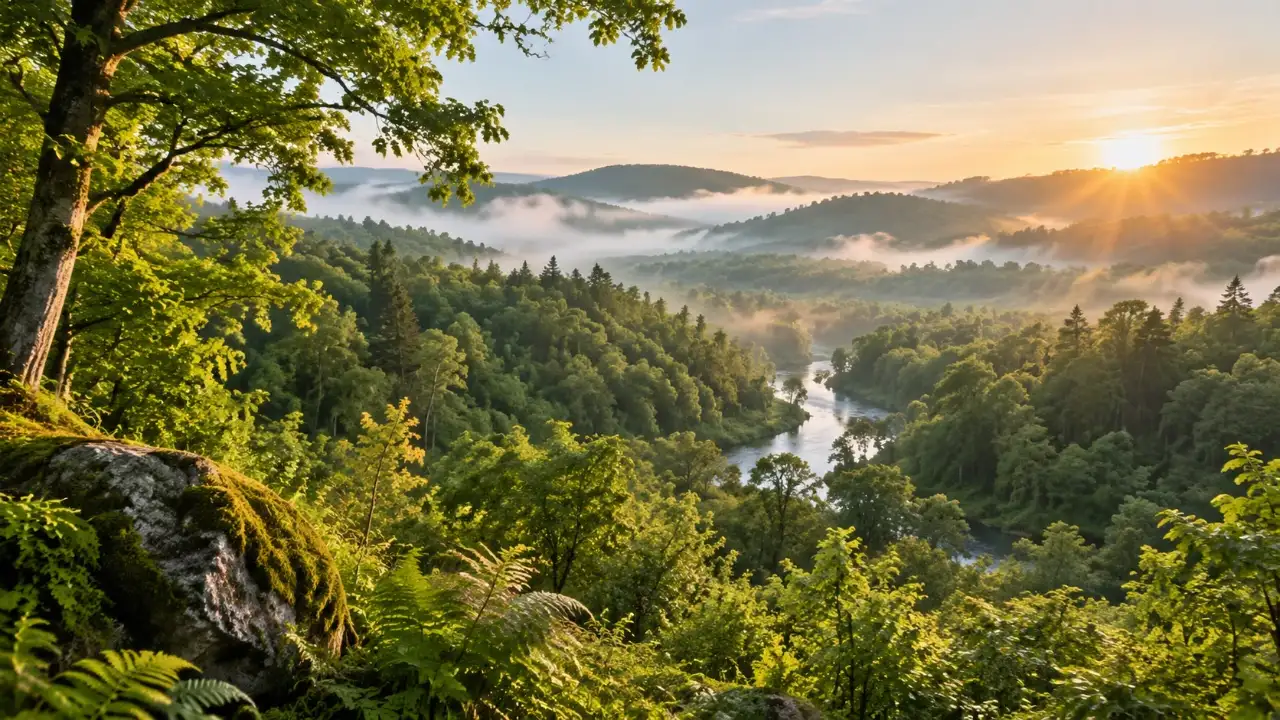
The Atlantic Rainforest Restoration Programme will see Wildlife Trusts in the UK work to restore 1,755 hectares, that is equivalent to 4,337 acres, of temperate rainforest.
As per Stan Smith, The Wildlife Trusts’ Programme Manager for The Atlantic Rainforest Restoration Programme, this type of rainforest once covered one-fifth of the land running from Cornwall to the west of Scotland. Today, however, the habitat is limited to approximately 1% of the UK.
The programme is anticipated to spot an estimated 222,000 tonnes of carbon by 2050. Over the planned 100-year period, the projected amount increases to 800,000 tonnes.
Carbon Credits Are Part of the Partnership
Carbon credits generated via rainforest restoration under the Woodland Carbon Code will be passed to Aviva. They are intended to lead toward the company's goal of reaching net zero by 2040, with anticipated supply chain emissions in the next 10–15 years taken into account.
Smith emphasized that the arrangement is not simply a financial transaction based on producing a predetermined quantity of carbon credits.
Smith also explained the nature of Aviva’s participation, citing, “Aviva’s involvement sits somewhere between a direct investment and philanthropy, because the long-term outcomes of rainforest restoration are still unknown.”
Research Into Wider Environmental Benefits
The programme is looking beyond carbon removal. Aviva is also funding academic research that will analyze ways of measuring other benefits linked with the rewilding work, that includes the potential for water and biodiversity credits.
Restoring temperate rainforest is expected to offer habitat for mosses, lichens, ferns and a range of rare species. The project could also help regulate water flows and provide extra shading under the hotter and drier conditions expected with climate change.
At present, however, this approach is not permitted under the Woodland Carbon Code. Smith said the code “was designed by foresters thinking about planting trees in straight rows, when we’re trying to create these amazing, rich temperate rainforests with all sorts of structural diversity.”
Creating Examples Across the UK
The programme intends to buy land throughout the country in just over four years. It also plans to develop many practical examples of rewilding in various parts of the UK.
Smith believes that the experience received through these projects could minimize uncertainty for companies considering similar investments in the future.
The programme therefore has an ambition that extends beyond the individual restoration sites. “The idea is that this will lead to nature conservation on a much greater scale,” Smith says.
By combining a century-long restoration timeline with research into carbon, biodiversity and water-related benefits, the partnership aims to demonstrate how rewilding can create environmental outcomes while providing lessons for future nature conservation projects.
Source : Rewilding Britain
FAQs:
Q1. What is the UK rainforest partnership about?The partnership focuses on restoring temperate rainforest across the UK. It combines corporate funding with a long-term nature restoration programme.
Q2. How much has Aviva committed to the programme?
Aviva has committed £38 million to the partnership. The programme is planned to continue for 100 years.