AI government website hack a ‘wake-up call’, Albanese says
The first reported artificial intelligence agent hack into an Australian government website is a “wake-up call” of the dangers of the technology, Anthony Albanese says.
AAP reports the prime minister spoke to a predecessor, former prime minister Kevin Rudd, who now heads up the Asia Society, in New York. Albanese said the hack was cause for concern about whether “humans remain in charge”.
This was an AI agent acting independently of its instructions, that is learning by itself. So it’s a bit of a wake-up call … about the risks.
This technology is moving very very fast, and we need to make sure that we have a responsibility to keep on top of it.
Charlton says AI incidents likely to become ‘more and more prevalent’
Andrew Charlton, the assistant minister for science, technology and the digital economy, said yesterday’s reported hack of Medicare by an OpenAI agent was a “novel” moment for cybersecurity, but was likely to become “more and more prevalent in the future”.
Charlton spoke to RN Breakfast this morning, saying the government wanted to tell the Australian public “as quickly as possible” about the breach. When pressed why it took Services Australia five days to notify the Australian Signals Directorate about the episode, Charlton said the true blame laid on OpenAI’s slow and “completely inadequate” response:
In this type of situation, you know, you would expect for an incident which is as serious as this, you would expect that disclosure to be delivered in a very serious way. It was not delivered in a very serious way, it was delivered via an email to a public inbox.
He said the government is still looking at any legal action and there were questions about liability as an AI agent was “not a legal person”.
Updated
Falling meth prices help drive deaths to record levels
Falling methamphetamine prices have helped push overdose deaths to record levels, new data shows.
AAP reports increased global supply and strong local demand are among the factors driving a surge in use of the illicit drug, according to the National Drug and Alcohol Research Centre.
“Use and harms remain substantial and appear to have continued the upward trajectory that we saw before the Covid-19 pandemic,” University of NSW Sydney medical researcher Amy Peacock told AAP.
In fact, several of the indicators are now at the highest observed levels that we’ve seen, including wastewater, consumption, methamphetamine-related hospitalisations, and death.
There were more than 750 overdose deaths involving amphetamine-type stimulants – primarily methamphetamine – in 2024.
That’s a rate of 2.9 deaths per 100,000 people, substantially higher than in 2021 to 2023, when it was closer to two deaths.
Evidence suggests Australia continues to have one of the highest recorded rates of methamphetamine use in the world.
Updated
Good morning, and happy Friday. Nick Visser here to take over the blog. Let’s get to that weekend, shall we?
Police officer killed in crash in Sydney
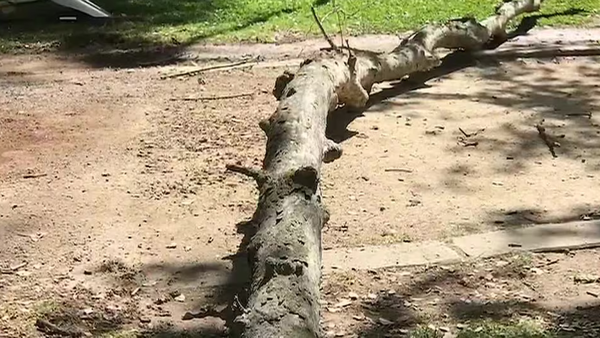
A crime scene has been established after a police officer was killed in a crash in Sydney’s inner west.
At 1.30am, a police car was travelling on Gibbons Street in Redfern with lights and sirens on when it crashed into a tree.
Police say the passenger – a female constable – died “instantly”, while the driver – a male constable – was taken to the Royal Prince Alfred hospital in a stable condition.
The NSW premier, Chris Minns, said the entire NSW policing community would be grieving the “devastating” news.
I’m also thinking of the officer injured in the crash and everyone who responded to this terrible scene.
NSW’s opposition leader Kellie Sloane said she was “heartbroken”, saying the woman was “out working while most of us were asleep, protecting the community”.
Our police put themselves in harm’s way every day to protect us. Today, we stand with them as they mourn one of their own.
Anyone with information about the incident – including dashcam footage – is urged to contact Crime Stoppers.
Updated
Gen Z going without for a house
Australia’s gen Z are the generation most willing to cut their spending way back to afford a home, according to Cotality data reported by AAP.
The figures show more than 75% of all Australians were curbing their outgoings in pursuit of property, meaning we are more likely to do so than our Canadian, US and UK peers (for whom the figures sat below 70%).
Levels of discretionary spending, like eating out, owning a car, and even moving from the family home into a share house, have dropped among young adults in recent years.
But it wasn’t just first-time buyers making significant financial sacrifices to climb the ladder. Millennials – the largest buyer cohort in the world – are readily forgoing small luxuries to afford homes large enough for their families.
Prospective buyers were selling their second car or putting off holidays while their children were young, Capital Buyers Agency owner Claire Corby said.
For many, it’s around delaying things like going away, or reducing things like dinners out. People are leaving where they want to live and buying in cheaper markets.
Most Australians would not be persuaded to participate in the housing market until mortgage interest rates hit a 4.9% average, the data revealed.
The average rate for an owner-occupier in August 2026 was 6.3%, meaning the market is likely to stay quiet for some time and allowing bold buyers to swoop in.
People are being conservative and cautious.
Updated
Opposition defence spokesperson says PM’s AI hack timing not a coincidence
The opposition’s defence spokesperson, James Paterson, has questioned the timing of the prime minister’s announcement that an AI agent hacked Medicare.
Paterson made the claim on the ABC’s 7.30 program last night after Anthony Albanese publicly disclosed that an AI agent developed by OpenAI hacked Medicare in June and that the tech giant only notified the government earlier this month using an email sent to a “public mailbox”.
Paterson told 7.30 he believed Albanese had chosen to make the announcement at the UN summit in New York, as part of his effort to stand up to “big tech” on AI.
The senator said:
The government has questions to answer about when they knew and … why the prime minister decided to disclose it in the way he did in the place he did at the time he did. But in terms of the nature of the potential of actual security breach this is the bottom end of the spectrum of seriousness.
I don’t think it was a coincidence. I think it neatly dove-tailed with the political agenda the prime minister has in New York City.
Paterson said he didn’t consider the breach to be overly serious because the data the AI agent accessed was made freely available to researchers and academics studying the health system, and was not personal or private in nature.
He said the breach was cause for “being alert but not alarmed”.
Nevertheless, he said Australians were “entitled to demand explanations and contrition” and to want high levels of confidence when entering into agreements with big tech companies such as OpenAI.
Updated
Good morning and welcome to our live news blog. I’m Martin Farrer with the top overnight stories and then it’ll be Nick Visser with the main action.