
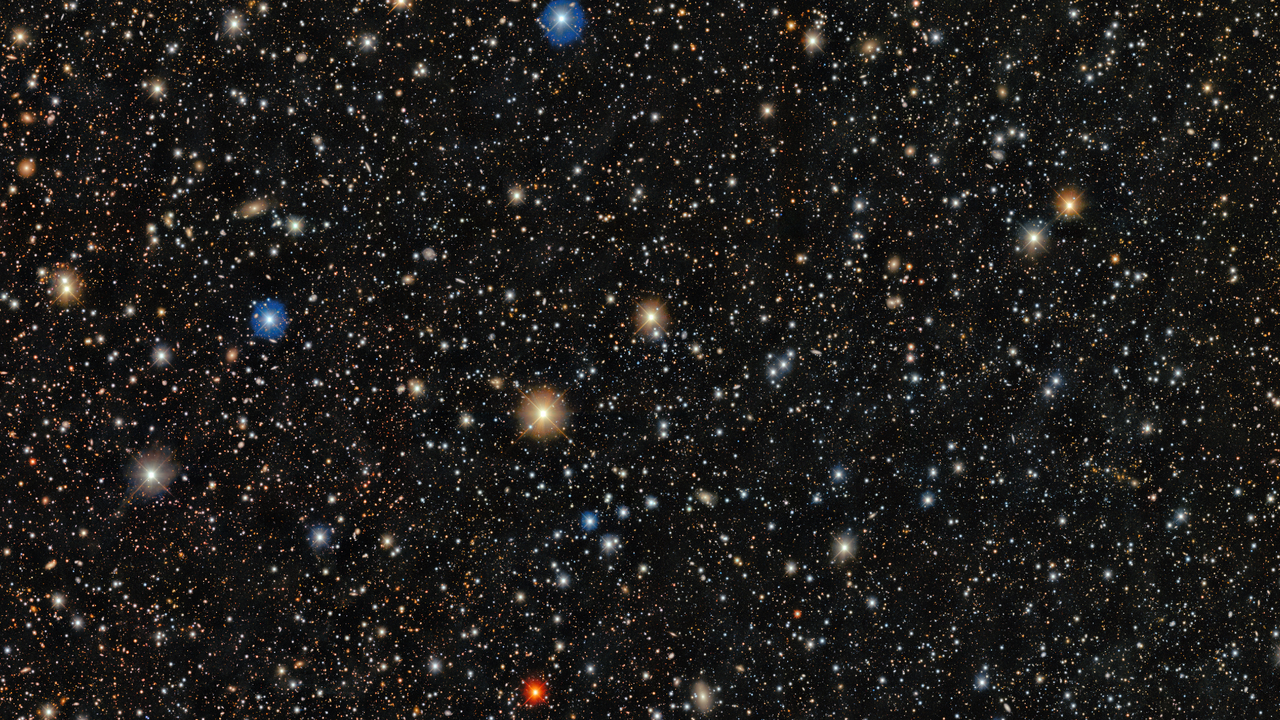
Scientists have adopted the role of "cosmic archaeologists" to discover a rare, iron-deficient second-generation star — essentially a fossil record of our universe's chemical evolution. Just as uncovering artifacts here on Earth teaches us about lost generations of humans, this observation provides hard evidence of how the first generation of stars died to chemically enrich their successors.
The second generation, or POP II, star was discovered in the dwarf galaxy Pictor II, located around 150,000 light-years from Earth in the constellation Pictor, using the Dark Energy Camera (DECam) mounted atop Víctor M. Blanco 4-meter Telescope. Designated PicII-503, the star has only 1/40,000th of the iron contained within the sun, which is a third-generation, or (somewhat confusingly) POP I, star. The fact that PicII-503 has the lowest concentration of iron ever seen beyond the Milky Way makes it one of the most primordial stars ever discovered.