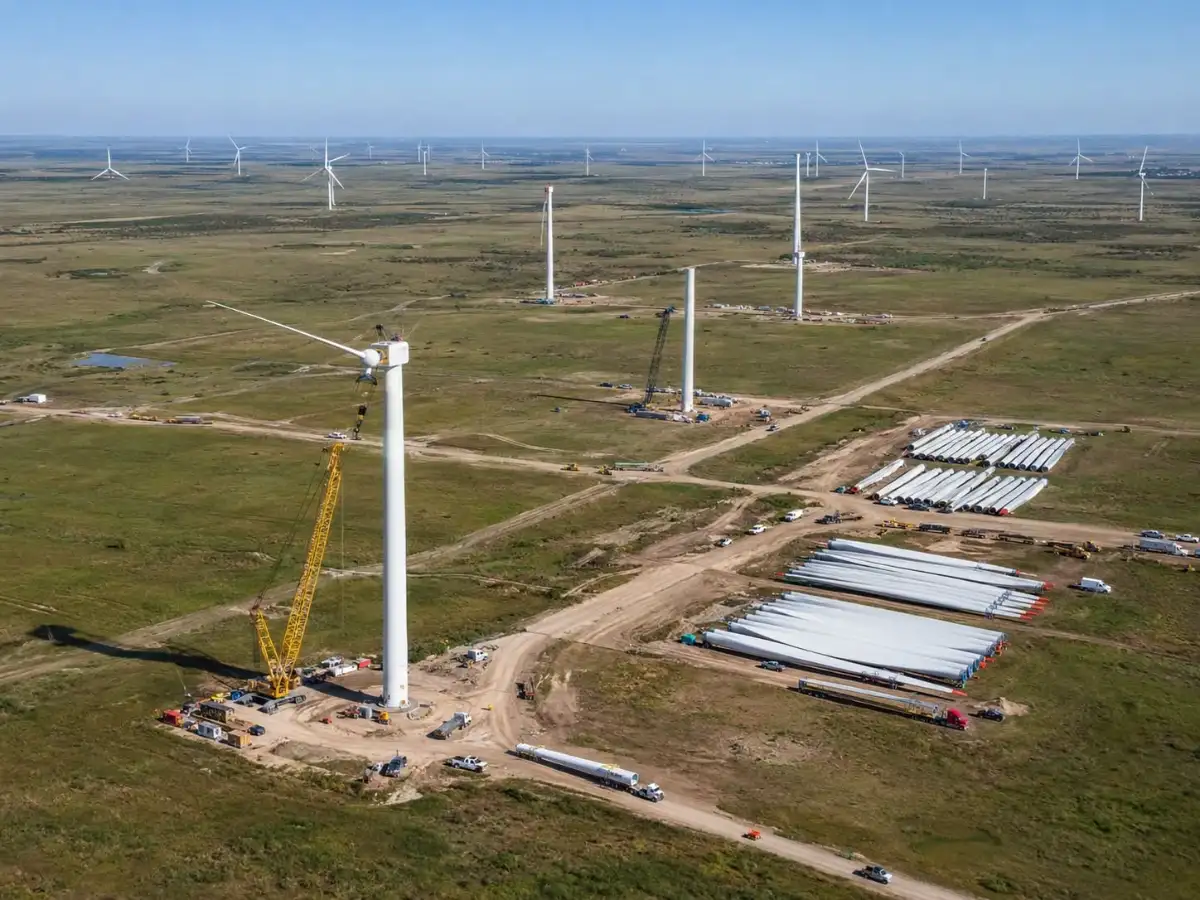
Wind turbine blades are one of the industry's harder waste problems: each blade can be as long as a Boeing 747's wingspan, built from composite fiberglass that traditional recycling methods cannot break down. Discarding them in landfills has been the default disposal route. A 2021 peer-reviewed NREL study titled "Wind turbine blade material in the United States: Quantities, costs, and end-of-life options," by Aubryn Cooperman, Annika Eberle, and Eric Lantz, published in Resources, Conservation and Recycling, estimated that the US could accumulate about 2.2 million tons of blade waste by 2050. That 2021 estimate is the backdrop for a repowering project carried out the same year at Panther Creek III in West Texas, one of the earlier field examples of an alternative to landfilling, and worth revisiting now that repowering has become more common industry practice.
What actually happened out in West Texas