
Did you know that the first VCR actually debuted at CES back in 1970? The tech trade show has always been about what's next, but for the past few years, it's also low-key become an auto show—and the most important one we cover here at InsideEVs. But this year, we're expecting a lot less in the way of battery-powered cars and a lot more about the industry's new favorite buzzword: "physical AI."

Welcome back to Critical Materials, your daily roundup for all things electric and tech in the automotive space! We let our team take a breather on this feature to relax a bit over the holidays, and we hope you missed us.
Get Critical Materials in your inbox.
The must-read industry and tech roundup, delivered every weekday.
Now we're back in force, covering the tech industry's biggest trade show. I'm on the ground here and so is Kevin Williams, and we'll be bringing you updates throughout the week. For now, here's what's on our radar.
25%: The 'Physical AI' Era Is Here For Cars—More Or Less

Here's the thing about CES, though: it showcases fantasies as much as it brings us what's next. People had VCRs (if you don't know what that is, go ask a grandparent or a nearby millennial) in their homes for decades. I am still waiting for flying cars to be a thing. Thus, it's good to take what you see at this show with a grain of salt. Or a gallon of it.
Still, there is an undeniable trend happening in the auto industry right now: a convergence between cars, autonomous driving, robotics and artificial intelligence. "Physical AI" is the buzzword on everyone's lips, just as "software-defined vehicle" was a decade ago. The term refers to AI technologies that go beyond software and exist in the real world, actually moving around and doing all sorts of tasks.
You may remember a few months ago when General Motors put on a big showcase in New York about its future technologies, including eyes-off Super Cruise, in-car AI assistants and eventually, vehicles smart enough to pick up your dry cleaning when you're not even in it. The car as a kind of personal robot, in other words; that's physical AI.
Of course, to do this, you need advanced AI, cutting-edge chipsets, next-generation sensors like lidar and radar, and better batteries. But the focus of the show seems to be less on individual cars and in-car tech, as was the case in 2023, 2024 and last year, and more on automating mobility itself and transforming cars into something more.
Again, it all feels very conceptual—especially at a time when people are just looking for more affordable ways to get their kids to school on time. But this shift is happening, even if it can feel more like a Wall Street play and less of a concrete product plan. No wonder the headliner event features Jensen Huang, CEO of Nvidia, which is now an automotive powerhouse in its own right.
50%: The Debuts We Expect, From Afeela To Zoox

So what automotive news can we expect from the show? Well, CES mainstay Sony Honda Mobility will be back with updates on its forthcoming Afeela brand. The EV joint venture will bring "exciting new updates for its first model, Afeela 1, now presented as a pre-production model, and showcase an all-new concept model."
Alphabet-owned Waymo will have a booth at the show, though it's not immediately clear if it will make any announcements there. Perhaps expansions to new cities? China's Geely Auto will be around as well. BMW will showcase the Neue Klasse EV platform and the new iX3, and that means Mercedes-Benz can't miss out either; the show will mean the American debut of the new GLC-Class electric SUV.
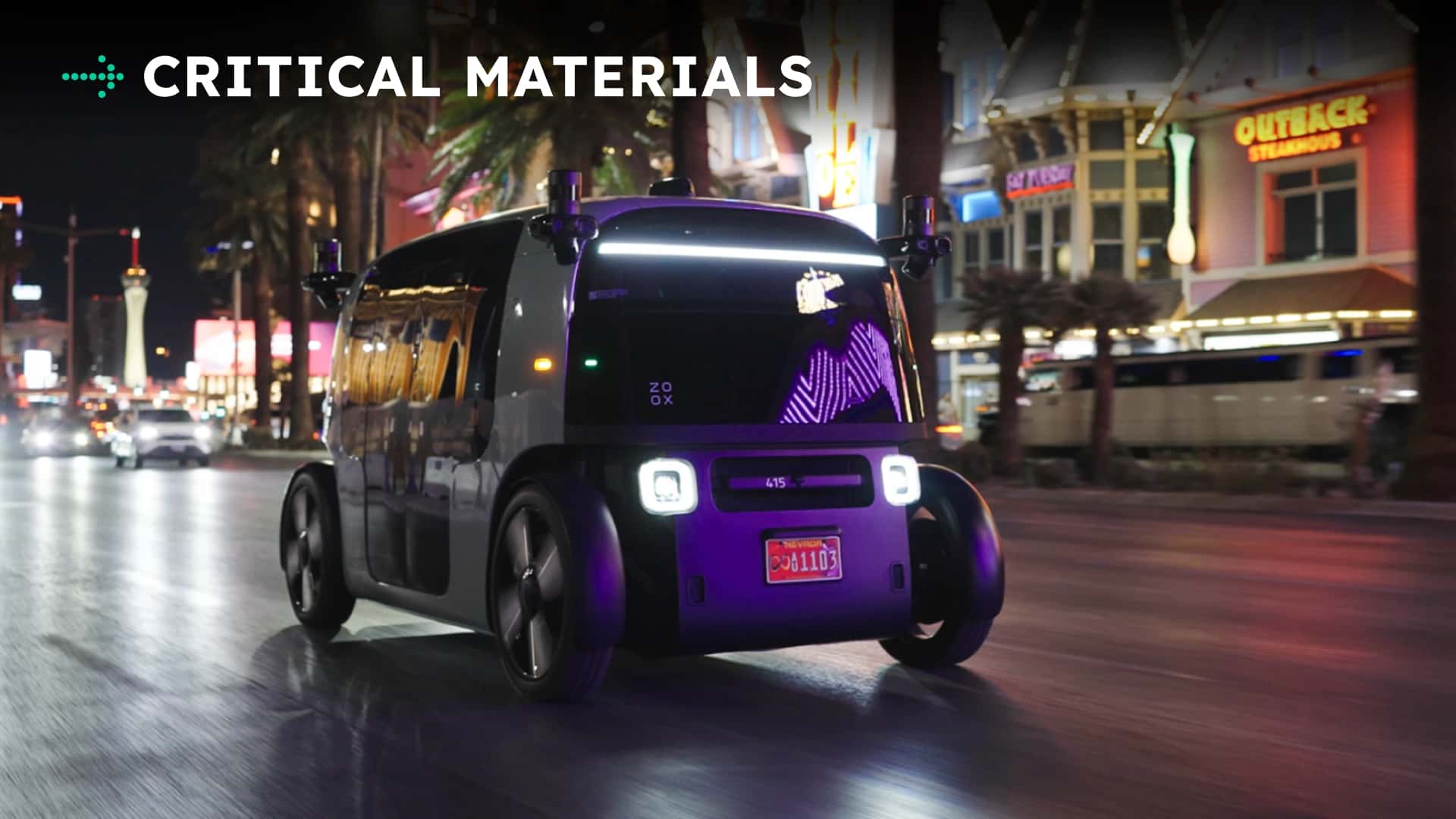
I would add that Las Vegas now has the steering-wheel-free Zoox robotaxis cruising around the city. We got a brief ride in one last year, but in 2026, the cabs seem ready for prime time. I hope to flag one of the Amazon-owned taxis later this week and will report back when I do.
75%: Hyundai Wants To Be A Robotic Powerhouse

And then there's Hyundai, which wants to show off an almost Tesla-like (or Xpeng-like) robotic and AI-powered future that goes well beyond cars. Hyundai's press conference is later this afternoon and we'll drop some updates as they happen. But remember: the Korean automaker also owns robotics giant Boston Dynamics and uses some of its machines in factories already, so we're expecting Hyundai to double down there.
Until then, here's The Korea Herald with more:
At its CES media day on Monday, Hyundai Motor will present its AI robotics strategy under the theme “Partnering Human Progress: AI Robotics, Beyond Lab-scale to Everyday Life.” A key highlight: the world’s first public live demonstration of the next-generation Atlas humanoid robot, developed by Hyundai’s US-based robotics subsidiary, Boston Dynamics. The fully electric Atlas replaces hydraulic actuation with advanced electric systems, enabling more precise motion, including joints capable of 360-degree rotation.
Beyond hardware upgrades, Atlas reflects a shift toward learning-based control. The robot incorporates reinforcement learning, allowing it to refine movements through trial and error — a defining feature of physical AI that contrasts with fixed, pre-programmed motion systems.
Hyundai Motor will also unveil plans to expand its AI robotics ecosystem through its Software-Defined Factory, a data- and software-driven manufacturing model designed to maximize flexibility. By integrating AI robotics, vehicles, logistics and software, the group aims to position itself as an end-to-end provider spanning robot development, training and deployment.
But what, if any of this, will translate to the automotive space? That's what I want to know.
100%: In The Future, Your Car Is A Robot (Maybe). How Do You Feel About This?

Look: it is easy to see why carmakers, which are among the most powerful manufacturing operations on earth, want to move past the capital-intensive, heavily regulated, low-margin business of just making and selling cars. And AI actually has yielded tangible, explosive growth in the autonomous vehicle sector in just the last few years. I can absolutely see how and why this convergence is taking place.
But how realistic is that to you? Do you think people want more automated and more robotic cars? Or have we not even scratched the surface of what's possible here, and maybe people don't know what they want until they've seen it? Lay out some theories as to where the physical AI boom could go and drop them in the comments.
Contact the author: patrick.george@insideevs.com