Get all your news in one place.
100’s of premium titles.
One app.
Start reading
Space
Space
Science
Anthony Wood

Astrophotographer spies an ancient supernova remnant shining in the wing of a cosmic swan (photo)

A swirling red nebula is pictured against a distant starfield.

Dutch astrophotographer Cornelis van Zuilen combined 35 hours of telescopic data to create an incandescent view of the Eastern Veil Nebula shining 2,100 light-years from Earth in the constellation Cygnus.

Van Zuilen's nebula image reveals breathtaking detail in these swirling clouds of interstellar dust and gas, which were cast out into space when a star 20 times more massive than the sun ended its life in a dramatic supernova explosion some 5,000 to 8,000 thousand years ago.
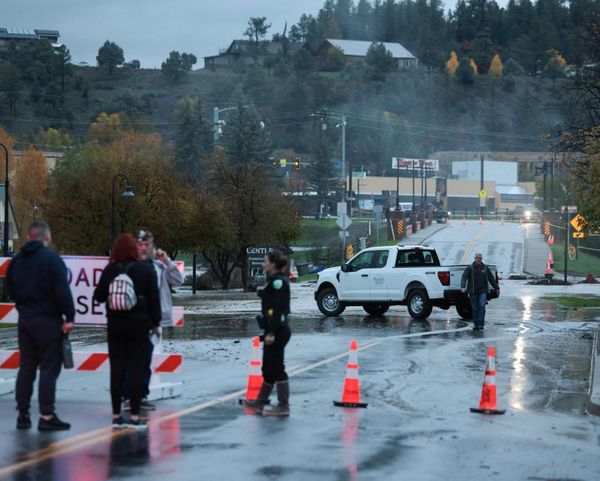
The twisting nebula seen in van Zuilen's image is just one section of the sprawling 120-light-year-wide supernova remnant, which can be found close to the bright star Epsilon Cygni in the constellation Cygnus along the glowing band of the Milky Way in November.

Due to the weather, the image was a difficult one to capture. "I'm from the Netherlands and we like to joke here that 'summer is the best day of the year,'" van Zuilen told Space.com in an email. "It rains a lot, so being an amateur astrophotographer is quite a challenging hobby, it requires patience and good timing. Fortunately I live just outside the city in a Bortle 5 area, which really helps with capturing good data through my telescopes." (The Bortle scale is used to measure the brightness of the night sky, including interference from light pollution.)

The twisting expanse of the Eastern Veil Nebula is part of the larger Cygnus Loop supernova remnant. (Image credit: Cornelis van Zuilen)

Van Zuilen captured the ancient nebula light using an Askar 103APO refractor telescope in conjunction with a ZWO manufactured camera along with an astronomy filter and peripherals as it hung in the Bortle 5 skies over the town of Heiloo in the Netherlands.

ZWO ASI533MC Pro
(Image credit: Amazon)

Want to capture your own nebula mosaics? The ZWO ASI533MC Pro camera is the best dedicated astro camera out there, in our opinion. It features zero amp glow, 80% quantum efficiency and a 20FPS frame rate. It also features a 9MP sensor and you can check out our ZWO ASI533MC Pro review for a more in-depth look.

"The most challenging part of editing this image was bringing out the faint hydrogen alpha filaments in the northern region of the image," explained van Zuilen. "That required careful processing with lots of stretching and noise reduction. It took nine nights to capture enough data to see the filaments clearly and a few more to process the final image, but in the end it was absolutely worth the effort."

Want to take spectacular images of the night sky for yourself? Then be sure to read our roundups of the best cameras and lenses for astrophotography, along with early deals on stargazing gear ahead of Black Friday 2025.

Editor's Note: If you would like to share your nebula views with Space.com's readers, then please send your photo, name, location along with any comments on the shoot and details on the gear used to capture it to spacephotos@space.com.

Sign up to read this article
Read news from 100’s of titles, curated specifically for you.
Already a member? Sign in here
Related Stories
Top stories on inkl right now
One subscription that gives you access to news from hundreds of sites
Already a member? Sign in here
Our Picks
Fourteen days free
Download the app
One app. One membership.
100+ trusted global sources.