
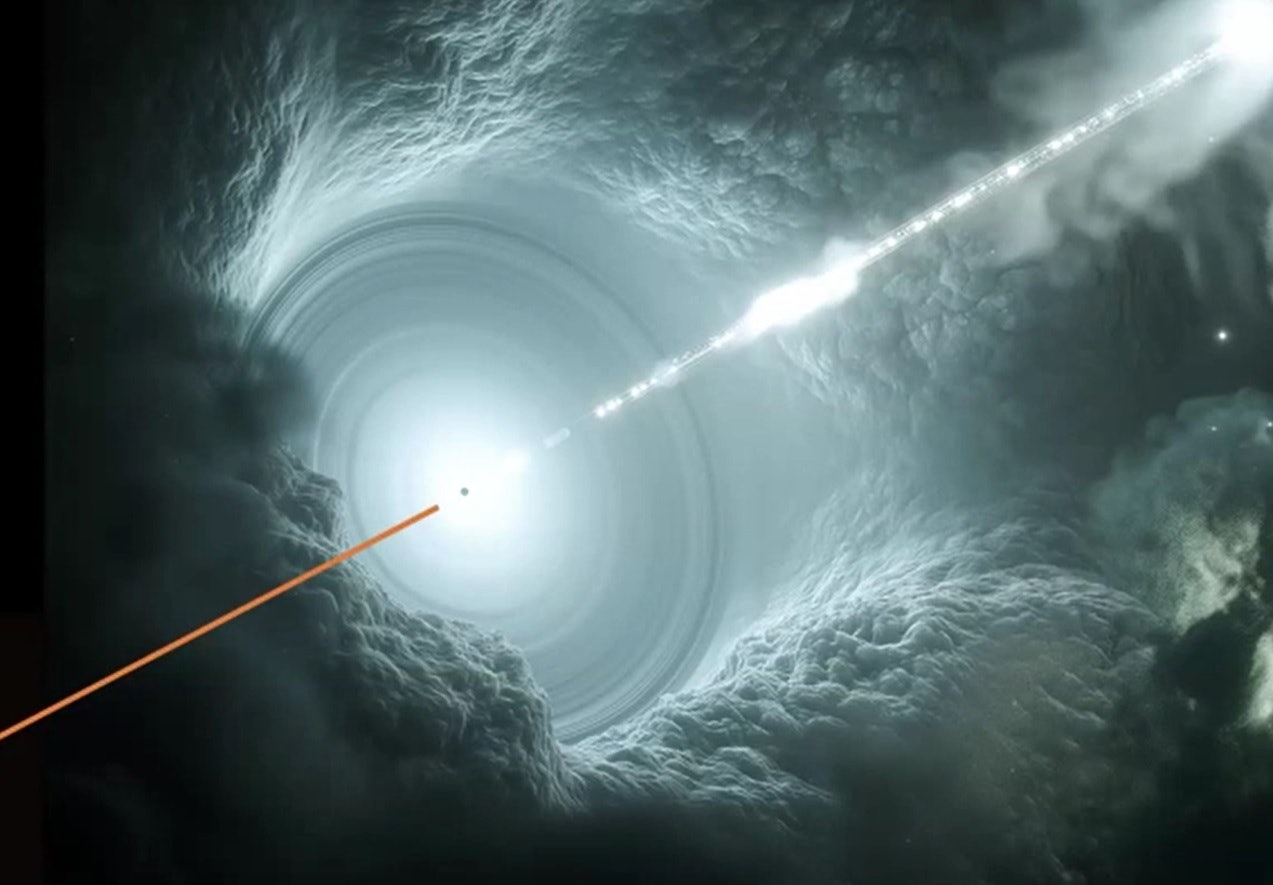
Imagine an amoeba blasting out jets of energy that stretched the width of the Earth. That’s what’s happening about 7.5 billion light years away on a much larger scale, where a supermassive black hole at the center of a galaxy is blasting jets of high-speed particles and energy across 23 million light years of space. That’s about 140 times the width of our Milky Way galaxy. It’s the longest pair of black hole jets ever discovered so far, and it could shed light on how supermassive black holes have sculpted not just their host galaxies, but the largest structures in the universe.
Caltech astrophysicist Martijn Oei and his colleagues published their work in the journal Nature.













