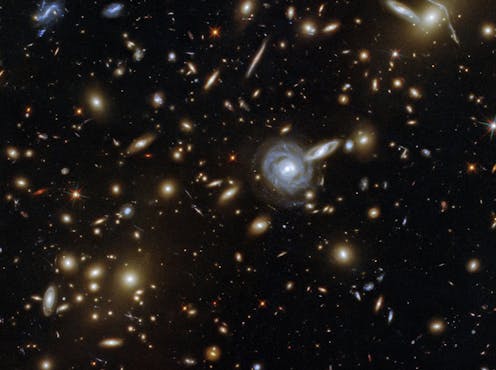
It is almost 100 years since scientists discovered the universe is expanding. In the decades that followed, the accuracy of the measurements, and interpretations and implications of this discovery, were a source of fierce debate. We now know the universe emerged dramatically from a highly compressed state in an event known as the Big Bang.
Measurements of the present-day expansion rate, known as the Hubble constant or H₀ (pronounced H-naught), have improved considerably since those early days. However, a new debate now grips the astronomy community: two independent measurements of H₀, which should agree, give different results. This situation has become known as the “H₀ tension”, or Hubble tension.