
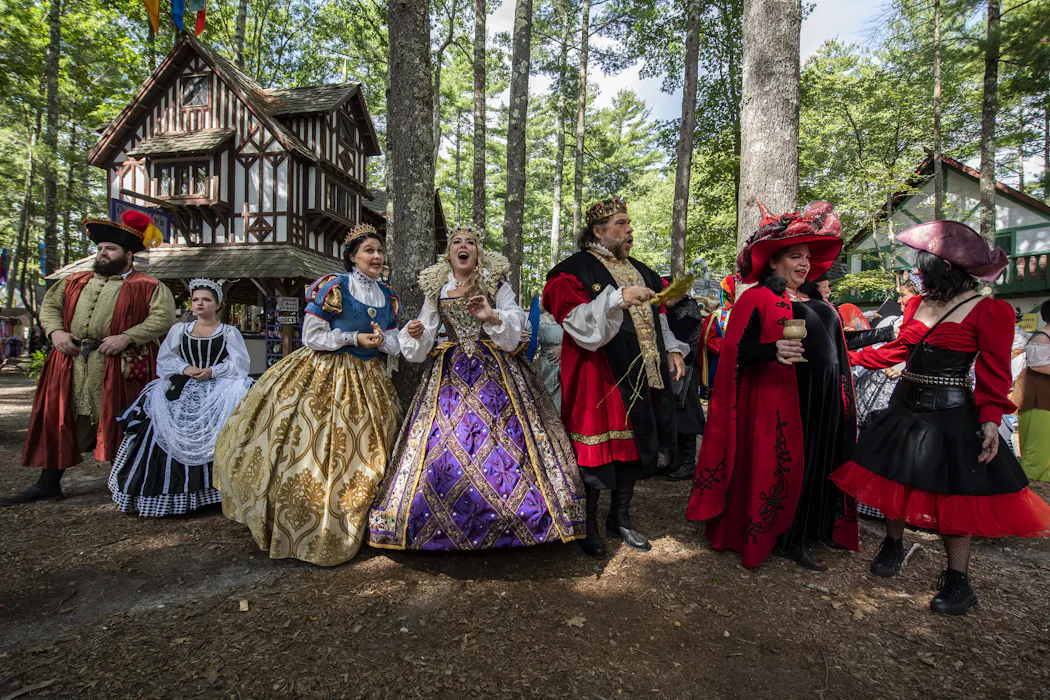
Within moments of entering the Newport Renaissance Faire, you are ushered to a group of fairies. They pass you a scroll and say, “You must seek out the Bone Man for the first hurdle in your quest.” As you navigate the fair, you find many men dressed in bones, both vendors and fellow attendees. When you find the correct Bone Man – an actor wearing what appears to be a mask made of human skull along with a crown constructed from deer antlers – he stamps your scroll. He then sends you to your next target: the Drunk Viking.
Following the directions of actors in the fair, you meet a variety of performers from many historical eras and fantastic realms, and stumble upon both merchants and merrymakers in your journey. It’s all part of the immersive experience that connects you with the other guests and staff, though many of the costumed staff members, speaking in faux Middle English, are also trying to sell you something.













