
Get all your news in one place.
100's of premium titles.
One app.
Start reading
Space
Space
Science
Keith Cooper

Artemis 2 moon mission shouldn't launch until late 2026, new analysis of solar superflares suggests

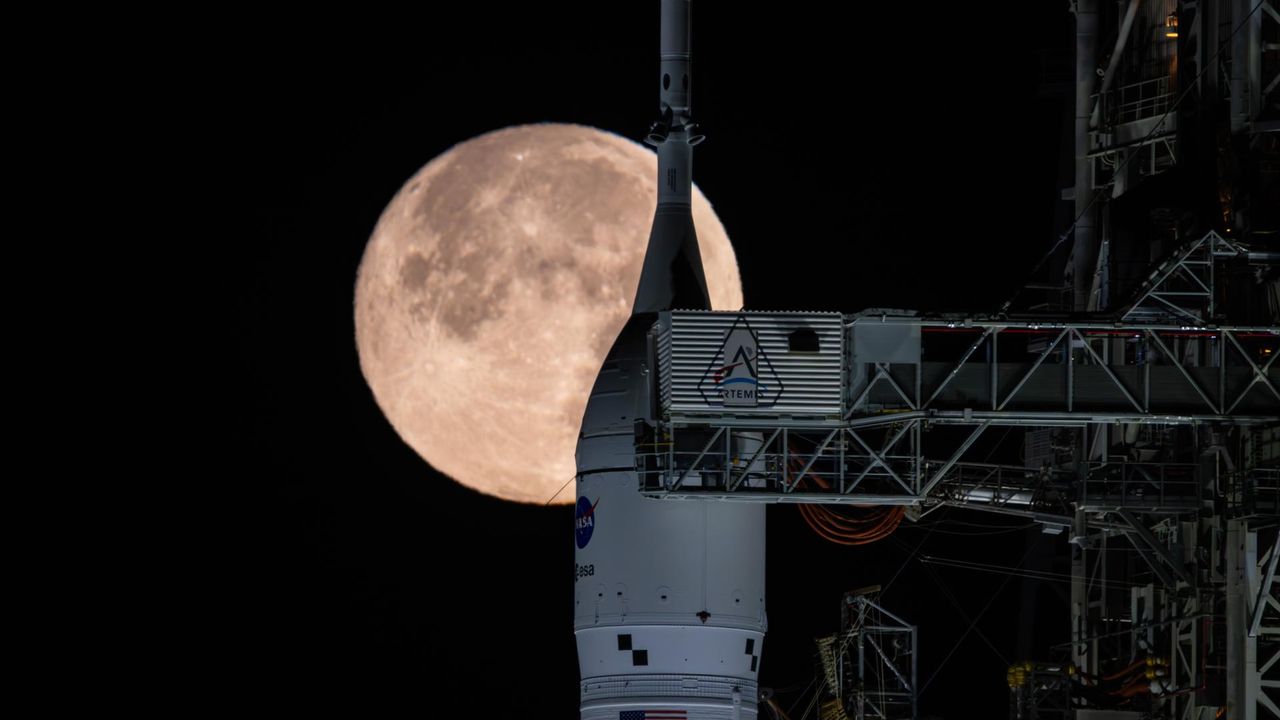
A white rocket nose with the circular NASA logo stands next to the metal gantry underneath a glowing large full moon in a black night sky.

Powerful solar superflares, which can generate geomagnetic storms and disrupt radio communications and GPS, damage satellites and endanger astronauts and even airline passengers, just got a lot easier to predict, thanks to a new formula that's based on half a century of X-ray observations of the sun.

The new findings could have immediate real-world implications. NASA's Artemis 2 astronaut mission around the moon has been pushed back to the beginning of April at the earliest to address issues with its rocket, but Victor M. Velasco Herrera of the National Autonomous University of Mexico thinks that it should be delayed even longer.
Sign up to read this article
Read news from 100's of titles, curated specifically for you.
Already a member? Sign in here
Related Stories
Top stories on inkl right now
One subscription that gives you access to news from hundreds of sites
Already a member? Sign in here
Our Picks
Fourteen days free
Download the app
One app. One membership.
100+ trusted global sources.