
Get all your news in one place.
100's of premium titles.
One app.
Start reading
Space
Space
Science
Anthony Wood

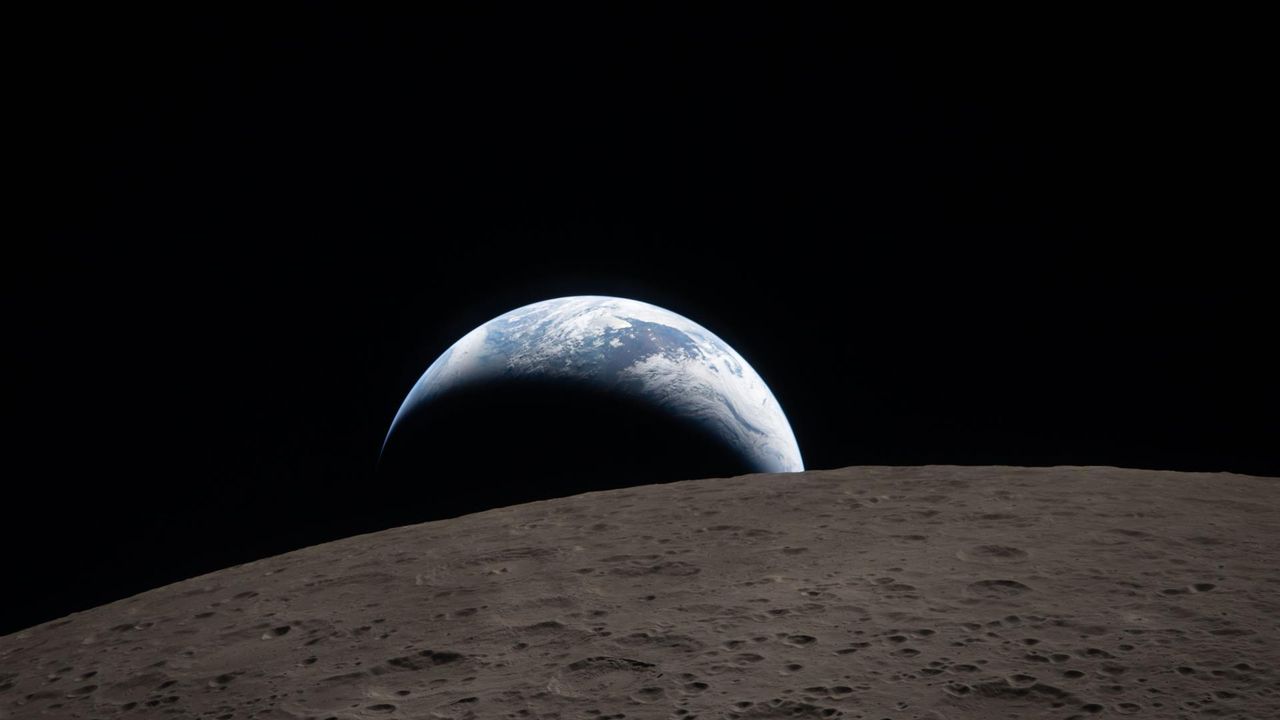
Artemis 2 captures historic 'Earthset' photo | Space photo of the day for April 7, 2026

Earthset captured through the Orion spacecraft window at 6:41 p.m. EDT, April 6, 2026, during the Artemis 2 crew’s flyby of the Moon.

The Artemis 2 crewmembers captured a spectacular view of Earth setting behind the moon through the window of their Orion spacecraft on Flight Day 6 of NASA's historic 10-day mission, as they passed over the far side of the lunar surface. They called it "Earthset," in reference to the iconic image captured by Bill Anders on Christmas Eve in 1968 during the Apollo 8 mission.

What is it?

The photo was captured at 6:41 p.m. EDT (1041 GMT) on April 6, as the majority of Earth's surface was veiled in shadow from the perspective of the Artemis 2 crew. Just a crescent of our planet could be seen illuminated by direct sunlight, revealing white clouds swirling over Australia and Oceana.

Countless craters can be seen scarring the moon's ancient surface, including the 40-mile-wide (64-kilometer-wide) expanse of Ohm Crater, which can be seen close to where the lunar horizon meets the shadowed night side of Earth. The crater features a prominent central peak and a sloping "terraced" rim.

"Earthset" captured on Flight Day 6 of the Artemis 2 mission to the moon. (Image credit: NASA)

NASA's Reid Wiseman, Victor Glover and Christina Koch and the Canadian Space Agency's Jeremy Hansen — the crew of the Orion spacecraft they named "Integrity" — witnessed Earth slip silently from view shortly after, as they passed over the far side of the moon.

They would later experience a planned 40-minute communications blackout while traveling beyond the range of NASA's relay satellites. But then, they witnessed an iconic "Earthrise" even more similar to what Anders saw in the 60s, as our Blue Marble emerged from behind its natural satellite.

Later that day, the crew would be treated to one of the rarest sights in human history, a total solar eclipse witnessed from a free-flying spacecraft, as Orion's trajectory placed the moon between the NASA spacecraft and our parent star.

Want to know more? Then be sure to stay up to date with the latest news with our Artemis 2 liveblog. You can also find out what the Orion crew will be getting up to over the rest of their 10 day lunar trip with our day-by-day breakdown of the trailblazing mission, which has seen humans travel farther from Earth than ever before.

Sign up to read this article
Read news from 100's of titles, curated specifically for you.
Already a member? Sign in here
Related Stories
Top stories on inkl right now
One subscription that gives you access to news from hundreds of sites
Already a member? Sign in here
Our Picks
Fourteen days free
Download the app
One app. One membership.
100+ trusted global sources.